
Why do bubbles in boiling water always form at the exact same spots on the pot
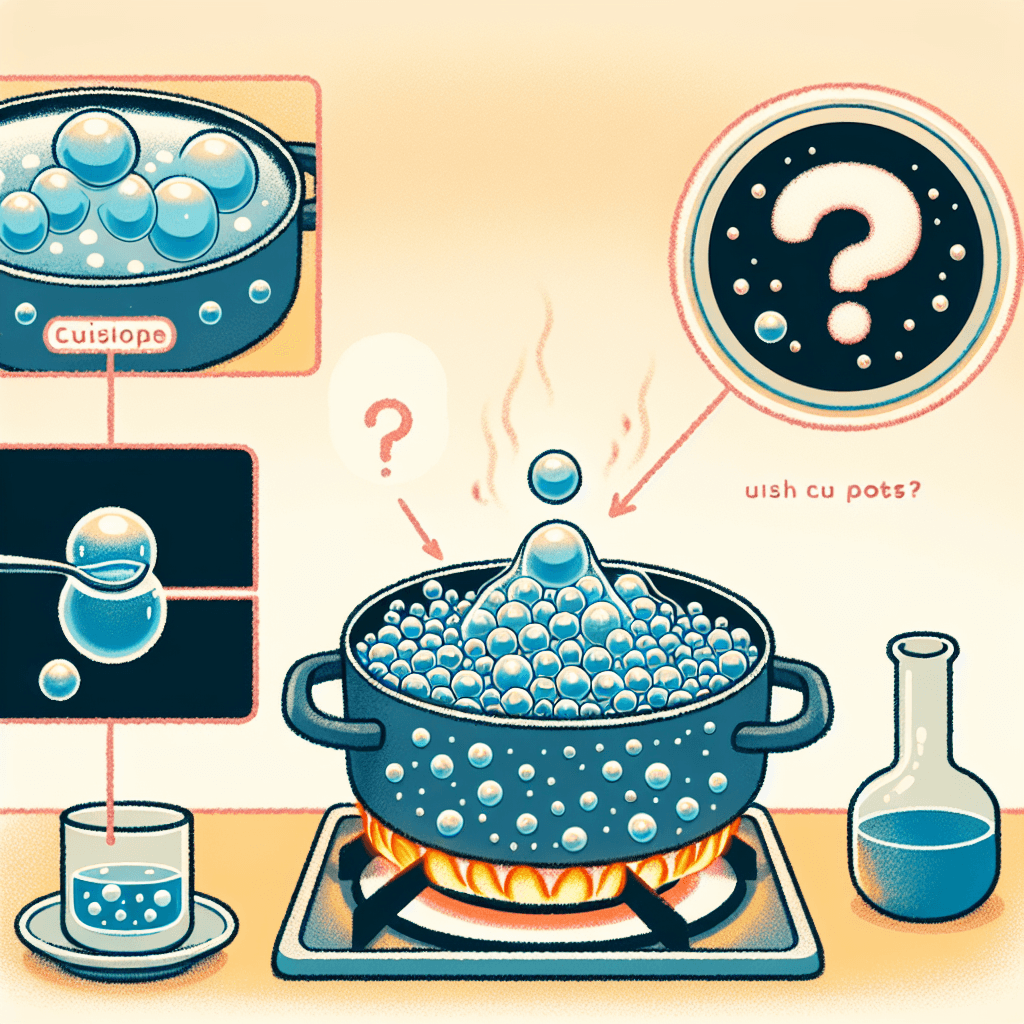
It’s not a coincidence; those bubbles are forming in microscopic, invisible imperfections on your pot that act as secret nurseries for boiling.

Too Long; Didn't Read
TLDR: Bubbles form in the same spots because they start in microscopic scratches and pits on the pot's surface. These imperfections trap tiny air pockets which act as seeds for the steam bubbles.
The Boiling Point Mystery: Why Do Bubbles in Boiling Water Always Form at the Exact Same Spots on the Pot?
Have you ever found yourself mesmerized by a pot of water coming to a boil? It’s a common kitchen ritual, yet it holds a fascinating scientific secret. You might notice that as the water heats up, the first tiny bubbles, and later the steady streams of larger ones, consistently rise from the very same points on the bottom of the pot. It’s not a coincidence or magic; it’s a beautiful demonstration of physics at play. This seemingly random process is, in fact, highly organized, and understanding why reveals the hidden world of microscopic imperfections and the science of phase transition. This post will delve into the reasons behind this phenomenon, explaining the crucial role of "nucleation sites."
The Science of Boiling: More Than Just Heat
Before we can understand where bubbles form, we need to understand how they form. Boiling is the process of a liquid turning into a gas when heated to its boiling point. For water, this is 100°C (212°F) at standard atmospheric pressure. However, for a bubble of water vapor (steam) to form within the liquid, it has to overcome significant barriers, including the surrounding water pressure and the liquid's own surface tension.
Interestingly, perfectly pure water in an immaculately smooth container can be heated beyond its boiling point without actually boiling. This unstable state is called "superheating." Without a starting point, the water struggles to form the first bubble. This tells us that something specific in our everyday pots and kettles is giving the bubbles a helping hand.
Nucleation Sites: The Secret Birthplaces of Bubbles
The "exact same spots" where bubbles form are known in physics as nucleation sites. These are microscopic imperfections on the surface of your pot. Even the most polished-looking stainless steel or non-stick pan is, on a microscopic level, a rugged landscape of:
- Scratches and crevices: Tiny valleys and cracks etched into the material.
- Pits: Microscopic cavities in the surface.
- Impurities: Minute particles of dust or mineral deposits that have settled on the bottom.
These imperfections are the key. They work by trapping tiny pockets of air or water vapor when you first fill the pot with water. As the pot heats from the bottom, the water in direct contact with these trapped gas pockets heats up and vaporizes far more easily than the water elsewhere.
Think of it like starting a fire. It's much easier to ignite a small, dry piece of tinder than it is to set a large, solid log ablaze. In this analogy, the trapped air in a nucleation site is the tinder. It provides a pre-existing gas-liquid interface, or a "seed," upon which the steam bubble can form and grow, requiring much less energy than creating a new bubble from scratch in the middle of the liquid.
Why the Same Spots, Every Time?
The reason the bubbles consistently form in the same locations is simply because the physical landscape of your pot's surface is fixed. The scratches and pits from manufacturing or daily use don’t move. Therefore, the most effective nucleation sites—the ones with the perfect shape and size to trap air and kickstart vaporization—remain in the same place every time you boil water.
When the water reaches a sufficient temperature, these "hot spots" become active, releasing a bubble that rises to the surface. Immediately after, water rushes back into the crevice, trapping a new, smaller pocket of vapor, and the process repeats, creating the steady streams of bubbles we observe.
The Danger of a Perfectly Smooth Surface
The importance of nucleation sites becomes clear when they are absent. In a laboratory setting, using very clean water and a perfectly smooth glass container can lead to the dangerous phenomenon of superheating. Because there are no sites for bubbles to form peacefully, the water temperature can climb past 100°C.
If the water is then disturbed, or a single bubble finally manages to form, the stored energy is released all at once. The superheated water can flash into steam explosively, a process called "bumping," which can eject boiling water violently from the container. This is why chemists often add "boiling chips"—small, porous materials with plenty of nucleation sites—to ensure liquids boil smoothly and safely.
Conclusion
The next time you watch water boil, you'll know you’re witnessing a precise and repeatable scientific event. Those reliable streams of bubbles are not random; they are a map of your pot's invisible, microscopic terrain. Each bubble originates from a nucleation site—a tiny scratch or pit that serves as the perfect cradle for its formation. This everyday kitchen occurrence is a powerful reminder that fascinating scientific principles are at work all around us, often hidden in the most mundane of places. It's the beautiful, predictable physics of imperfection that ensures our water boils safely and our pasta gets cooked every time.


