
Why do foods get crispy in an oven but soggy in a microwave
Discover the science behind why one appliance uses dry heat to create a golden, crispy masterpiece, while the other wages a steamy, internal war that leaves your food a soggy mess.

Too Long; Didn't Read
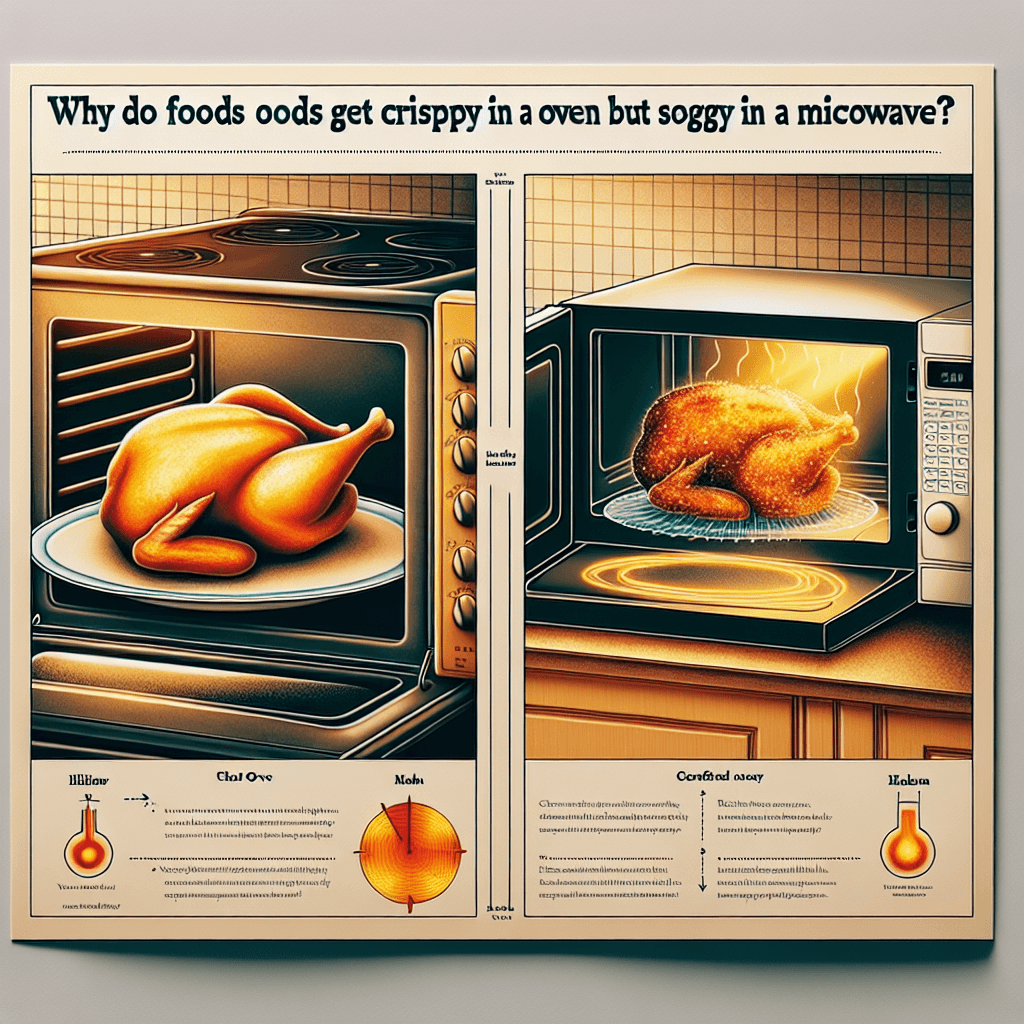
TLDR: Ovens use dry heat to evaporate moisture from the food's surface, making it crispy. Microwaves heat the water inside the food, creating steam that turns the outside soggy.
The Crispy Conundrum: Why Do Foods Get Crispy in an Oven But Soggy in a Microwave?
Have you ever faced the ultimate kitchen disappointment? You pull a slice of leftover pizza from the microwave, hoping for that glorious, crispy crust, only to be met with a limp, steamy, and undeniably soggy result. Yet, that same slice, reheated in an oven, emerges with a perfectly re-crisped base. This isn't a culinary accident; it's a matter of science. The vast difference in texture comes down to the fundamentally different ways these two kitchen workhorses heat your food. This post will unravel the science behind the heat, explaining exactly why your oven is the champion of crunch and your microwave is the master of moisture.
The Oven's Secret: Dry Heat and a Delicious Chemical Reaction
An oven is essentially a super-insulated box that uses a heating element to create a very hot, dry environment. It cooks your food primarily through two methods:
- Convection: The heating element warms the air, which then circulates and transfers heat to the food's surface.
- Radiation: The hot walls and element of the oven radiate infrared heat directly onto the food.
This process heats your food from the outside in. As the surface temperature rises, the moisture on the exterior of the food begins to evaporate. This drying process is the crucial first step to achieving crispiness.
Once the surface is dry and the temperature climbs above 300°F (about 150°C), a magical chemical transformation known as the Maillard reaction begins. This is a complex reaction between amino acids and reducing sugars that creates hundreds of new aroma and flavor compounds. It’s responsible for the delicious browning on a loaf of bread, the sear on a steak, and, most importantly, the development of a firm, crispy crust.
The Microwave's Method: Steaming from the Inside Out
A microwave oven works on a completely different principle. Instead of using external heat, it bombards the food with microwaves—a type of electromagnetic radiation. These waves are particularly good at agitating one specific molecule: water.
When the microwaves pass through your food, they cause the water molecules within it to vibrate millions of times per second. This rapid vibration creates friction, which generates heat. In essence, a microwave causes your food to cook itself by turning its own water content into a heat source.
This "inside-out" heating method is incredibly fast and efficient, but it has a major textural downside. The water molecules turn into steam inside the food. This steam then tries to escape, effectively steaming the food from within. The enclosed, non-ventilated space of the microwave traps this steam, creating a humid environment that prevents any surface moisture from evaporating. Without evaporation, there is no drying, and without dry heat, the Maillard reaction can't happen. The result is a soft, moist, and often rubbery or soggy texture.
A Tale of Two Heats: A Quick Comparison
To put it simply, the difference comes down to how each appliance handles moisture.
Oven:
- Heating Method: Dry, ambient heat (convection and radiation).
- Process: Heats from the outside in.
- Effect on Moisture: Evaporates surface moisture, creating a dry environment.
- Result: A browned, crispy exterior thanks to the Maillard reaction.
Microwave:
- Heating Method: Electromagnetic waves.
- Process: Excites internal water molecules, heating from the inside out.
- Effect on Moisture: Turns internal water into steam, trapping moisture.
- Result: A soft, steamy texture with no browning or crisping.
Conclusion
The mystery of the crispy oven versus the soggy microwave is solved by understanding their core functions. The oven’s dry, external heat is perfectly designed to drive off moisture and trigger the chemical reactions that create a delicious, crunchy crust. In contrast, the microwave's efficient but moisture-centric method essentially steams your food, prioritizing speed over texture. So, while the microwave is unbeatable for quickly reheating soup or steaming vegetables, the oven remains the undisputed king of crisp. The next time you're faced with leftovers that deserve a crunchy comeback, you'll know that a little patience with your oven will be rewarded with a far more satisfying bite.


