
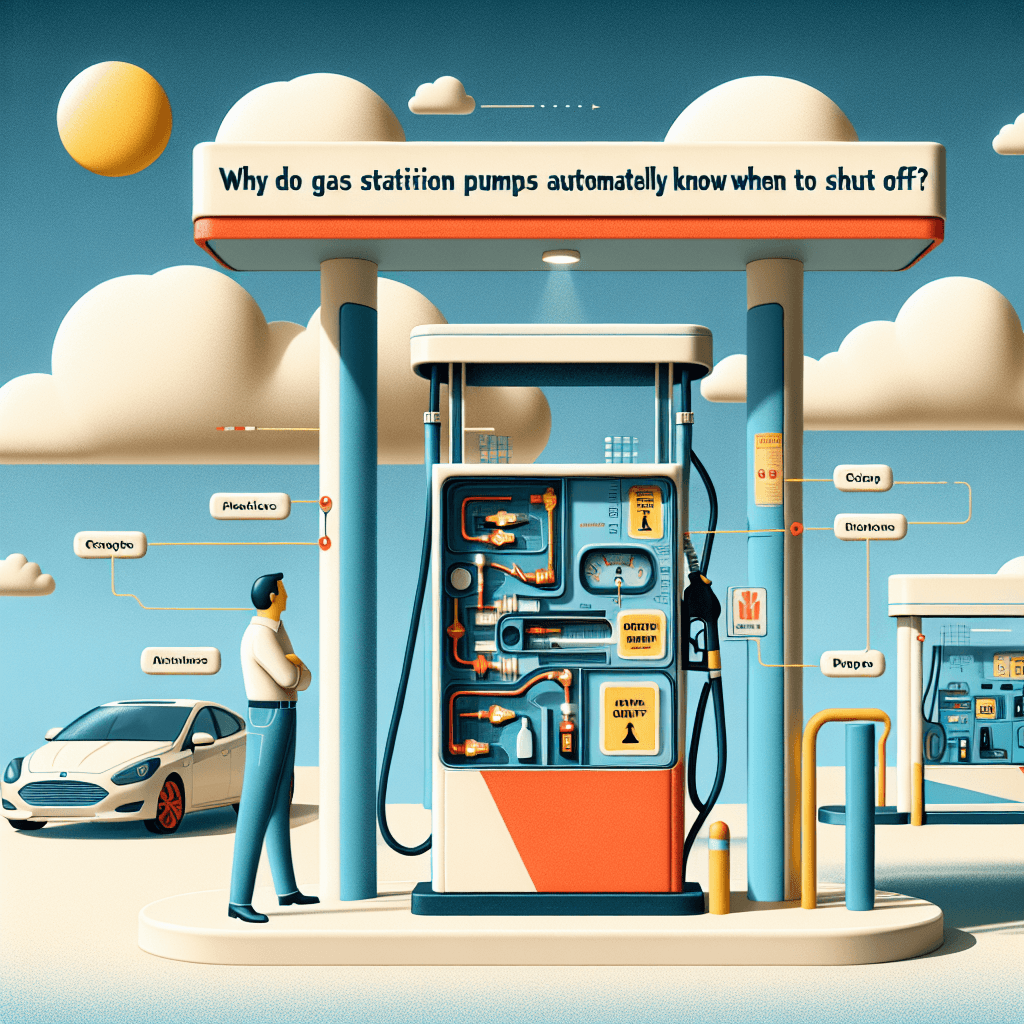
Why do gas station pumps automatically know when to shut off
It’s not a digital sensor, but a surprisingly simple mechanical trick involving a puff of air that prevents a messy overfill. Discover the ingenious physics hiding inside the nozzle that you use every week.

Too Long; Didn't Read
A small tube in the nozzle tip sucks in air. When gas from your full tank covers the tube, it blocks the airflow, causing a pressure change that mechanically trips a shut-off valve in the handle.
The Clever Trick Behind the Click: Why Do Gas Station Pumps Automatically Know When to Shut Off?
We’ve all experienced it. You’re filling up your car, mindlessly watching the numbers on the pump climb, when you hear it—that sudden, satisfying click as the handle pops and the flow of gasoline stops. It’s a universal signal that your tank is full. But have you ever stopped to wonder how it works? It seems almost magical that a simple pump nozzle knows the precise moment to shut off, preventing a messy, dangerous, and expensive overfill. The truth isn’t magic, but rather a brilliant piece of mechanical engineering that relies on a fundamental principle of physics. This post will demystify the clever process that allows gas pumps to know exactly when your tank is full.
It's Not Magic, It's Physics: Introducing the Venturi Effect
Contrary to what many people assume, there isn't a complex electronic sensor communicating with your car. The automatic shut-off mechanism is entirely mechanical, and its genius lies in its simplicity. The hero of this story is a scientific principle known as the Venturi effect.
First described by Italian physicist Giovanni Battista Venturi in the 18th century, the Venturi effect states that when a fluid (like air or a liquid) flows through a constricted section, or a "choke point," its speed increases while its pressure decreases.
Think about putting your thumb over the end of a garden hose. The water sprays out faster because you've narrowed the opening. The Venturi effect is the same core idea, but the crucial part for a gas nozzle is the drop in pressure that accompanies this increase in speed. This simple principle is the engine that drives the entire shut-off mechanism.
A Look Inside the Nozzle
To understand how the Venturi effect stops the flow of gas, we need to look at the key components inside the nozzle's spout:
- The Main Fuel Spout: This is the large tube that gasoline flows through into your car's tank.
- A Tiny Sensing Tube: Running parallel to the main spout is a much smaller tube. It has a small opening right at the very tip of the nozzle.
- A Diaphragm and Valve: Inside the pump handle, this sensing tube is connected to a flexible diaphragm, which is linked to a set of levers and a poppet valve that controls the main flow of fuel.
These parts work together in a delicate, pressure-based balancing act.
How it Works: From Flow to Click
The automatic shut-off process is a beautiful sequence of cause and effect. Here’s how it unfolds step-by-step:
- Steady Airflow: When you squeeze the trigger, gasoline rushes through the main spout. At the same time, the flow of gasoline through a Venturi chamber inside the nozzle creates a low-pressure area. This low pressure creates a gentle suction, pulling a steady stream of air in through the small sensing tube at the tip of the nozzle. As long as this air is flowing freely, the pressure on the diaphragm remains stable, and the main valve stays open.
- The Tank Fills Up: As the gasoline level in your car's tank rises, it eventually reaches the tip of the nozzle spout.
- The Sensing Tube is Blocked: The rising liquid gasoline covers the small opening of the sensing tube, blocking the path for air to enter.
- A Sudden Vacuum is Created: With the air supply cut off, the suction from the Venturi effect instantly creates a vacuum inside the sensing tube. This sudden and dramatic drop in pressure pulls hard on the flexible diaphragm inside the handle.
- The Click! The diaphragm flexes inward, tripping the lever mechanism connected to the main fuel valve. This action releases the trigger handle and snaps the valve shut, immediately stopping the flow of gasoline. This entire mechanical chain reaction is what produces that familiar click.
This same system is why a pump might shut off prematurely if fuel splashes back or if you hold the nozzle at an unusual angle. Anything that momentarily blocks that tiny sensing hole will trick the system into thinking the tank is full.
Conclusion
The automatic shut-off mechanism in a gas station pump is a testament to brilliant, reliable engineering. It doesn't rely on batteries, wires, or digital sensors, but on a simple, elegant application of fluid dynamics. By harnessing the Venturi effect, this mechanical system provides a crucial safety feature that prevents dangerous spills, protects the environment from harmful fumes, and saves drivers from wasting fuel. So, the next time you’re at the pump and hear that satisfying click, you’ll know it’s not just a sound—it’s the sound of clever physics hard at work, keeping your fueling experience safe and efficient.


