
Why do most bricks have a large rectangular indentation on top
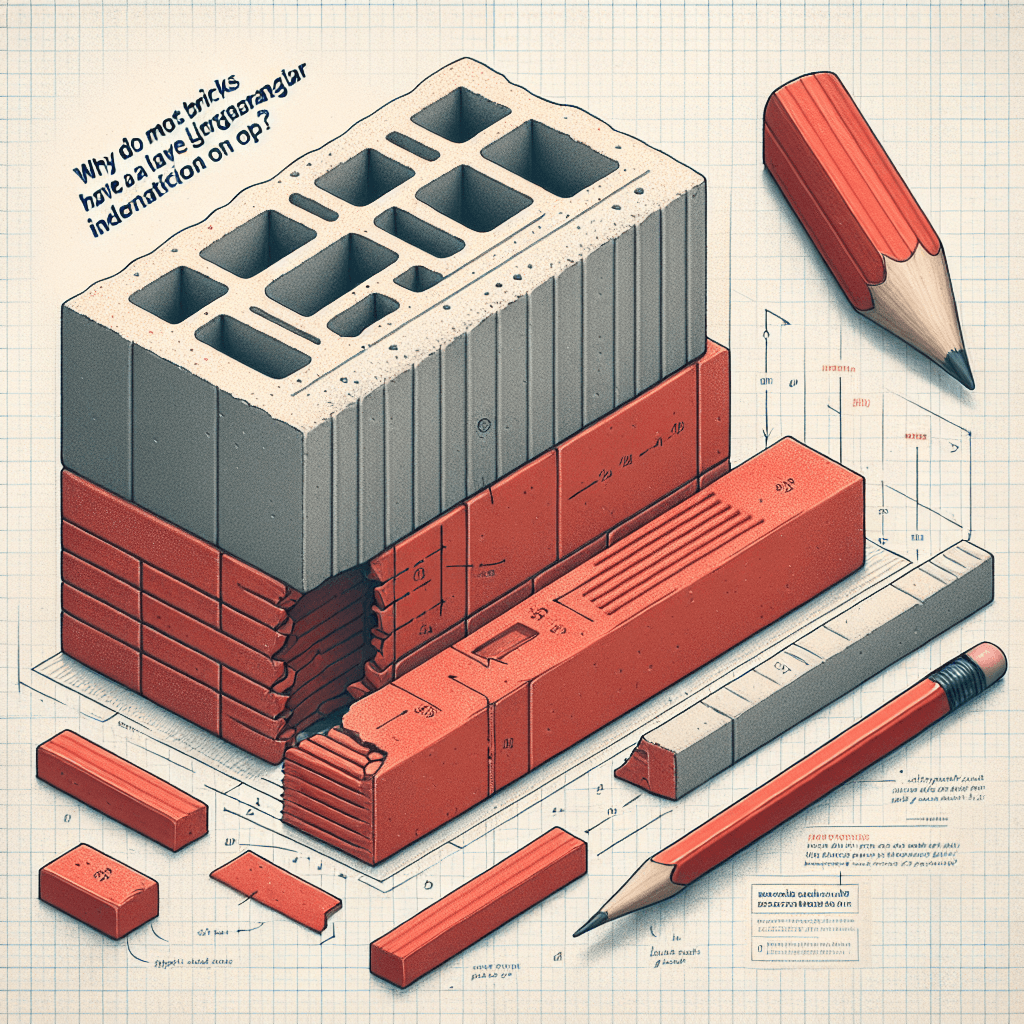
That rectangular dent isn't a mistake or just to save clay—it's a brilliant engineering feature, known as a 'frog,' that's crucial for holding the entire wall together.

Too Long; Didn't Read
The indentation in a brick, called a frog, makes it lighter and helps it fire evenly. Most importantly, it fills with mortar to lock the bricks together, creating a much stronger wall.
The Mason's Secret: Why Do Most Bricks Have a Large Rectangular Indentation on Top?
Walk past any construction site or historic building, and you'll see them: stacks of familiar, reddish-brown blocks. But have you ever paused to look closely at a single brick? If you have, you've likely noticed the large, rectangular depression on its top surface. This feature is so common that we often overlook it, assuming it's just part of the design. However, this indentation is far from decorative. It’s a crucial piece of engineering with a specific name and several vital functions that have been perfected over centuries. This blog post will delve into the "hole" story, explaining why this simple feature is fundamental to creating strong, durable, and efficient structures.
It Has a Name: Introducing the "Frog"
That rectangular indentation in a brick has an official name: the frog. While the exact origin of the term is debated among historians and masons, a popular theory suggests it relates to the term "frog" used to describe the V-shaped indentation on a horse's hoof, which it vaguely resembles.
Regardless of its name's origin, the frog is a deliberately designed feature, pressed into the wet clay before the brick is fired in a kiln. It is not an imperfection or a random byproduct of manufacturing; it is a critical element with multiple benefits.
The Key to a Stronger Bond
The primary and most important reason for the frog is to create a stronger, more reliable bond between bricks. When a bricklayer lays a course of bricks, they spread a layer of mortar, and the next brick is pressed down on top.
The frog fills with mortar, creating what is known as a mortar key. This hardened "key" of mortar locks the bricks together vertically, significantly increasing the wall's resistance to lateral or shear forces—think of pressure from wind, ground movement, or other sideways loads. Without this key, the bond would rely solely on the adhesion between the flat surfaces of the mortar and brick, which is far weaker. This simple interlocking mechanism transforms a stack of individual units into a cohesive, monolithic structure.
More Than Just Strength: Other Practical Benefits
While creating a superior bond is the frog's main job, it offers several other significant advantages that make the brick-making and building processes more efficient.
1. Lighter Weight
Removing a portion of the clay to create the frog makes each brick lighter. While it may only be a small percentage of the total weight, this reduction has a cumulative effect:
- For the Mason: A lighter brick reduces physical strain and fatigue for bricklayers over a long workday, potentially increasing productivity and safety.
- For Transportation: Lighter bricks mean lower shipping costs, as more units can be transported per load without exceeding weight limits.
2. A More Efficient Firing Process
Bricks are made by firing molded clay at extremely high temperatures in a kiln. This process needs to be precise to create a strong, durable product. The frog helps with this in two ways:
- It allows heat to penetrate the brick more evenly and thoroughly during firing.
- This even heating reduces the risk of the brick cracking, warping, or developing a "black heart" (an under-fired core), leading to a higher quality product with less waste.
3. A Place for the Brand
Finally, the frog serves as a convenient and protected space for the brick manufacturer to stamp their name, logo, or insignia. This traditional practice of branding allows for the identification of the brick's origin, which can be useful for historical purposes or for matching bricks during restoration projects.
Conclusion: The Unsung Hero of Masonry
So, the next time you see a brick, you'll know that the simple indentation on its top is much more than a cosmetic feature. That frog is a testament to clever, time-tested engineering. It is the key to creating a powerful structural bond, an aid to more efficient manufacturing and transport, and a subtle nod to the craftsmanship of its maker. It's a perfect example of how in construction and engineering, even the smallest, most overlooked details play a critical role in the strength and longevity of the structures we rely on every day. That humble frog is, in many ways, the unsung hero of the brick wall.


