
Why do most wine bottles have a deep, bowl-shaped indentation called a punt at the bottom
That deep, mysterious crater at the bottom of your wine bottle isn’t just a convenient place for your thumb—it’s a centuries-old design with a hidden, vital purpose. Discover the surprising science and history behind the "punt" and why it’s about far more than just aesthetics.

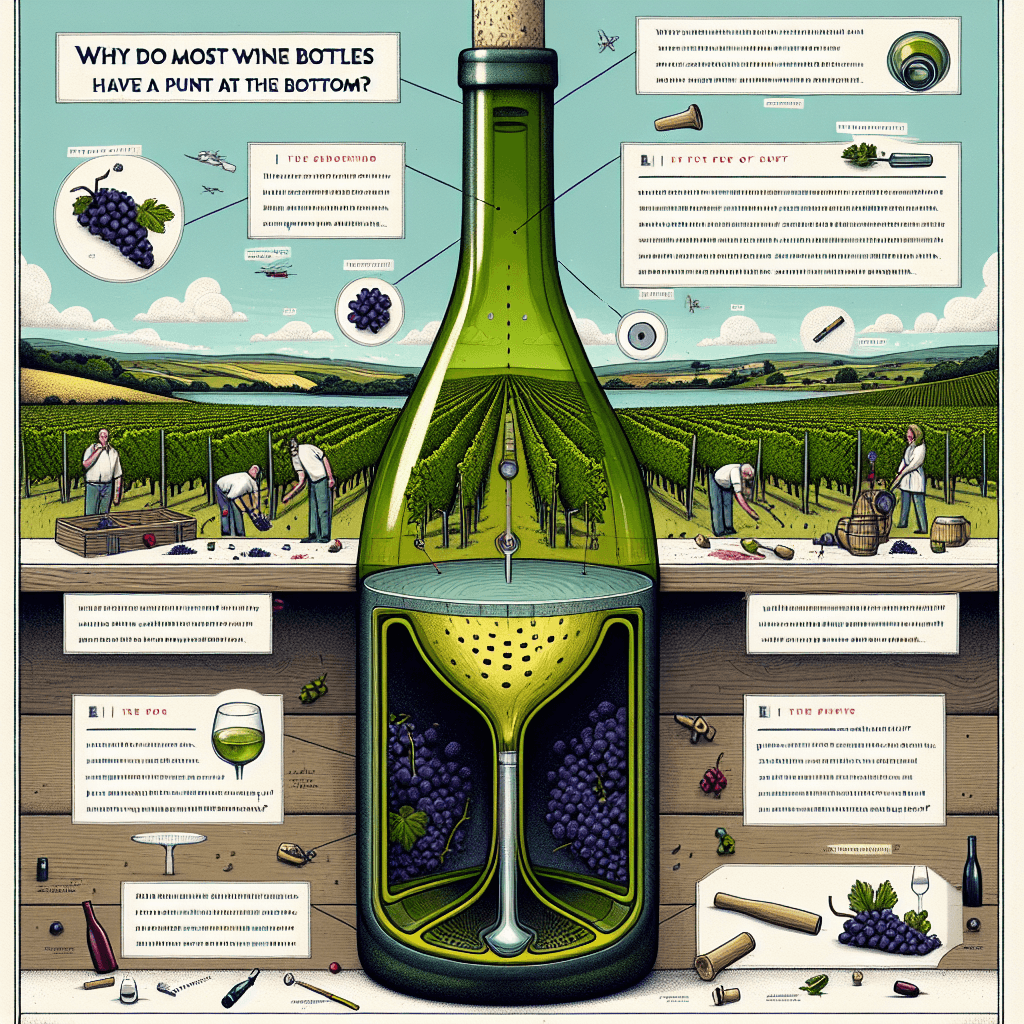
Too Long; Didn't Read
The punt at the bottom of a wine bottle serves several purposes: it provides structural integrity to withstand pressure, helps the bottle stand upright by avoiding a rounded base, traps sediment away from the pour, and offers a convenient grip for serving. Historically, it was a byproduct of manual glassblowing techniques.
The Mystery of the Punt: Why Do Most Wine Bottles Have a Deep, Bowl-Shaped Indentation at the Bottom?
Have you ever reached the end of a fine bottle of Cabernet Sauvignon and noticed that your thumb fits perfectly into a deep, conical curve at the base? This distinctive feature is known as a "punt," and it has sparked countless debates at dinner tables for centuries. Some believe it is a clever trick to make a bottle look fuller than it is, while others argue it is essential for the wine's aging process. In reality, the answer is a fascinating blend of historical necessity, structural engineering, and modern tradition. This post will explore the multifaceted reasons why most wine bottles have a deep, bowl-shaped indentation called a punt at the bottom.
The Historical Roots: Hand-Blown Glass Craftsmanship
To understand the punt, one must look back to the era before industrial manufacturing. Historically, wine bottles were individual works of art, hand-blown by master glassmakers. During the blowing process, a tool called a "pontil" (or punty) was used to hold the hot glass. When the rod was removed, it often left a sharp, jagged scar of glass at the base of the bottle.
If the bottom were left flat, this protrusion would make the bottle unstable, causing it to wobble or even tip over on a flat surface. Glassblowers discovered that by pushing the base of the bottle upward into the vessel, they could create a stable, circular rim for the bottle to rest on while tucking the sharp "pontil mark" safely away from the table. While modern manufacturing has eliminated the need for manual glassblowing, the shape has persisted as a hallmark of wine bottle design.
Structural Integrity and Pressure Management
One of the most critical functions of the punt relates to the physics of pressure. This is particularly evident in the production of sparkling wines, such as Champagne. According to glass engineering principles, a curved surface is significantly stronger than a flat one when subjected to internal pressure.
- Pressure Distribution: Champagne bottles can contain up to 90 pounds of pressure per square inch. A flat bottom would be a structural weak point, prone to bowing outward or shattering. The arched shape of the punt distributes this internal pressure evenly against the walls of the bottle.
- Manufacturing Durability: Even for still wines, the punt adds structural "girth." It makes the bottle more resistant to the minor shocks and bumps that occur during shipping and handling.
Practical Benefits for Serving and Aging
Beyond its history and strength, the punt serves several practical purposes for both the winemaker and the consumer.
Sediment Collection
As many red wines age, they naturally develop sediment—solid particles of tannins and tartrates. A flat-bottomed bottle allows these solids to stir up easily when the bottle is moved. However, the ring-shaped "trough" created by a punt allows sediment to settle in a concentrated area at the base. This makes it much easier to decant the wine cleanly, as the solids are less likely to flow into the neck of the bottle during pouring.
The Sommelier’s Grip
In the world of professional hospitality, the punt serves an ergonomic function. A sommelier or server often places their thumb in the punt while supporting the rest of the bottle with their fingers. This "sommelier grip" allows for a steady, controlled pour while ensuring the server’s hand does not warm the wine through the glass.
Faster Cooling
The indentation increases the total surface area of the glass. For white, rosé, and sparkling wines that require chilling, a larger surface area allows the cold temperature of an ice bucket to transfer to the liquid more efficiently, reaching the desired serving temperature faster than a flat-bottomed bottle might.
Marketing, Perception, and Modern Utility
While the technical necessity of the punt has diminished with modern glass-making technology, it remains a powerful tool for branding. In the wine industry, there is a long-standing consumer perception that a deeper punt indicates a higher-quality, more expensive wine. While this is not scientifically true—excellent wines come in flat-bottomed bottles every day—many premium producers continue to use deep punts to satisfy these market expectations. Additionally, the punt provides a convenient "locking" mechanism for automated packing machinery, allowing bottles to be stacked more securely.
Conclusion
The presence of a punt is more than just a quirky design choice; it is a legacy of ancient craftsmanship that continues to offer functional benefits today. From providing structural stability against the intense pressure of carbonation to acting as a reservoir for sediment in aged vintages, the punt remains a vital component of wine culture. While modern technology could easily produce perfectly flat-bottomed bottles for every variety, the punt persists as a marriage of form and function. Next time you pour a glass, take a moment to appreciate that deep indentation—it is a small piece of engineering history resting right in the palm of your hand.


