
Why do our brains often hear missing lyrics in a song's instrumental break
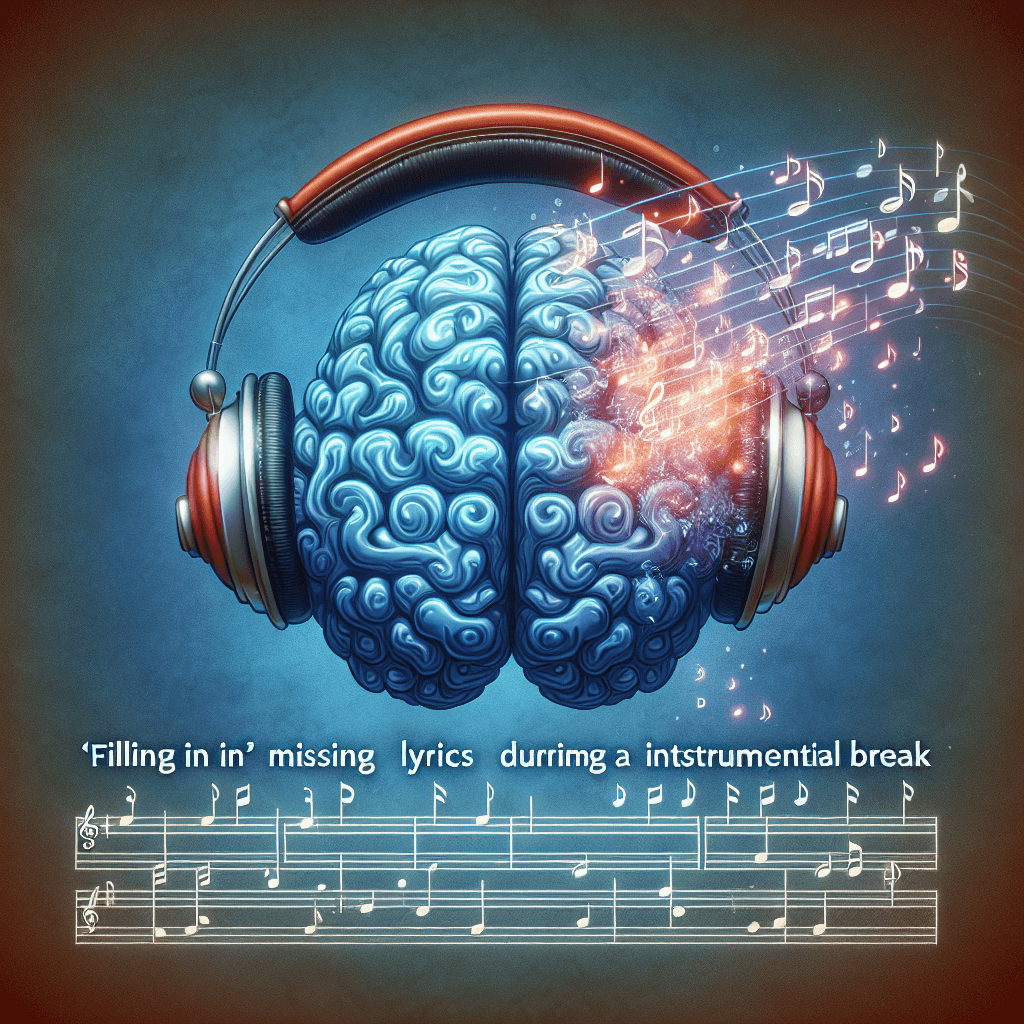
Ever sworn you could still hear the vocals during a guitar solo? That’s not just your memory playing tricks; it’s a powerful auditory illusion, and we’re about to explain how your brain pulls it off.

Too Long; Didn't Read
TLDR: Your brain is a prediction machine that loves patterns. When you hear the instrumental of a familiar song, your brain expects the lyrics and automatically fills in the blank by playing them from memory in your head.
Blog Post Title: The Ghost in the Music: Why Do Our Brains Often Hear Missing Lyrics in a Song's Instrumental Break?
Have you ever listened to an instrumental or karaoke version of a song you know by heart, only to find you can still "hear" the singer's voice perfectly in your head? It’s a common yet fascinating phenomenon where your brain seems to play a phantom vocal track over the music. This isn't just a quirk of your imagination; it's a powerful demonstration of how your brain processes music and memory. This experience, often called "auditory imagery" or the "phantom words" effect, reveals the incredible predictive power of our minds. This post will explore the neuroscience and psychology behind why our brains insist on filling in the blanks, turning a simple instrumental into a full-fledged auditory illusion.
The Brain as a Prediction Machine
At its core, your brain is a highly efficient prediction engine. It constantly uses past experiences to anticipate what will happen next, which helps us navigate the world with less cognitive effort. This process is known as predictive coding. When you listen to a favorite song dozens or even hundreds of times, your brain builds an incredibly detailed and robust mental model of it. This model includes not just the melody and rhythm but the timbre of the singer’s voice, the cadence of the lyrics, and the emotional weight of each line.
When you then hear an instrumental version, the music provides a strong set of cues that activate this entire model. Your brain predicts the lyrics are coming, and when they don't materialize, its prediction is so powerful that it generates the experience of hearing them anyway. It's essentially filling in the missing data based on a high-confidence pattern it has already learned.
Your Inner Jukebox: Auditory Imagery and the Auditory Cortex
The experience of "hearing" these missing lyrics is a form of auditory imagery—the ability to hear sounds in your mind without any external sound source. What’s truly remarkable is what happens in the brain during this process. Neuroimaging studies, including research from Dartmouth College, have shown that the very same part of the brain that processes actual, external sound—the auditory cortex—is also active when we imagine sounds.
When a familiar instrumental starts playing, it acts as a trigger. Your brain recognizes the musical pattern and cues the auditory cortex to "play back" the associated vocal track from memory. You aren't just remembering the words; your brain is simulating the experience of hearing them. This neural overlap explains why the phantom lyrics can feel so vivid and real.
Implicit Memory: The Automatic Connection
The final piece of the puzzle lies in how we store musical memories. The connection between a song's melody and its lyrics is often stored as an implicit memory. Unlike explicit memory (like recalling a fact for a test), implicit memory is unconscious and automatic. It's the same system that allows you to ride a bike or type on a keyboard without consciously thinking about each movement.
Through repeated listening, the melody and lyrics of a song become inextricably linked in this implicit system. This connection is so strong that one element automatically triggers the other.
Here’s how it works:
- The Cue: The instrumental provides the familiar musical cue.
- The Activation: This cue activates the deeply ingrained memory network associated with the song.
- The Result: The brain automatically retrieves the linked lyrics, creating the perception of hearing them even though they are absent. It’s an effortless, non-conscious process, much like a reflex.
Conclusion: A Symphony of Prediction and Memory
So, the next time you hear a ghost-like voice in a song’s instrumental break, you’re not just imagining things. You are experiencing a beautiful symphony of complex brain functions working in perfect harmony. It’s a testament to your brain's remarkable efficiency, combining predictive coding, vivid auditory imagery, and the automatic power of implicit memory to create a complete and seamless perceptual experience. This phenomenon isn't a glitch in your hearing; it's a feature of your brain's incredible ability to use the past to enrich your present reality. It highlights the profound and deeply personal connection we form with the music we love.


