
Why do sealed snack bags inflate during an airplane flight
That bag of chips puffing up like it's about to pop isn't just a mid-flight curiosity; it's a fascinating, edible experiment in atmospheric pressure.

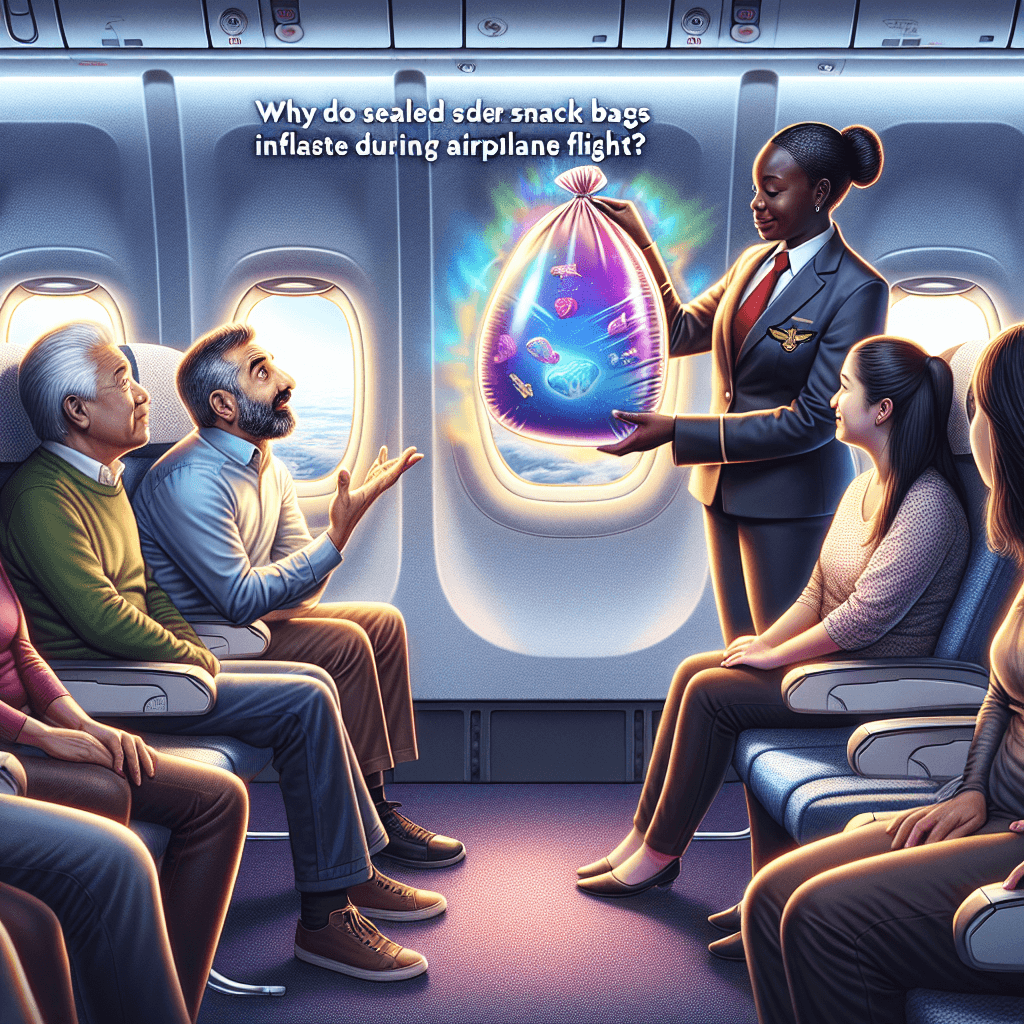
Too Long; Didn't Read
TLDR: The air pressure inside the snack bag is higher than the lower air pressure in the airplane cabin, causing the air trapped inside the bag to expand and inflate it.
Blog Post Title: Cabin Pressure and Puffy Chips: The Science Behind Why Sealed Snack Bags Inflate During an Airplane Flight
Introduction
Have you ever settled into your airplane seat, reached into your carry-on for a mid-flight snack, and noticed that your bag of potato chips has inflated like a small, crinkly pillow? It’s a common and often amusing sight for air travelers. This isn't a packaging defect or some strange high-altitude magic; it's a perfect real-world demonstration of a fundamental principle of physics. This everyday occurrence provides a fascinating glimpse into the invisible forces at play when we travel thousands of feet above the Earth. This post will unpack the science behind your puffy snack bag, explaining exactly why it expands and what it tells us about the environment inside an airplane cabin.
Main Content
The Science of Air Pressure: Ground vs. Sky
To understand why your snack bag inflates, we first need to talk about air pressure. Think of air pressure as the weight of the atmosphere pushing down on everything.
- At Sea Level: On the ground, the column of air above you is taller and denser, meaning there are more air molecules packed into a given space. This creates higher atmospheric pressure. When your snack bag is sealed at the factory, it traps this high-pressure, sea-level air inside.
- At Cruising Altitude: As an airplane ascends to 30,000-40,000 feet, the surrounding air becomes much thinner, and the air pressure drops significantly.
To keep passengers safe and comfortable, airplane cabins are pressurized. However, they are not pressurized to match sea-level conditions. Instead, the cabin pressure is typically maintained at an equivalent of 6,000 to 8,000 feet in altitude. While this is perfectly safe for breathing, it means the air pressure inside the cabin is still considerably lower than the pressure on the ground where your chips were bagged.
Meet Boyle's Law: The Physics Behind the Puff
This pressure difference is where the magic happens, and it’s all explained by a 17th-century principle known as Boyle's Law. In simple terms, Boyle's Law states that for a gas at a constant temperature, its pressure and volume are inversely related.
As external pressure decreases, the volume of the gas increases.
Let’s apply this to your bag of chips:
- On the Ground: The bag contains a fixed amount of air (and often nitrogen gas, which we'll get to later) at high, sea-level pressure. The high pressure of the air outside the bag pushes inward, balancing the pressure of the air inside the bag.
- In the Air: As the plane climbs, the cabin pressure drops. Now, the higher-pressure air trapped inside your snack bag is pushing outwards with much more force than the lower-pressure cabin air is pushing inwards.
- The Result: To equalize this pressure imbalance, the air inside the bag expands, pushing against the flexible packaging and causing it to inflate. The gas inside is simply taking up more space because there's less external force squeezing it.
It's the same reason your plastic water bottle might make a "hiss" when you open it mid-flight or look crunched in on itself after you land.
What’s Actually in the Bag?
Interestingly, that puffiness isn't just from regular air. To keep chips fresh and prevent them from being crushed into dust during shipping, manufacturers use a technique called "modified atmosphere packaging." They flush the bags with an inert gas, usually nitrogen, before sealing them.
Nitrogen serves two key purposes:
- Freshness: It displaces oxygen, which causes the oils in snacks to oxidize and go stale.
- Cushioning: It provides a protective cushion, preventing breakage.
This nitrogen gas behaves just like any other gas and is subject to Boyle's Law. As the external pressure in the cabin drops, the nitrogen inside the bag expands, contributing to that puffed-up appearance.
Conclusion
So, the next time you see your bag of pretzels or chips swell up during a flight, you can confidently explain the science behind it. It's not a mystery, but a simple and elegant display of physics. The phenomenon is a direct result of the pressure difference between the air sealed in the bag at sea level and the lower-pressure air maintained inside the airplane cabin at cruising altitude, all governed by the principles of Boyle's Law. It’s a powerful reminder that even in our modern world of air travel, we are constantly interacting with the fundamental laws of nature. That puffy snack bag isn't just a snack; it's a science experiment at 30,000 feet.


