
Why do some ancient amphitheaters have near-perfect acoustics without modern technology
How did ancient engineers, with nothing but stone and geometry, create massive open-air theaters where an unamplified whisper could captivate thousands? The answer lies in a forgotten science carved directly into the seats.

Too Long; Didn't Read
TLDR: The near-perfect acoustics of ancient amphitheaters result from their steep, semi-circular design, which focuses sound and prevents echoes. The stone seating acts as a natural acoustic filter, reflecting high-frequency voices while absorbing low-frequency crowd noise, ensuring clarity for the entire audience.
Sound Secrets of the Ancients: Why do some ancient amphitheaters have near-perfect acoustics without modern technology?
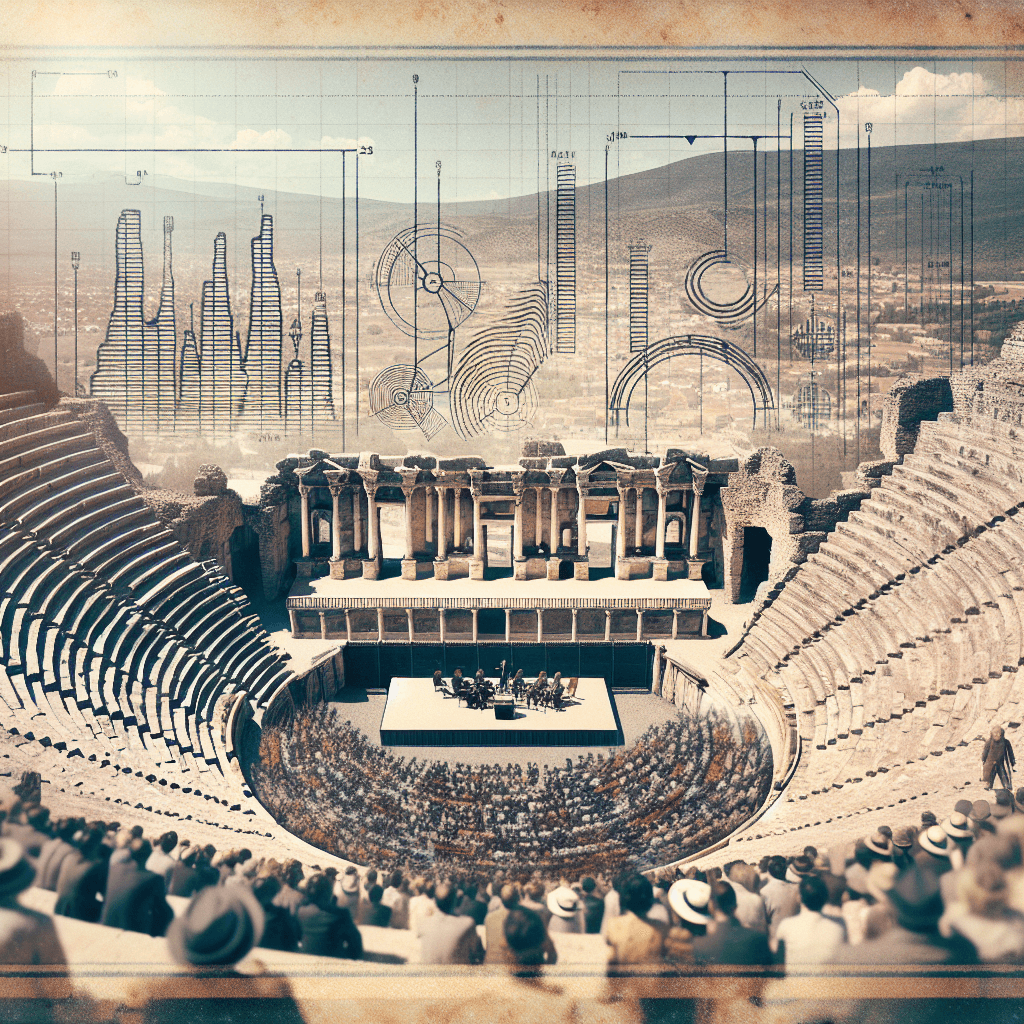
Imagine sitting in the highest row of a vast, 2,000-year-old stone theater. Far below, on a central stage, a single actor speaks without a microphone, yet you can hear every word with perfect clarity. This isn't a scene from a fantasy novel; it's a reality in ancient Greco-Roman amphitheaters like the one at Epidaurus, Greece, which is renowned for its stunning acoustic properties. How did ancient architects, without the aid of digital modeling or modern sound equipment, create spaces with such breathtaking auditory fidelity? The answer lies not in magic, but in a masterful understanding of physics and design. This post will uncover the architectural principles and material science that give these ancient marvels their near-perfect acoustics.
The Genius of Geometry: Shape and Slope
The most immediate and crucial factor in the acoustic success of ancient theaters is their deliberate and precise geometry. The design wasn't just for accommodating large crowds; it was an integral part of the sound system.
The semi-circular, tiered seating arrangement, known as the cavea, is the foundation of this acoustic brilliance. This shape ensures that spectators are positioned in a way that minimizes the distance sound has to travel to reach them. More importantly, the steep incline of the seating is critical. Each row is significantly higher than the one in front of it, providing a clear, direct line of sound from the performance area (the orchestra) to every single audience member. This prevents the sound waves from being absorbed or blocked by the people in the rows below, a problem that can muffle sound in more gently sloped modern venues.
More Than Just Stone: The Science of Surfaces
While the shape provided the blueprint, the choice of materials acted as the amplifier and filter. The theaters were almost exclusively built from stone, typically dense limestone or marble. These hard, non-porous surfaces are excellent at reflecting sound waves with minimal absorption, ensuring the performers' energy wasn't lost to the structure itself.
However, recent research has uncovered an even more subtle acoustic trick. A groundbreaking study from the Georgia Institute of Technology focused on the theater at Epidaurus and revealed a phenomenon known as the "seat-corrugation effect." Scientists discovered that the rows of stone seats, with their uniform, corrugated shape, act as a natural acoustic filter.
- Filtering Low Frequencies: The seats effectively suppress low-frequency sounds, such as the murmurs of the crowd or the rustling of wind. This is the background noise that can often interfere with a performance.
- Reflecting High Frequencies: At the same time, the stone surfaces reflect the higher-frequency sounds of the human voice, allowing them to travel with remarkable clarity all the way to the back rows.
Essentially, the seating itself cleans up the sound, ensuring the performers' voices are heard above any potential distractions.
A Symphony of Silence: Minimizing Interference
The final piece of the acoustic puzzle was controlling the environment. Ancient architects were masters of site selection, often building their theaters into natural hillsides. This served two purposes: it provided a natural structural foundation for the steep seating and, crucially, it shielded the theater from external winds and the noise of nearby settlements.
Furthermore, the open-air design, which might seem counterintuitive, prevents the uncontrolled reverberation and echoes that plague many enclosed halls. Without walls or a ceiling to bounce sound around chaotically, the spoken word could travel directly from the stage to the audience's ears, crisp and unadulterated. The combination of a quiet, shielded location and an open-air plan created an ideal canvas for pristine sound.
Conclusion
The near-perfect acoustics of ancient amphitheaters are a testament to brilliant, empirical engineering. It was not a single feature but a harmonious combination of factors—the focusing power of the semi-circular shape, the unobstructed sound path created by the steep slope, the reflective quality of the stone, and the ingenious filtering effect of the seats themselves. These ancient builders didn't have computers, but they possessed a profound, practical knowledge of how sound behaves in a physical space. Their work serves as a powerful reminder that sometimes the most effective solutions are born not from complex technology, but from a deep and elegant understanding of the laws of nature.


