
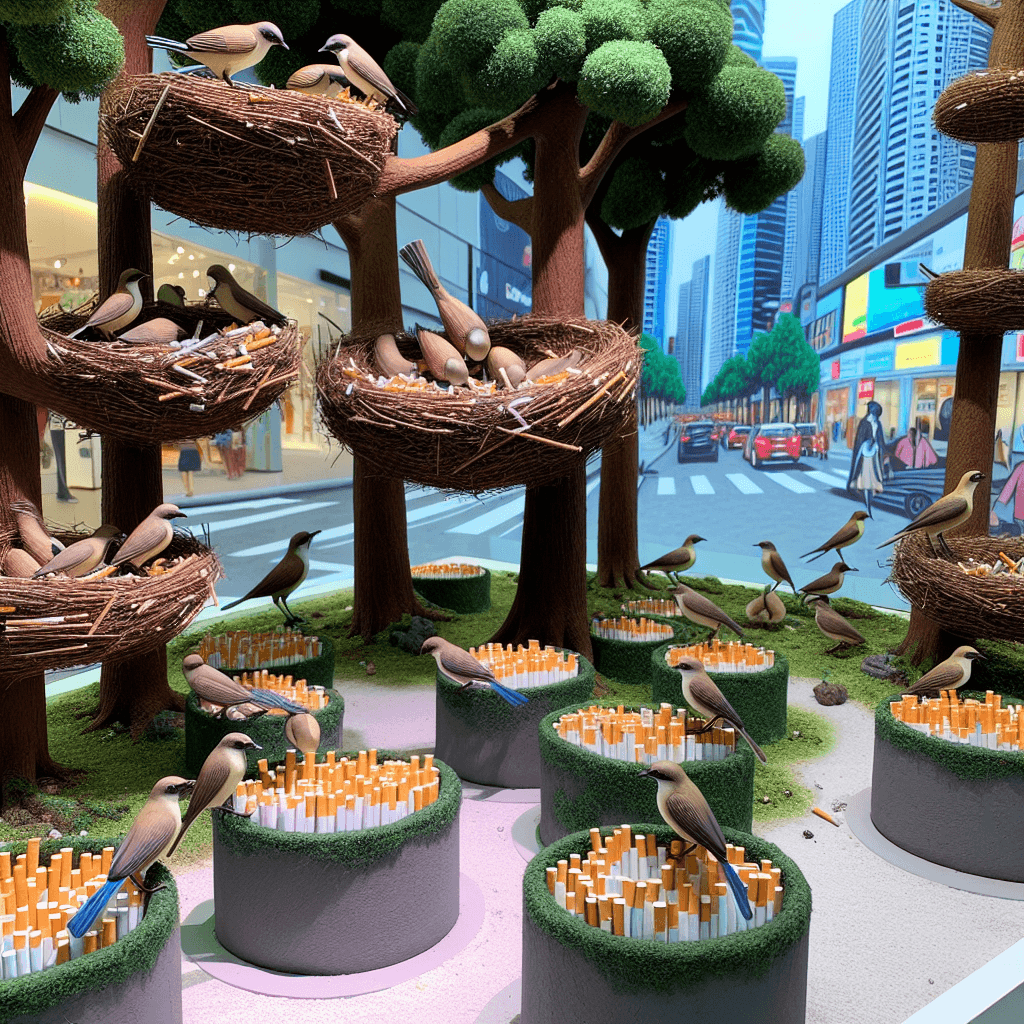
Why do some birds line their nests with discarded cigarette butts
This isn't just a grim sign of pollution; it's a shockingly clever survival tactic that turns our toxic trash into a powerful pesticide for the nest.

Too Long; Didn't Read
TLDR: Birds use cigarette butts to line their nests because the nicotine and other chemicals act as a natural pesticide, repelling parasites like mites and ticks that could harm their young.
The Smoker's Secret: Why Do Some Birds Line Their Nests with Discarded Cigarette Butts?
Have you ever walked through a city park and noticed a bird's nest woven with a strange assortment of materials? Twigs and leaves are expected, but what about string, plastic, and, most bizarrely, discarded cigarette butts? It's a common sight in urban areas, prompting an intriguing question. This isn't just a case of birds making do with available trash; it's a fascinating and complex survival strategy. This blog post will delve into the science behind this peculiar behavior, exploring why these feathered architects deliberately choose toxic tobacco waste to build their homes and the surprising trade-offs involved.
A Chemical Shield Against Pests
The primary reason birds use cigarette butts is for a remarkable form of self-medication. While they are a symbol of human pollution, smoked cigarette filters contain a potent chemical cocktail, with the most important ingredient being nicotine. For tiny parasites like mites and fleas, nicotine is a powerful neurotoxin.
Research led by ecologists at the National Autonomous University of Mexico has shed significant light on this phenomenon. Their studies on house sparrows and house finches revealed a clear correlation: nests containing more cigarette butt fibers had significantly fewer ectoparasites. These pests can be devastating to young birds, feeding on their blood, stunting their growth, and transmitting diseases. By weaving nicotine-laced fibers into their nests, the parent birds are effectively fumigating their homes. This chemical defense creates a safer, healthier environment for their vulnerable chicks, increasing their chances of survival. It's a prime example of how wildlife cleverly adapts to use elements from human-dominated landscapes to their advantage.
The Added Bonus: Insulation and Comfort
Beyond their chemical properties, cigarette butts offer physical benefits as well. The material used in most cigarette filters is cellulose acetate, a type of plastic fiber. These fibers are soft, pliable, and excellent insulators.
For a bird, building a well-insulated nest is crucial for maintaining the optimal temperature for incubating eggs and keeping hatchlings warm. The thousands of tightly packed fibers in a single cigarette butt can be teased apart and woven into the nest structure, trapping air and providing a cozy lining. In this sense, cigarette butts serve a dual purpose: they are a potent pesticide and a high-quality insulation material, making them a uniquely valuable, if hazardous, resource for an urban bird.
The Unseen Dangers: A Toxic Trade-Off
While the anti-parasite benefits are clear, incorporating toxic waste into a home is not without risk. The same chemicals that repel parasites can also harm the birds themselves. Cigarette butts contain not only nicotine but also a host of other toxins and carcinogens, including heavy metals like arsenic, lead, and cadmium.
The consequences of this long-term exposure are a serious concern for scientists. Studies have pointed to potential negative effects, including:
- DNA Damage: Research has shown that chicks raised in nests with high concentrations of cigarette butts can exhibit signs of genotoxicity, which is damage to their genetic material.
- Developmental Issues: Direct contact with these chemicals during the most fragile stages of life—as an egg and a hatchling—could lead to developmental problems or a weakened immune system.
- Long-Term Health: The full impact of this exposure over a bird's lifetime is still not fully understood.
This presents a stark evolutionary trade-off. The birds are balancing the immediate, life-saving benefit of fending off deadly parasites against the potential for long-term health problems caused by chronic chemical exposure.
A Story of Adaptation and Pollution
The story of birds and cigarette butts is a powerful illustration of animal ingenuity in the face of a changing world. It demonstrates how species can adapt their behavior to not only survive but even thrive by co-opting the byproducts of human society. However, it also serves as a sobering reminder of the pervasive and often-unseen impact of our pollution. This behavior, while fascinating, is a direct consequence of a man-made problem. It underscores the complex and interwoven relationship between human activity and the natural world, showing us that even a flicked cigarette butt can have a profound effect on the wildlife living right outside our windows.


