
Why do some plants grow fake eggs on their leaves to trick butterflies
Forget thorns and poison—some plants have evolved a far more cunning defense. Discover the brilliant act of biological deception that convinces butterflies their nurseries are already full.

Too Long; Didn't Read
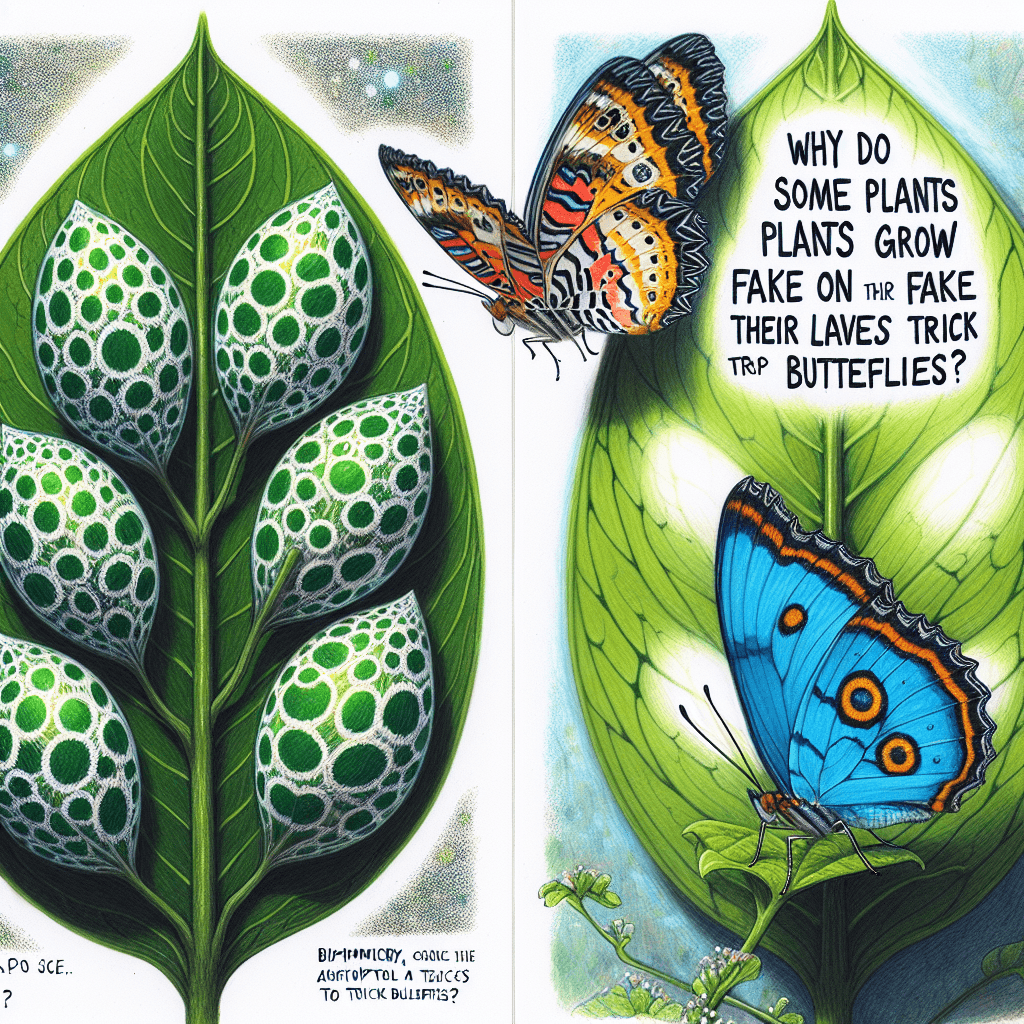
Plants grow fake-egg spots to trick butterflies into thinking a leaf is already occupied. Butterflies then lay their real eggs elsewhere, saving the plant from being eaten by caterpillars.
Nature's Clever Trick: Why Do Some Plants Grow Fake Eggs on Their Leaves to Trick Butterflies?
Have you ever looked closely at a plant and noticed something that just seemed out of place? Nature is full of incredible deceptions and intricate relationships, but one of the most fascinating is the cat-and-mouse game played between certain plants and the butterflies that wish to lay eggs on them. In a brilliant display of evolutionary strategy, some plants have learned to fight back not with thorns or toxins, but with a clever lie: they grow fake eggs on their leaves. This blog post will explore the remarkable phenomenon of egg mimicry, uncovering why this botanical bluff is such an effective defense and revealing the high-stakes drama unfolding in the plant kingdom.
The Evolutionary Arms Race
Before we dive into the deception itself, it’s important to understand the context. The natural world is the stage for a constant "evolutionary arms race" between plants and the herbivores that eat them. Plants develop defenses like chemical toxins, tough leaves, or sharp spines to avoid being eaten. In response, insects evolve ways to overcome these defenses, such as developing a resistance to the toxins or learning to navigate the physical barriers. This back-and-forth pressure forces both sides to develop increasingly sophisticated strategies for survival. Egg mimicry is one of the most elegant and cunning strategies to emerge from this ongoing battle.
The Master of Deception: The Passionflower Vine
The most well-documented and classic example of egg mimicry involves the relationship between the Passiflora (passionflower) vine and the vibrant Heliconius (longwing) butterflies. These butterflies rely exclusively on passionflower vines as host plants for their young. A female Heliconius butterfly will carefully inspect a vine before deciding where to lay her precious eggs. This is where the plant’s trick comes into play.
So, why does the presence of other eggs deter a female butterfly? The reason is brutally practical: Heliconius caterpillars are cannibals.
- Competition for Resources: A passionflower leaf can only provide so much food. If too many eggs are laid on one plant, the resulting caterpillars will face starvation.
- Avoiding Cannibalism: An older, larger caterpillar will not hesitate to eat younger, smaller ones or even unhatched eggs.
A female butterfly knows that giving her offspring a head start is crucial for their survival. Therefore, she actively seeks out fresh, unoccupied leaves to ensure her young have a safe and plentiful food source.
How the Fake Eggs Work
Understanding the butterfly's behavior, certain species of passionflower have evolved a stunning defense. They produce small, yellow or orange, bead-like structures on their leaves and stipules (the small appendages at the base of a leaf). These structures are perfect mimics of mature Heliconius eggs in size, shape, and color.
When a female butterfly lands on a leaf to inspect it, she sees these fake eggs and is fooled into thinking a competitor has already been there. Assuming the plant is a poor choice for her offspring, she moves on in search of a less "crowded" host. Research has confirmed this behavior; studies have shown that passionflower vines with more egg mimics receive significantly fewer real eggs. Scientists like Lawrence Gilbert, who pioneered this research in the 1970s, even demonstrated that physically removing the fake eggs made the plants much more attractive to butterflies.
More Than One Trick Up Its Sleeve
The passionflower’s defensive arsenal doesn’t stop at fake eggs. This co-evolutionary battle has pushed the plant to develop other clever strategies:
- Variable Leaf Shapes: Some Passiflora species have evolved to grow leaves of many different shapes on the same vine. This makes it harder for the butterfly, which searches for a specific leaf silhouette, to recognize its target host plant.
- Hiring Bodyguards: Many passionflower species have extrafloral nectaries—nectar-producing glands located outside the flowers. These glands attract ants and wasps, which are paid in sugary nectar. In return, these aggressive insects act as bodyguards, attacking and preying on any butterfly eggs or caterpillars they find on the plant.
Conclusion
The fake eggs on a passionflower leaf are far more than a simple curiosity; they are a testament to the power of evolution. This intricate deception highlights a complex, co-evolved relationship where the survival of one species is directly linked to its ability to outsmart another. It’s a silent, high-stakes game of mimicry and survival, showing that plants are not just passive organisms but active participants in the drama of life. So, the next time you see a passionflower vine, take a closer look. You might just spot the tiny yellow "eggs" that serve as a powerful reminder of nature’s endless ingenuity and the hidden stories waiting to be discovered in our own backyards.


