Why do some sea slugs steal working solar panels from the algae they eat
Meet the ocean's most ingenious thief: a tiny slug that rips the solar panels from its food and becomes a solar-powered, part-animal, part-plant hybrid.

Too Long; Didn't Read
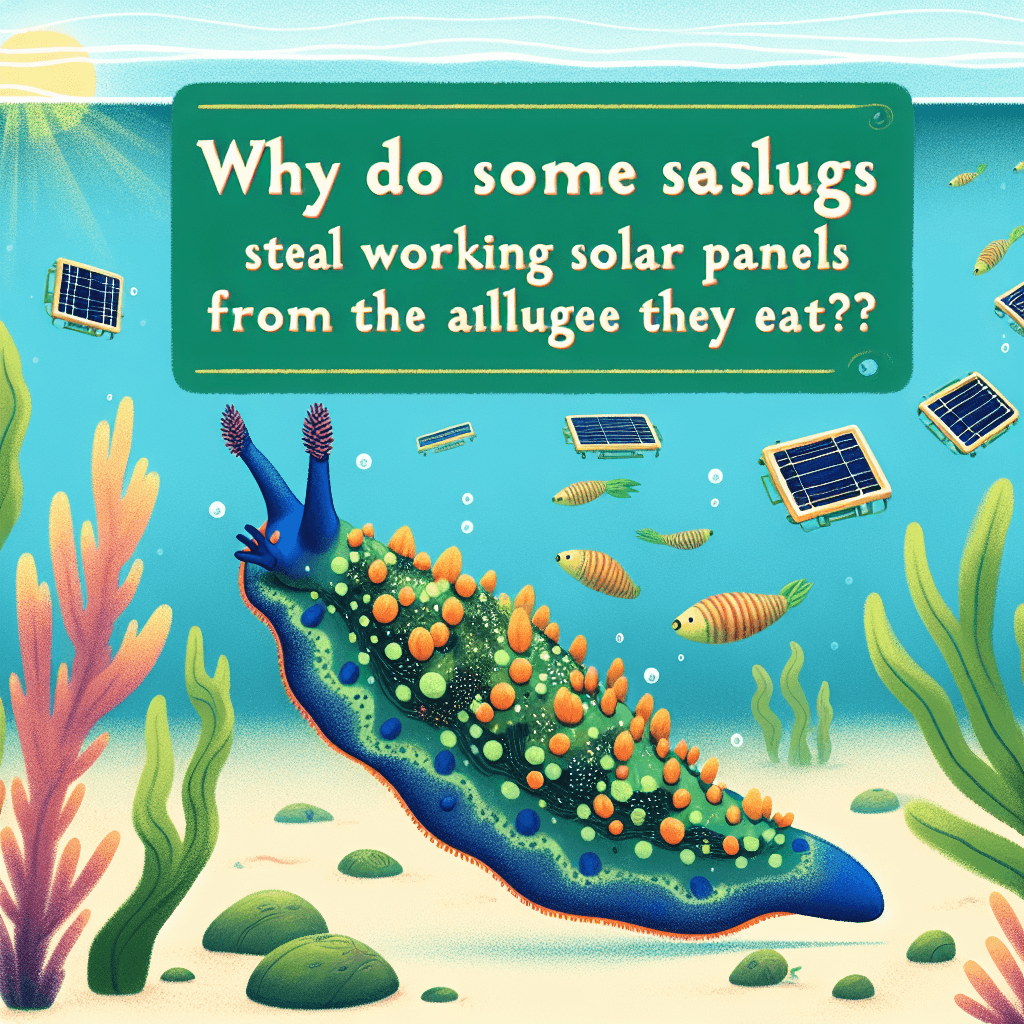
Some sea slugs eat algae and steal their chloroplasts, which act as tiny solar panels. They absorb these into their own bodies to make food from sunlight, essentially becoming solar-powered and allowing them to survive for months without eating.
The Ultimate Heist: Why Do Some Sea Slugs Steal Working Solar Panels from the Algae They Eat?
Imagine an animal that could eat a salad and then photosynthesize, generating its own food from sunlight for months. It sounds like something straight out of science fiction, but for a unique group of sea slugs, this is a reality. These remarkable creatures, often called "solar-powered sea slugs," perform one of the most incredible heists in the natural world: they steal the photosynthetic machinery—the tiny solar panels—from the algae they consume. This post will dive into the fascinating world of these slugs to uncover how and why they commit this extraordinary act of biological theft.
The "Solar Panels" in Question: A Look at Chloroplasts
Before we can understand the heist, we need to know what's being stolen. The "solar panels" in this story are microscopic organelles called chloroplasts. Found inside the cells of plants and algae, chloroplasts are the powerhouses of photosynthesis. They contain chlorophyll, the pigment that captures sunlight, and use that energy to convert carbon dioxide and water into sugars—the fuel that sustains the plant. In essence, every chloroplast is a miniature, self-contained solar power factory. For most animals, these are simply part of the meal, digested along with everything else. But for a special group of sea slugs, they are a priceless treasure.
The Grand Heist: The Process of Kleptoplasty
The act of stealing and using chloroplasts is a biological phenomenon known as kleptoplasty (from the Greek kleptes, "thief," and plastos, "formed," referring to the plastid, or chloroplast). The masters of this art belong to a group called sacoglossan sea slugs.
The process is as stunning as it is precise:
- Selective Feeding: A solar-powered sea slug, such as the famous Eastern Emerald Elysia (Elysia chlorotica), uses its specialized, sharp tooth to puncture the cell walls of algae.
- Sucking, Not Chewing: Instead of eating the whole alga, the slug sucks out the nutrient-rich cytoplasm, which is filled with chloroplasts. It’s like drinking a cellular smoothie.
- A Specialized Gut: Here’s where the magic happens. The slug’s digestive system is designed to separate the chloroplasts from the rest of the cellular soup. While the rest is digested, the chloroplasts are carefully preserved.
- Integration: The unharmed chloroplasts are absorbed and embedded into the cells lining the slug’s extensively branched digestive tract. The slug’s flattened, leaf-like body shape is no accident; it maximizes surface area, turning its entire back into a living solar panel to expose the stolen chloroplasts to sunlight.
The Motive: Why Go Through All the Trouble?
Stealing and maintaining foreign cellular machinery is a complex biological feat. So, why do these sea slugs do it? The primary driver is a brilliant survival strategy centered on food security.
-
A Built-in Food Supply: The main advantage is having a constant source of energy. By hosting a thriving community of photosynthesizing chloroplasts, the sea slug can generate its own food. When its preferred algae are scarce, the slug can simply bask in the sun and live off the sugars produced by its internal "solar farm." Some species, like Elysia chlorotica, can survive for up to nine months without eating another meal, relying solely on photosynthesis.
-
Energy on Demand: This adaptation provides a significant energetic advantage. The slug doesn't have to expend energy constantly hunting for food. Research published in scientific journals has confirmed that these stolen chloroplasts remain functional for extended periods, actively producing nutrients for their new host.
-
A Long-Lasting Snack, Not a Full Meal Plan: While incredibly effective, there is an ongoing scientific debate about whether kleptoplasty provides enough energy for the slug to live on exclusively. Some studies suggest it acts more as a crucial energy supplement—a long-lasting snack that helps the slug survive between meals—rather than a complete replacement for eating. Regardless, this ability to harness solar power gives these slugs a massive competitive edge in their marine environment.
Conclusion
The phenomenon of solar-powered sea slugs is a breathtaking example of evolution’s ingenuity. By stealing the chloroplasts from algae, these creatures blur the lines between animal and plant, creating a unique symbiotic relationship within their own bodies. This act of kleptoplasty is not just a biological curiosity; it is a sophisticated survival mechanism that allows them to thrive in environments where food may be unpredictable. It serves as a powerful reminder that the natural world is filled with extraordinary strategies and hidden wonders, proving that sometimes, the most effective way to get ahead is to steal a little sunshine.