
Why do your fingers and toes get wrinkly after soaking in water for a long time
Think your wrinkly bath-time fingers are just a sign of soaking too long? Discover the fascinating evolutionary "superpower" that transforms your hands into high-grip tools the moment they get wet.

Too Long; Didn't Read
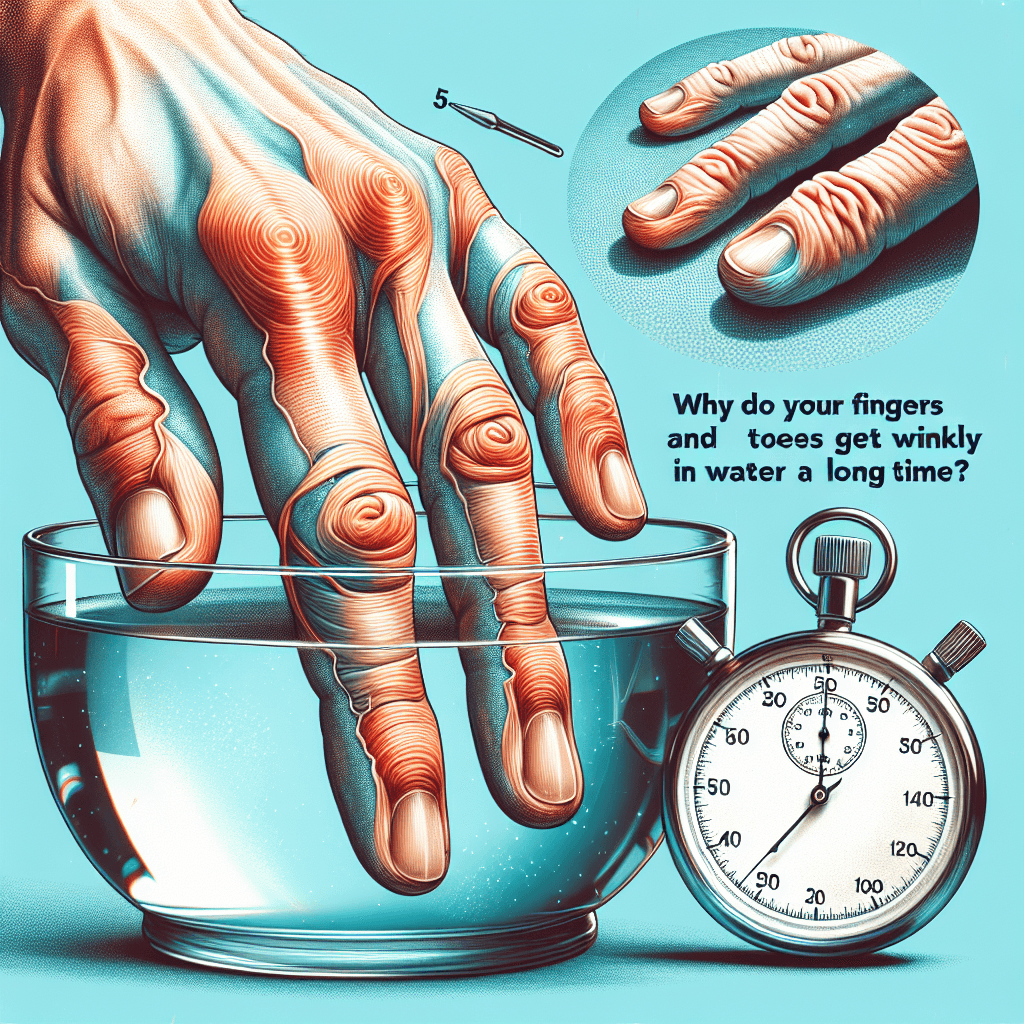
Fingers and toes wrinkle in water due to an active nervous system response that constricts blood vessels. This evolutionary trait creates ridges that act like tire treads, improving your grip on wet objects and providing better traction in slippery conditions.
The Science of Pruney Skin: Why Do Your Fingers and Toes Get Wrinkly After Soaking in Water for a Long Time?
Have you ever emerged from a long soak in the bathtub or a session at the local pool only to find that your hands and feet look decades older than the rest of your body? This phenomenon, often colloquially called "pruning," has puzzled bathers and swimmers for generations. For a long time, the common consensus was that our skin simply absorbed water and swelled up. However, modern biology has revealed a much more fascinating truth. Far from being a simple side effect of moisture, this transformation is a sophisticated biological response. This blog post explores the neurological and evolutionary reasons why do your fingers and toes get wrinkly after soaking in water for a long time, transforming our understanding of this everyday quirk from a physical flaw into a survival mechanism.
Beyond Osmosis: Debunking the Water-Logging Myth
For decades, the prevailing theory was based on osmosis. It was believed that water passed into the outer layer of the skin—the stratum corneum—causing it to swell. Because this layer is attached to the firmer tissue underneath, it had to fold to account for the increased surface area, resulting in wrinkles.
However, scientists began to question this when they observed a peculiar clinical sign: patients with certain types of nerve damage did not develop wrinkles when their hands were submerged in water. If the process were purely based on water absorption, the condition of the nervous system should not have mattered. This discovery shifted the scientific focus away from simple physics and toward the autonomic nervous system, which controls involuntary functions like heart rate and digestion.
The Role of the Autonomic Nervous System
Current research confirms that wrinkling is an active process controlled by the body’s internal wiring. When your skin stays submerged for a specific period—usually around five minutes—the nervous system triggers a response in the blood vessels of the extremities.
The Mechanism of Vasoconstriction
When your fingers and toes are soaked, the autonomic nervous system sends signals to the blood vessels to constrict. This process, known as vasoconstriction, reduces the volume of the tissue beneath the skin. As the underlying volume shrinks, the skin stays the same size but is pulled inward, creating the characteristic ridges and valleys we see.
Key factors of this process include:
- Localized Response: This reaction only occurs in the hairless (glabrous) skin of the fingers, palms, toes, and soles.
- Neurological Health: Because it is a nerve-controlled response, doctors sometimes use water immersion as a simple bedside test to evaluate the health of a patient’s autonomic nervous system.
- Precision: The wrinkles are not random; they form specific patterns that are remarkably consistent across different people.
An Evolutionary Advantage: Nature’s Rain Treads
If the brain is actively causing our skin to wrinkle, there must be a biological benefit. In 2011, evolutionary neurobiologist Mark Changizi suggested that these wrinkles act like "rain treads" on a tire. Just as the grooves in a tire channel water away to maintain contact with the road, the wrinkles on our fingers and toes create channels that allow water to drain away when we touch wet surfaces.
Scientific Evidence for Improved Grip
A landmark study published by Newcastle University in 2013 provided empirical evidence for this theory. Researchers asked participants to pick up submerged objects, such as marbles and fishing weights, of different sizes. They found that:
- Participants with wrinkled fingers were significantly faster at moving wet objects than those with dry, smooth hands.
- The wrinkles had no impact—either positive or negative—on the ability to move dry objects.
- The results suggested that the wrinkles improve "wet traction," likely providing our ancestors with a better grip on slippery stones or wet plants while foraging for food or navigating rainy environments.
Conclusion
Understanding why do your fingers and toes get wrinkly after soaking in water for a long time reveals a hidden layer of human evolution. Rather than a sign of "water-logged" skin, these ridges are a testament to the body’s ability to adapt in real-time to its environment. By utilizing the autonomic nervous system to constrict blood vessels, our bodies essentially transform our hands and feet into high-grip tools, optimized for wet conditions.
This biological "tread" system highlights the incredible efficiency of natural selection. The next time you step out of the shower and notice your pruney fingers, you can appreciate them for what they truly are: a sophisticated, built-in safety feature that has helped humans navigate a wet world for millennia. To learn more about how your body interacts with its environment, keep observing the small, everyday wonders of human biology.


