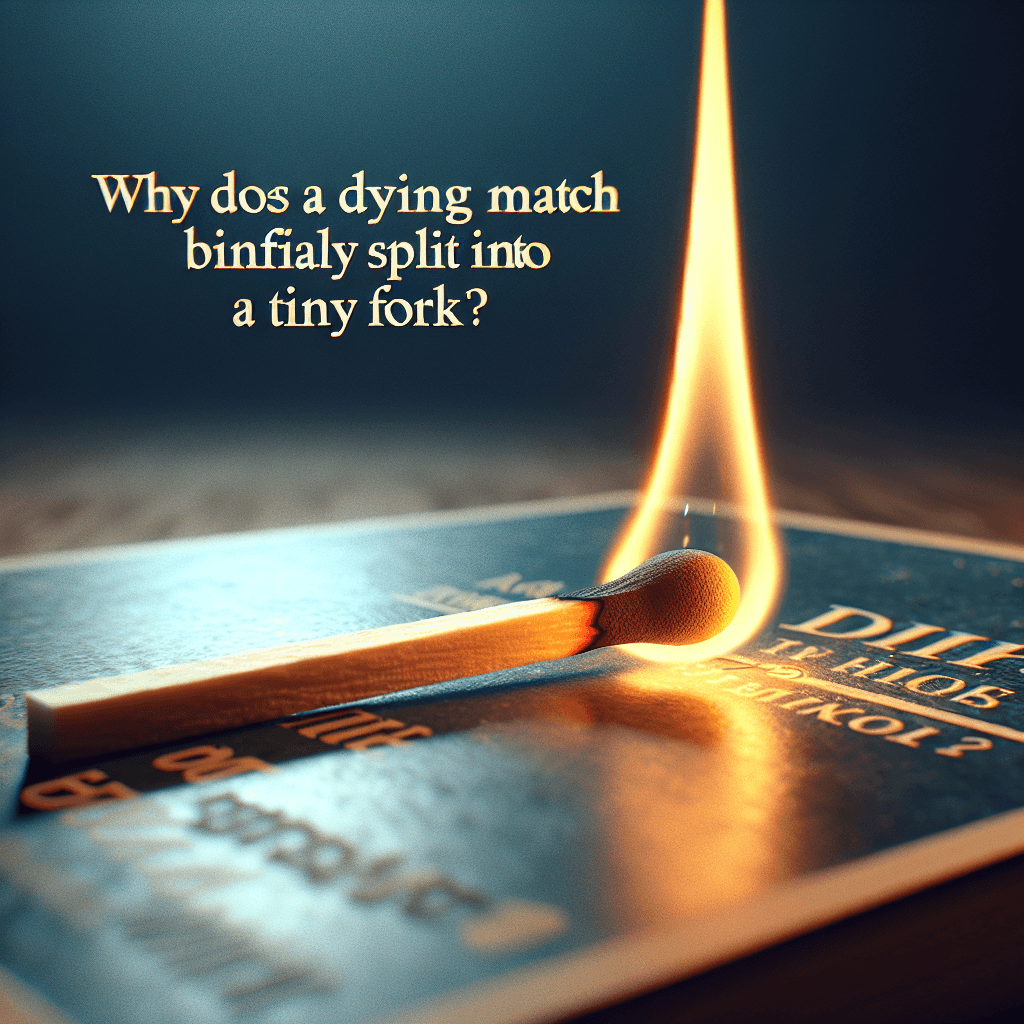
Why does a dying match flame briefly split into a tiny fork
That fleeting, forked split in a dying match flame isn't a random flicker—it's the flame literally tearing itself apart in a final, desperate search for fuel.

Too Long; Didn't Read
As a match runs out of fuel, the upward current of hot air feeding the flame becomes weak and unstable. This air current splits, pulling the last flicker of the flame into a fork shape just before it extinguishes.
The Final Flicker: Unraveling the Science of Why a Dying Match Flame Briefly Splits into a Tiny Fork
Have you ever lit a match and watched it burn all the way down? It’s a simple, almost meditative act. As the flame consumes the small wooden stick, there’s a fleeting moment, just before it goes out, where the single flame splits into a distinct, two-pronged fork. It’s a tiny spectacle that lasts for less than a second, yet it’s a universal experience for anyone who has ever used a match. This isn’t a random flicker or a trick of the eye; it's a beautiful demonstration of physics at work. This post will delve into the science behind this fascinating phenomenon, breaking down the interplay of heat, fuel, and airflow that creates the match’s final forked farewell.
The Life of a Flame: More Than Just Fire
Before we can understand why a flame splits, we need to understand what a flame actually is. A flame isn't a solid object; it's a visible, gaseous part of a fire. It’s a chemical reaction in motion. For a match, this process starts with the phosphorus and potassium chlorate in the head, but the steady flame that follows is fueled by the wood stick itself.
However, the solid wood isn't what's burning. Instead, the intense heat from the initial flame triggers a process called pyrolysis. Think of pyrolysis not as burning, but as a super-heating process that breaks down the wood fibers without oxygen. This decomposition releases a cloud of flammable gases—often called wood gas—around the stick. It is this cloud of gas that mixes with oxygen in the air and combusts, creating the teardrop-shaped flame you see.
The Crucial Moment: How the Fuel Source Changes
As the flame travels down the matchstick, it continuously creates its own fuel by heating the wood just ahead of it. The flame is essentially chasing its own fuel source. The shape and behavior of the flame are dictated by the upward flow of these hot, flammable gases and the surrounding air, a process known as convection. Hot gases are less dense and rise, pulling the flame upward into its characteristic shape.
Everything changes as the flame nears the end of its journey. At this point:
- The majority of the wood stick has already been consumed and turned into char.
- The amount of wood remaining to undergo pyrolysis and release flammable gas is drastically reduced.
- The heat is no longer just on the tip of the unburned wood but is now wrapping around the entire remaining sliver.
This is the critical stage where the conditions for the split are created.
The Split: A Tale of Two Fuel Streams
The iconic forking of the flame is a direct result of how the last bit of wood gas is released. As the flame engulfs the final section of the matchstick, the wood in the center is already charred and depleted. The most intense heating now occurs along the two opposite sides of the thin, flat stick.
Here's the step-by-step breakdown of the split-second event:
- Focused Heating: The remaining heat intensely bakes the two thin edges of the wood stick.
- Dual Gas Release: Pyrolysis now happens primarily on these two opposing faces, releasing two separate, parallel streams of flammable wood gas.
- The Barrier in the Middle: The central, charred portion of the stick acts as a physical barrier, preventing these two gas streams from merging into a single column.
- Convection Takes Over: The natural upward pull of convection draws these two distinct fuel streams upward. Each stream ignites and burns as a separate flame.
The result is the small, perfectly formed fork—two tiny flames burning side-by-side, connected only at their base. This elegant fork persists only as long as those two sides of the stick can produce enough gas to sustain their own flames.
Once this last bit of fuel is exhausted, the reaction stops, the flames vanish, and all that's left is a faint wisp of smoke and the glowing ember of the carbonized wood.
Conclusion
The simple act of a match burning out is a microcosm of complex scientific principles. That final, forked flicker is not a magical anomaly but a predictable outcome of thermodynamics, fluid dynamics, and chemistry. It’s a visual story of a fuel source changing its shape, splitting its output, and ultimately exhausting itself. By understanding the role of pyrolysis and convection, we see that the dying match flame splits because the remaining wood releases its last flammable gases from two distinct sides. So, the next time you strike a match, take a moment to watch it all the way to the end. You'll not only see a tiny flame but a beautiful, fleeting demonstration of the laws that govern our world.