
Why does a full stomach trigger a sneezing attack in some people
Ever erupt into a sneezing fit after a big meal? It’s not an allergy, but a bizarre neurological quirk that connects your full stomach directly to your nose.

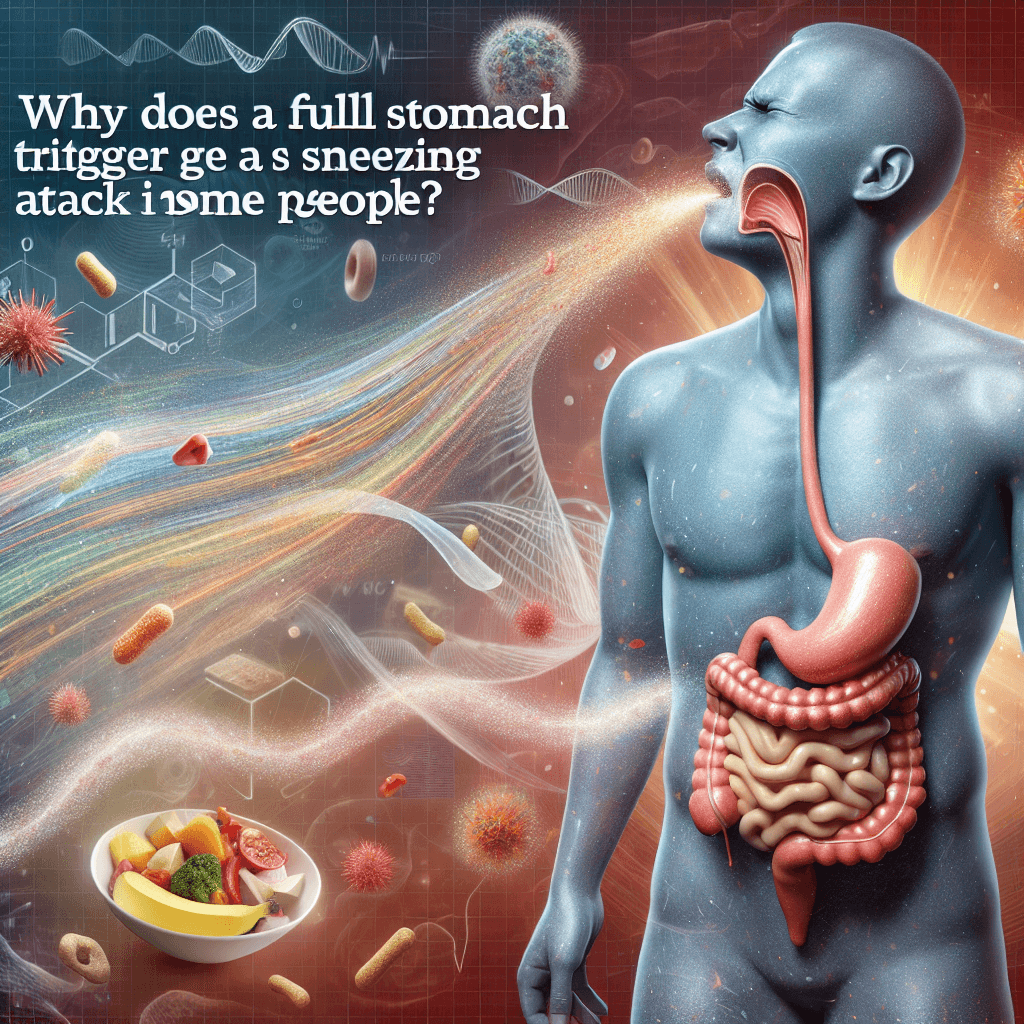
Too Long; Didn't Read
TLDR: A full stomach can overstimulate a nerve that signals fullness, which is located very close to the nerve that controls sneezing. This neurological cross-talk causes a sneezing fit in people with a specific genetic trait for it, a harmless condition known as snatiation.
The Post-Meal Sneeze: Why Does a Full Stomach Trigger a Sneezing Attack in Some People?
Have you ever finished a large, satisfying meal, pushed back from the table feeling content, and then suddenly been hit with an uncontrollable fit of sneezes? If this sounds familiar, you're not just imagining it, and you're certainly not alone. This peculiar bodily quirk is a genuine medical phenomenon, and it even has a name. This post will delve into the fascinating science behind why a full stomach triggers sneezing attacks, exploring the leading theories and separating fact from fiction.
Unpacking the Mystery: What is "Snatiation"?
The official-sounding term for this post-meal sneezing is gustatory rhinitis, which refers to non-allergic rhinitis triggered by eating. However, the specific, inherited condition of sneezing uncontrollably after a large meal is colloquially and aptly known as snatiation—a portmanteau of "sneeze" and "satiation."
First documented in the medical literature in the 1980s, snatiation is considered an autosomal dominant trait. This means it's a genetic condition that can be passed down through families. If one of your parents experiences it, you have a 50% chance of inheriting the trait yourself.
The key characteristics of a snatiation episode are:
- It is triggered by a large meal that fills the stomach, regardless of the type of food eaten.
- It results in a sudden, uncontrollable burst of sneezing, often two to three times in a row.
- It is not accompanied by other allergy symptoms like itchy eyes, hives, or a runny nose.
Why Does it Happen? The Leading Neurological Theories
So, what’s going on in the body to connect a full stomach to a reflex in your nose? The answer isn't about the food itself but about your nervous system's wiring. The leading theory points to a fascinating case of "crossed signals" within the cranial nerves.
The Cranial Nerve Connection
Your body's involuntary functions, like digestion and sneezing, are managed by the autonomic nervous system. Two key players in this story are major cranial nerves:
- The Trigeminal Nerve (Cranial Nerve V): This nerve is a major pathway for sensations in your face, including your nasal passages. It plays a crucial role in triggering the sneeze reflex when it detects an irritant in your nose.
- The Vagus Nerve (Cranial Nerve X): This nerve is a superhighway connecting the brain to many organs, including the stomach. It is central to the "rest and digest" function and signals to the brain when the stomach is full and stretching.
The most widely accepted theory is that in people with snatiation, the signals get crossed. When a large meal causes the stomach to distend, it sends a strong signal up the vagus nerve to the brain. Researchers believe this powerful "I'm full!" signal can somehow stimulate the nearby trigeminal nerve nucleus in the brainstem. The trigeminal nerve misinterprets this stimulation as an irritant in the nose, triggering the sneeze reflex as a response. Think of it like a faulty telephone switchboard where a call meant for the stomach accidentally gets routed to the nose.
Is It a Food Allergy?
It's essential to distinguish snatiation from a true food allergy. While certain spicy or hot foods can trigger a runny nose or sneezing in many people (another form of gustatory rhinitis), snatiation is different.
- Allergy: A food allergy is an immune system response. The body mistakenly identifies a protein in food as a threat and releases histamines, causing symptoms like hives, swelling, itching, and, in severe cases, anaphylaxis.
- Snatiation: This is a neurological reflex. The immune system is not involved. The trigger isn't a specific food but the physical state of having a full stomach. Someone with snatiation will sneeze after a large Thanksgiving dinner just as they would after a large plate of pasta.
Conclusion
The post-meal sneeze, or snatiation, is a perfect example of the human body's fascinating and sometimes perplexing complexities. While it can be a source of amusement or minor annoyance at the dinner table, it is a harmless and genetically inherited trait. The phenomenon is not an allergy but rather a case of neural crosstalk, where a full stomach's signal to the brain inadvertently triggers the sneeze reflex. So, the next time you let out a series of sneezes after a hearty meal, you'll know it's simply your body's intricate wiring having a unique and predictable conversation with itself.


