
Why does a gecko's tail keep wiggling after it has broken off
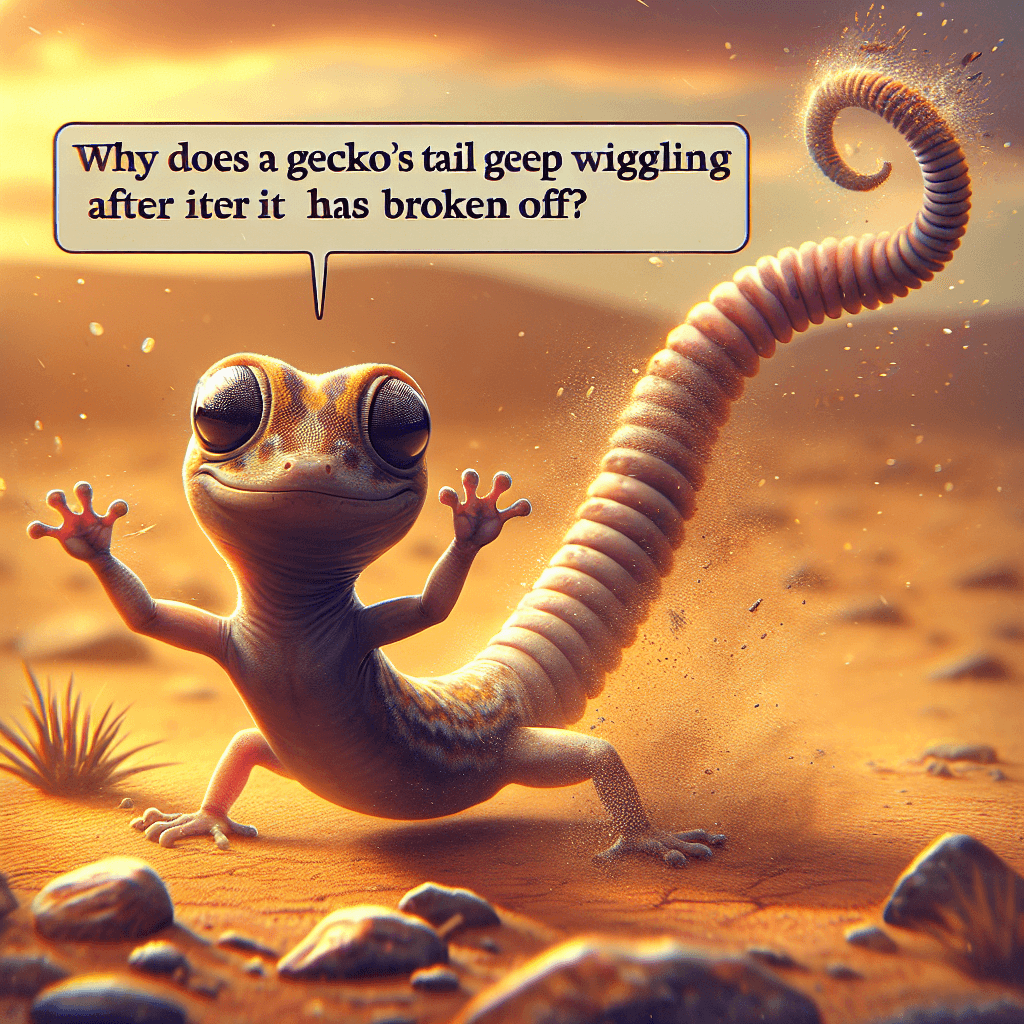
It's a gruesome but brilliant trick: the gecko is long gone, but its disembodied tail continues to dance and twitch with a mind of its own.

Too Long; Didn't Read
TLDR: A gecko’s tail detaches to distract predators. It keeps wiggling due to pre-programmed nerve signals in its spinal cord that continue to fire without the brain, creating a convincing decoy so the gecko can escape.
Nature's Ultimate Decoy: Why Does a Gecko's Tail Keep Wiggling After It Has Broken Off?
Have you ever witnessed the bizarre, almost sci-fi spectacle of a gecko darting away, leaving its tail behind to flip, jump, and writhe on its own? It's a startling sight that often leaves observers with a mix of fascination and confusion. This isn't a gruesome final act but a brilliantly executed survival strategy. The seemingly independent life of the detached tail is a key part of the escape, powered by a remarkable feat of biology. This post will explore the intricate science behind this phenomenon, revealing how and why a gecko's tail puts on such a lively performance long after its owner has fled the scene.
Caudal Autotomy: The Ultimate Escape Plan
The ability of a gecko to voluntarily detach its tail is a defense mechanism known as caudal autotomy. The term comes from the Greek words cauda (tail) and autotomy (self-amputation). When a gecko is caught by a predator or feels threatened, it can contract specific muscles at a "fracture plane"—a pre-determined weak point in a vertebra of its tail. This allows for a clean break with minimal blood loss and damage to the gecko's body.
The primary purpose is misdirection. A predator, such as a bird, snake, or cat, is instinctively drawn to the most dynamic and erratic movement. The vigorously thrashing tail becomes the new target, capturing the predator's full attention. This brief but crucial distraction provides the gecko with the precious seconds it needs to escape to safety.
The Ghost in the Machine: The Science of the Wiggle
The most captivating part of this process is the tail's continued movement. This isn't random twitching; it's a complex, pre-programmed motor pattern. The secret lies within the gecko's spinal cord.
Unlike in mammals, a gecko's spinal cord extends deep into its tail and is packed with its own neural circuitry. When the tail detaches, this segment of the spinal cord is severed from the brain, but it remains active. It contains what neuroscientists call Central Pattern Generators (CPGs). These are sophisticated neural networks capable of producing rhythmic, coordinated movements without any input from the brain.
According to studies on lizard anatomy, these CPGs in the tail are activated upon detachment, unleashing a series of elaborate motions. The tail can perform a variety of actions:
- Simple wiggles and waves.
- Complex flips and lunges.
- Full-on jumps that can be several centimeters high.
These movements can persist for 30 minutes or even longer, making the tail an incredibly convincing and long-lasting decoy. It's essentially a self-operating "sacrificial lure" running on its own isolated power source and neural programming.
The High Cost of a New Beginning
While caudal autotomy is a life-saving tactic, it's a last resort that comes at a significant cost to the gecko. Losing its tail is a major sacrifice.
- Loss of Energy Reserves: Geckos store a large portion of their fat reserves in their tails. Losing this is like losing a vital emergency food supply, which can be dangerous during periods when food is scarce.
- Reduced Social Status: In some gecko species, the tail is used for social signaling and communication. A gecko without a tail may experience a drop in its social standing and have difficulty attracting a mate.
- Impaired Mobility: The tail is crucial for balance, especially when climbing and leaping. A tailless gecko is often clumsier and more vulnerable to falls and future predator attacks.
Fortunately, geckos can regrow their tails, but the replacement is never quite the same. The new tail is supported by a rod of cartilage instead of bone, has a different scale pattern, and often a slightly different color. This regeneration process also consumes a great deal of energy, diverting resources from growth and reproduction.
A Masterclass in Survival
The wiggling of a detached gecko tail is a testament to the incredible and sometimes strange solutions that evolution devises for survival. It's not a random muscular spasm but a highly sophisticated, pre-programmed performance designed to deceive and distract. This biological marvel, powered by an autonomous spinal cord, perfectly illustrates the high-stakes trade-off an animal will make to live another day. So, the next time you see this peculiar sight, you'll understand you're not just watching a tail—you're witnessing one of nature's most clever and effective magic tricks.


