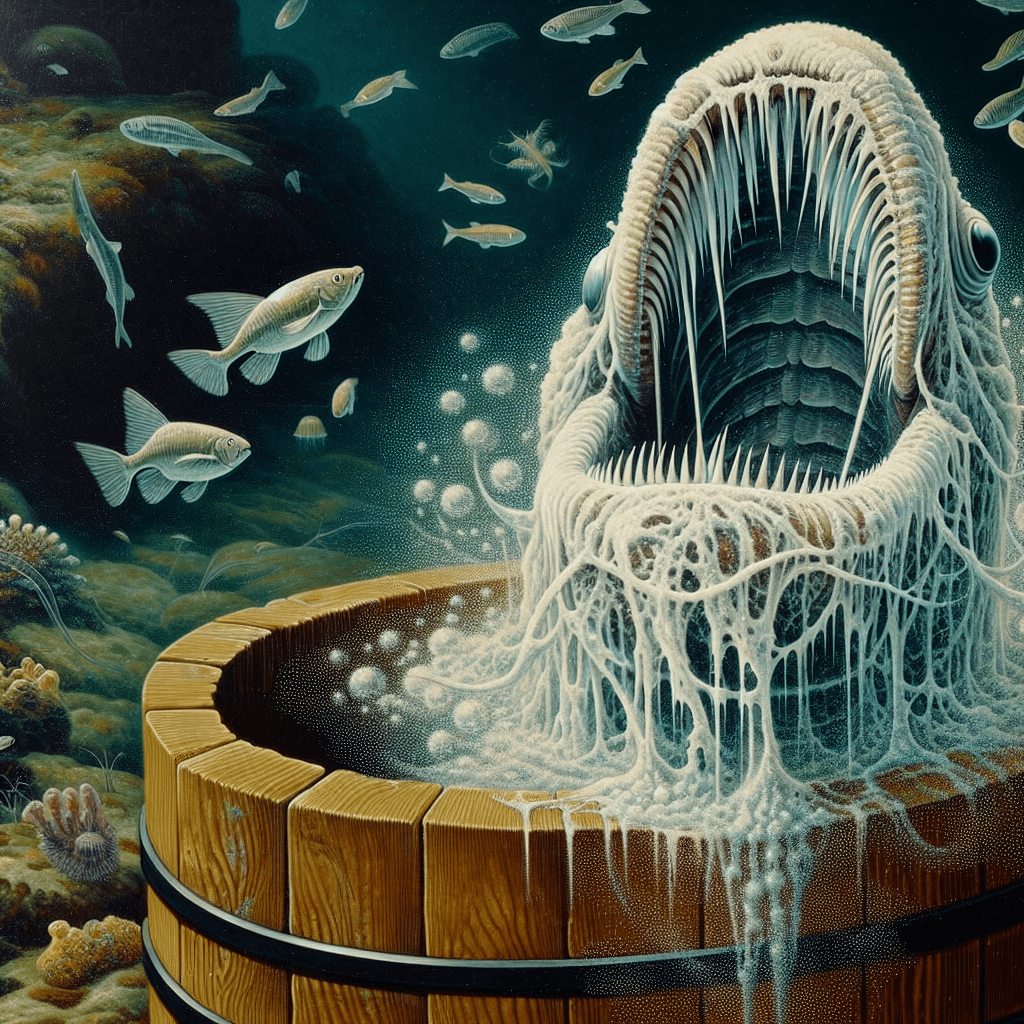
Why does a hagfish produce enough slime to instantly fill a bucket
A predator attacks, and in less than a second, the water becomes a suffocating, gill-clogging trap—this isn't science fiction, it's the hagfish's bizarre secret to survival.

Too Long; Didn't Read
TLDR: Hagfish slime is a defense mechanism. A tiny amount of secreted goo rapidly expands in seawater to clog the gills of attacking predators like sharks, forcing them to retreat or suffocate. The hagfish then ties itself in a knot to scrape the slime off its own body.
Ocean's Slime Machine: Why Does a Hagfish Produce Enough Slime to Instantly Fill a Bucket?
Imagine a creature that, when threatened, can transform the surrounding water into a suffocating, gelatinous trap in the blink of an eye. This isn't a monster from a sci-fi film; it's the hagfish, an ancient, eel-like scavenger of the deep sea. Its legendary defense mechanism—the ability to produce an incredible volume of slime almost instantly—has fascinated and repulsed people for years. But this isn't magic; it's a masterpiece of biological engineering. This post will dive into the science behind the hagfish's slime, exploring how it's made, why it's so effective, and what gives it the power to seemingly fill a bucket from almost nothing.
The Secret Recipe: What is Hagfish Slime?
Before we understand the volume, we need to understand the substance. Hagfish slime isn't just simple mucus. The animal doesn't store a bucket's worth of goo inside its body. Instead, it produces a highly concentrated "pre-slime" gel that is ejected from a series of pores along its sides. This concentrate is made of two remarkable components:
- Mucin Vesicles: These are tiny packets filled with a slimy protein called mucin. When these packets rupture in seawater, the mucin rapidly absorbs water, much like a sponge.
- Thread Cells: These are specialized cells containing incredibly long, tightly coiled protein threads. Each thread, though microscopic in thickness, can be up to 15 centimeters long. They act like the reinforcing steel in concrete.
When the hagfish is stressed or bitten, it releases this potent mixture. The real magic happens next.
The Science of Instant Expansion
The answer to the question "Why does a hagfish produce enough slime to instantly fill a bucket?" lies in explosive expansion, not massive production. The tiny amount of ejected gel reacts with seawater in a fraction of a second.
Here’s the process:
- Ejection: The hagfish releases the concentrated mucin and thread cells.
- Rupture: The mucin vesicles burst upon contact with saltwater, releasing the water-loving mucin proteins.
- Unraveling: Simultaneously, the thread cells unravel, shooting out their long protein filaments.
- Trapping Water: These uncoiled threads create a fine, intricate web. The swelling mucin and this protein scaffold trap enormous amounts of water, causing the slime to expand to more than 10,000 times its original volume.
So, a hagfish isn't producing a bucket of slime; it's producing a few milliliters of a hyper-efficient concentrate that instantly becomes a bucket of slime by absorbing the surrounding water.
The Ultimate Gill-Clogging Defense
This incredible ability is primarily a defense mechanism, and it's brutally effective against a specific type of predator: fish. When a shark or other large fish tries to bite the hagfish, it gets a mouthful of the slime concentrate. As the slime expands in the predator's mouth and gills, it creates a suffocating mass. The attacker can't breathe and is forced to release the hagfish and flee, often gagging violently to clear its gills. It's a non-violent defense that incapacitates the enemy without a fight.
You might wonder, how does the hagfish avoid getting trapped in its own slime? It has a clever trick for that, too. The hagfish can tie its body into a knot and scrape the slime off by passing the knot from its head to its tail.
Conclusion: A Masterclass in Efficiency
The hagfish's slime is a perfect example of nature's ingenuity. It doesn't rely on brute force, sharp teeth, or venom. Instead, it uses a sophisticated biochemical reaction to create an unparalleled defensive shield from a minuscule amount of material. The ability to "fill a bucket" isn't an exaggeration of production but a testament to the slime's mind-boggling expansion. This unique adaptation has allowed these ancient creatures to thrive in the harsh deep-sea environment for over 300 million years and continues to inspire scientists looking to create new, super-absorbent, and strong biomaterials.