
Why does a standard piano have exactly eighty-eight keys
The piano's iconic 88 keys aren't an arbitrary number, but the result of a historic tug-of-war between composers demanding more range and the absolute physical limits of what our ears can hear.

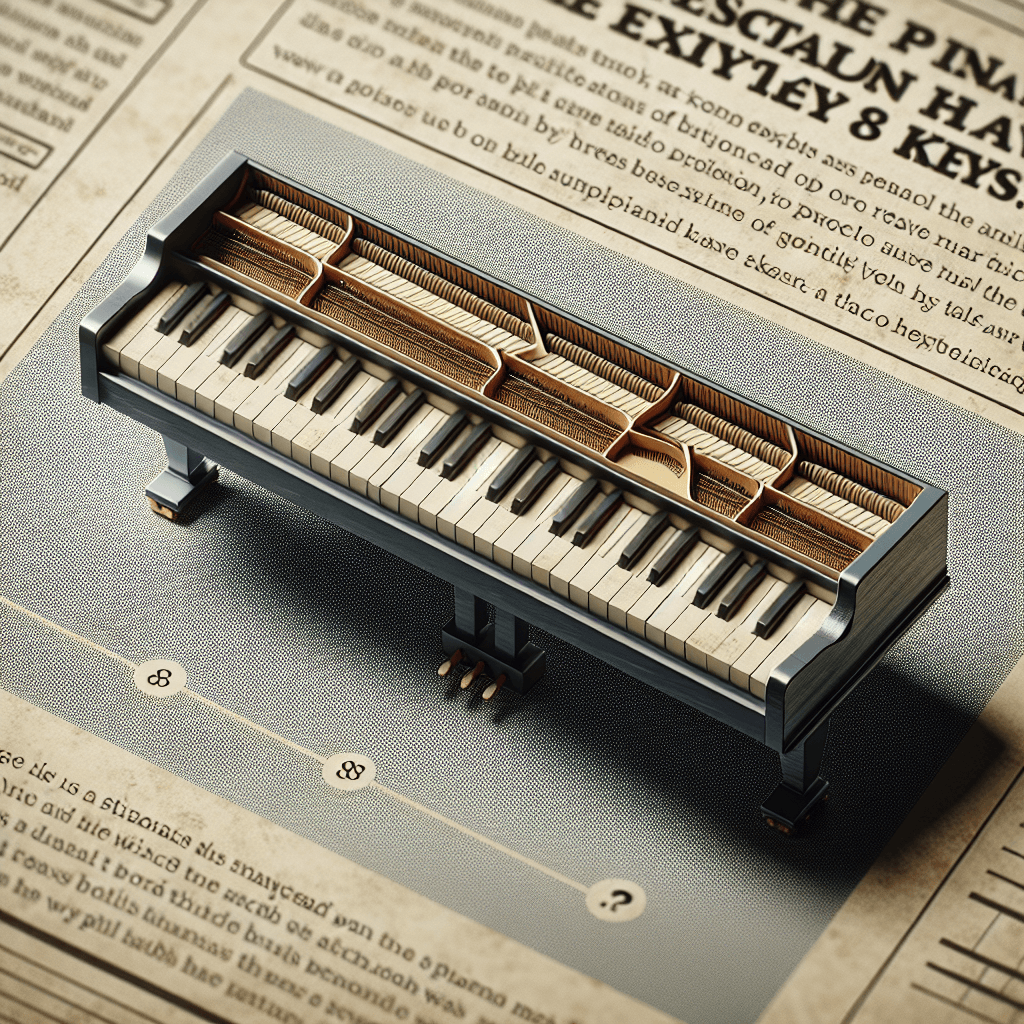
Too Long; Didn't Read
TLDR: Pianos started with fewer keys, but as composers wrote music requiring a wider range, makers like Steinway expanded the keyboard. The 88-key design became the standard because it covered the full musical spectrum needed without the highest notes sounding too shrill or the lowest notes becoming an indistinct rumble.
The Magic Number: Why Does a Standard Piano Have Exactly 88 Keys?
Have you ever sat down at a piano, run your fingers over the cascade of black and white, and wondered why there are precisely 88 keys? Not 85, not 90, but a very specific 88. This number isn't arbitrary; it’s the culmination of centuries of musical innovation, artistic demand, and acoustic science. The standard 88-key keyboard represents a perfect harmony between what composers dreamed of, what engineers could build, and what the human ear can truly appreciate. This post will unravel the fascinating story of how the modern piano settled on its magic number, exploring its journey from a modest keyboard to the expressive powerhouse we know today.
From Harpsichords to Fortepianos: The Keyboard's Evolution
Before the piano, keyboard instruments like the harpsichord and clavichord were common, but they had a much smaller range. Most of these early instruments featured around 60 keys, spanning about five octaves. When Bartolomeo Cristofori invented the first "gravicembalo col piano e forte" (harpsichord with soft and loud) around the year 1700, he laid the groundwork for the modern piano. However, even his revolutionary instruments did not have 88 keys. The keyboard was a work in progress, and its expansion was just beginning.
The Driving Force: Composers Pushing Boundaries
The primary catalyst for adding more keys was the boundless imagination of composers. As the piano grew in popularity throughout the 18th and 19th centuries, musical visionaries began writing pieces that demanded a greater expressive and tonal range.
- Wolfgang Amadeus Mozart and Joseph Haydn composed for pianos with around five octaves.
- Ludwig van Beethoven, a true revolutionary, constantly pushed the limits of the instruments available to him. He composed pieces that required notes his current piano didn’t have, directly challenging manufacturers to expand the keyboard.
- Later, Romantic-era composers like Franz Liszt and Frédéric Chopin wrote increasingly virtuosic and emotionally complex music that utilized the full breadth of a wider keyboard.
This creative demand created a sort of "arms race" among piano makers. Each sought to build an instrument that could satisfy the artistic ambitions of the era's greatest musicians by adding more notes to both the bass and treble ends.
The Standardization: How 88 Became the Magic Number
For much of the 19th century, piano keyboards varied in size, ranging from 65 to over 90 keys. The lack of a standard was a challenge for both composers and performers. This changed in the late 1880s when the renowned piano manufacturer Steinway & Sons built their 88-key model. This model, which spans seven full octaves plus a minor third (from A0 to C8), became the industry gold standard.
But why did they stop at 88? The decision was rooted in the practical limits of acoustics and human perception.
- The Low End (Bass): The lowest note on a piano is A0. Any notes lower than this become acoustically muddy. The human ear begins to struggle to distinguish a clear, discernible pitch. Instead of a musical tone, you hear more of a rumbling or percussive sound. Furthermore, the strings required for such low notes would need to be incredibly long and thick, making the piano impractically large and expensive.
- The High End (Treble): The highest note is C8. Notes played above this frequency have a very short sustain and can sound thin or shrill to the human ear. The high-tension strings for these notes are short and stiff, and they lack the rich overtones that give lower notes their character. Composers rarely wrote music that extended beyond this range because the musical value was limited.
Essentially, the 88 keys encompass the most useful and pleasing range of musical tones for both composition and listening.
Conclusion
The 88 keys on a standard piano are no accident. They are the elegant solution to a question posed over centuries by artists and engineers alike. This specific number represents the perfect equilibrium—a range broad enough to accommodate the vast majority of Western musical literature, yet constrained by the physical limitations of instrument design and the perceptual boundaries of the human ear. It is a testament to the collaborative evolution between musical creativity and technological innovation. So, the next time you see a piano, you'll know that its 88 keys aren't just a number, but a rich piece of history.


