
Why does a volcano sometimes create its own massive lightning storm
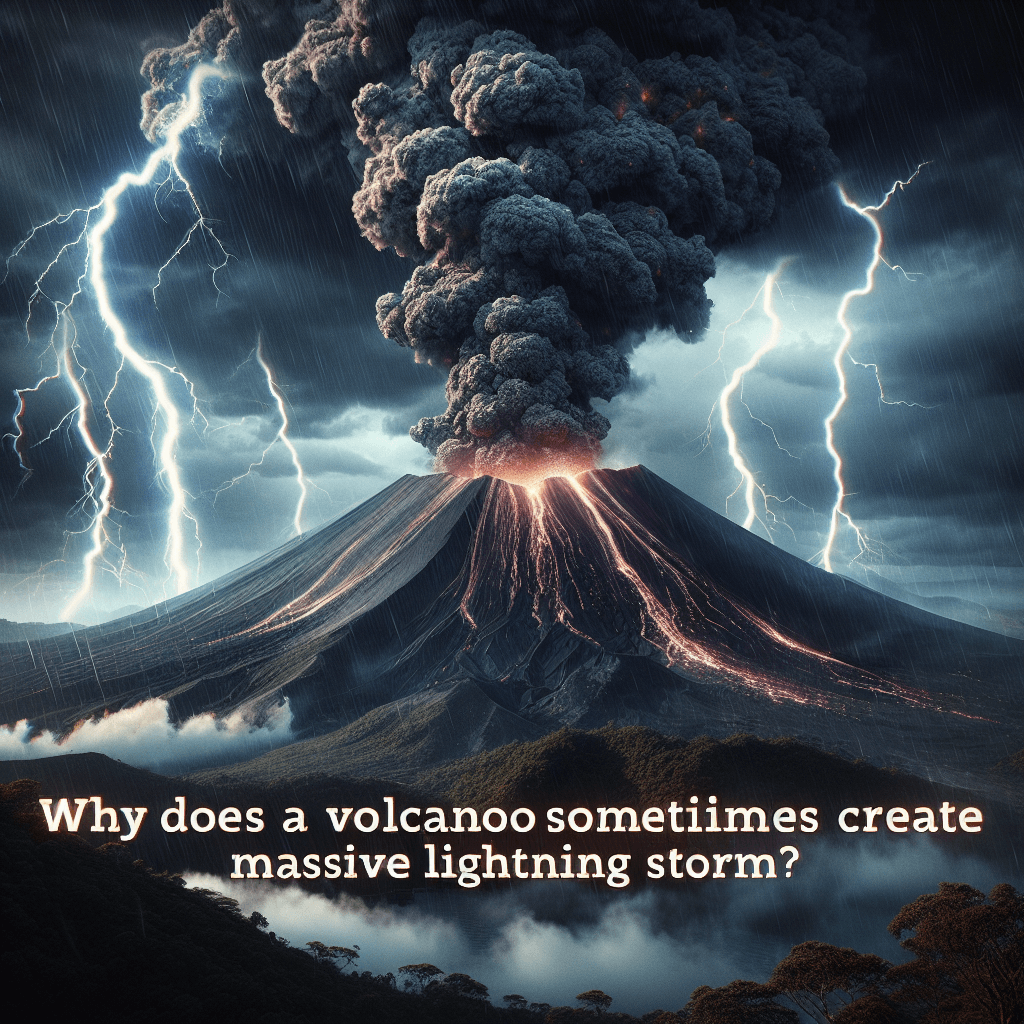
It's one of nature's most apocalyptic displays—a volcanic plume so violent that the friction between its own ash particles generates a massive, terrifying lightning storm.

Too Long; Didn't Read
TLDR: The violent friction between ash, rock, and ice particles spewed out during an eruption builds up enormous amounts of static electricity within the plume. The cloud then discharges this massive energy imbalance as a powerful lightning strike.
Fire and Fury: Why Does a Volcano Sometimes Create Its Own Massive Lightning Storm?
Imagine a scene of pure, elemental power: a mountain spewing a colossal column of ash and smoke miles into the sky. Now, picture that same dark plume illuminated from within by a furious, crackling web of lightning. This isn't a scene from a fantasy film; it's a real, and scientifically fascinating, phenomenon known as a volcanic lightning storm, or a "dirty thunderstorm." While it looks like a clash between two separate forces of nature, the volcano is, in fact, the engine of its own electrical fury. This blog post will explore the powerful physics at play, answering the question: Why does a volcano sometimes create its own massive lightning storm?
The Anatomy of a Dirty Thunderstorm
At its core, all lightning—whether in a regular thunderstorm or a volcanic plume—is the result of the same fundamental principle: charge separation. For a lightning bolt to form, you need a powerful buildup of positive and negative electrical charges in different areas. When the difference between these charged regions becomes too great for the air to insulate, it breaks down, and a massive electrostatic discharge flashes between them. In a normal storm, this process is driven by colliding ice crystals and water droplets inside clouds.
In a volcanic eruption, the plume of ash and gas provides all the necessary ingredients for a similar, but far more violent, process. The eruption creates a turbulent, chaotic environment where countless particles are sent hurtling against each other, generating immense static electricity.
The Science of Charge Generation
Scientists have identified two primary mechanisms that work together to turn a volcanic ash cloud into an electrical generator. These processes often occur in distinct phases as the plume evolves.
Phase 1: Near-Vent Charging
The first sparks often appear right at the mouth of the volcano, amidst the most violent part of the eruption. This initial lightning is primarily caused by a process called fracto-electrification.
- Violent Fragmentation: As magma is blasted from the earth, it tears apart rock and solidifies into tiny particles of ash.
- Friction and Collision: In this incredibly dense and turbulent jet, these fragments of rock and ash collide at high speeds.
- Stripping Electrons: The friction from these millions of collisions strips electrons from some particles and deposits them on others. This creates an immediate and intense separation of positive and negative charges right at the volcano's vent, triggering smaller, often continuous sparks.
Phase 2: Ice-Powered Plume Lightning
As the hot ash plume rises, it can climb for miles into the freezing-cold upper atmosphere. Here, a second, more powerful mechanism takes over, creating the large, branching lightning bolts that look more like traditional storm lightning.
- Freezing in the Atmosphere: The plume carries a significant amount of water vapor from the magma and surrounding air. As it ascends into sub-zero altitudes, this water freezes, coating the tiny ash particles with ice.
- Ice Crystal Collisions: Now, the plume behaves much more like a regular thundercloud. These ice-coated ash particles collide with other ice crystals that have formed in the cold air.
- Charge Separation on a Grand Scale: These collisions efficiently separate charges over a much larger area. Generally, lighter, positively charged ice crystals are carried upward by the rising plume, while heavier, negatively charged, ice-coated ash particles tend to fall. This creates a massive electrical imbalance within the cloud, leading to spectacular lightning discharges.
According to research from institutions like Ludwig Maximilian University of Munich, the intensity and location of volcanic lightning can tell scientists a great deal about the eruption itself. The lightning acts as a probe, providing real-time data on the plume’s height, ash concentration, and overall power—information that is critical for aviation safety, as volcanic ash can cause catastrophic jet engine failure.
Conclusion
A volcanic lightning storm is one of nature’s most awe-inspiring displays, a perfect fusion of geology and meteorology. Far from being a random coincidence, it is a direct consequence of the eruption's raw power. The violent friction of rock and ash at the vent, combined with the formation of ice high in the atmosphere, transforms the plume into a massive electrostatic generator. This "dirty thunderstorm" is not just a visual spectacle; it is a vital source of information for scientists tracking a dangerous eruption. The next time you see an image of lightning striking from an ash cloud, you’ll know you're not just looking at a storm—you're witnessing the volcano's own immense energy being unleashed in a flash of light.


