
Why does applying a piece of clear tape make frosted glass appear completely transparent
It looks like a magic trick, but it’s actually a mind-bending physics hack—discover how a simple strip of clear tape can instantly "undo" the blur and turn frosted glass crystal clear.

Too Long; Didn't Read
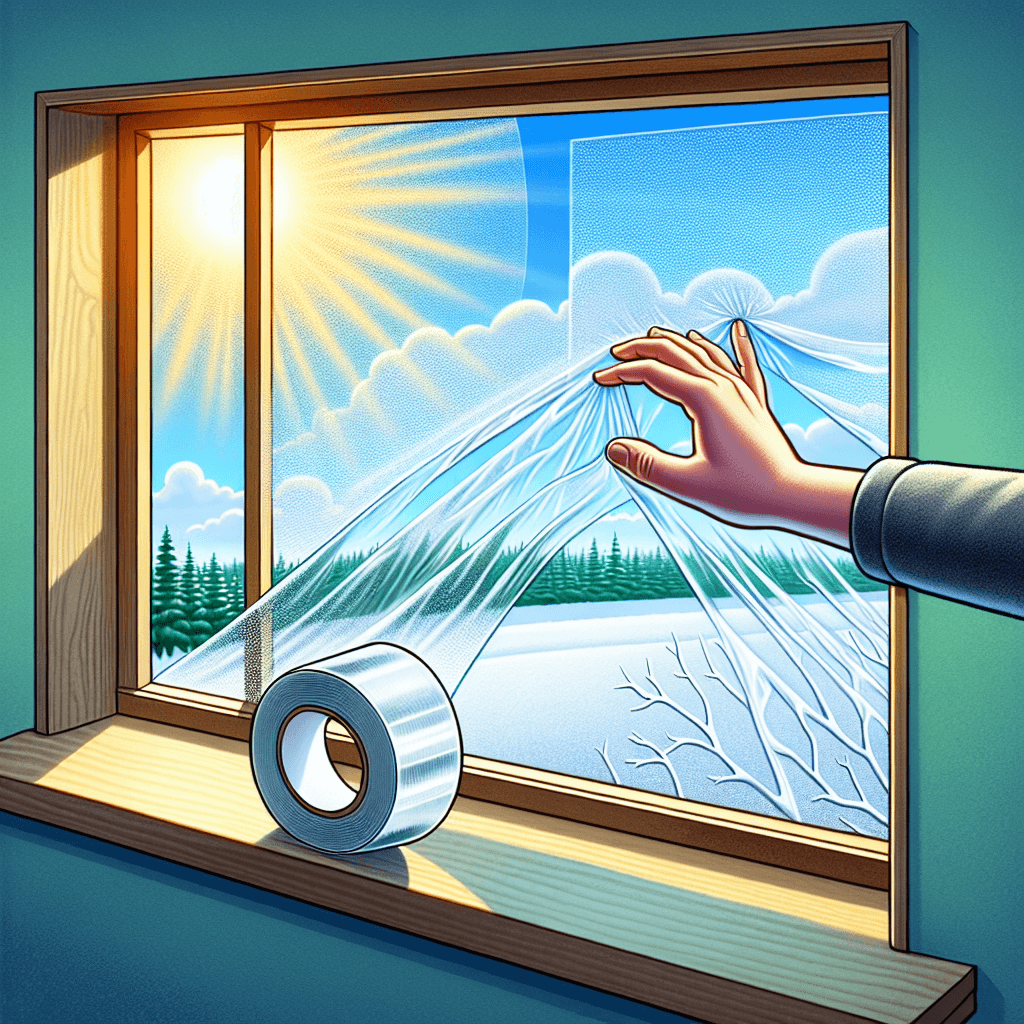
Frosted glass appears opaque because its rough, pitted surface scatters light in many directions. Clear tape restores transparency because its adhesive fills in these microscopic gaps and creates a smooth, flat surface. Since the adhesive has a refractive index similar to glass, light can pass through in a straight line instead of scattering, making the area look clear.
The Science of Seeing Through: Why Does Applying a Piece of Clear Tape Make Frosted Glass Appear Completely Transparent?
Have you ever encountered a frosted glass window or door and wondered if there was a way to peek through it? While frosting is designed specifically for privacy, a common household item can bypass this optical barrier in seconds. It almost feels like a "life hack" or a magic trick: simply press a piece of clear adhesive tape onto the rough surface, and suddenly, a clear window appears within the frost. This phenomenon is a favorite demonstration for physics teachers, but the underlying science is far more than a simple trick. Understanding why applying a piece of clear tape makes frosted glass appear completely transparent requires a dive into the world of light scattering, surface topography, and the physics of refraction.
Understanding the Texture of Frosted Glass
To understand why tape "fixes" frosted glass, we first need to understand how frosted glass is made. Standard glass is transparent because its surfaces are fire-polished to be incredibly smooth at a microscopic level. This allows light rays to pass through the material in straight, parallel lines—a process known as specular transmission.
Frosted glass, however, undergoes a process such as sandblasting or acid etching. This creates a surface pitted with countless microscopic "peaks" and "valleys." While the glass material itself remains clear, the surface is no longer flat. According to optical principles, when light hits this uneven surface, it doesn't pass straight through. Instead, each individual ray of light hits a differently angled microscopic slope and bends in a different direction. This is called diffuse reflection and scattering. The result is that while light can still get through (which is why frosted rooms are still bright), the organized images are lost in a chaotic jumble of rays.
The Role of the Adhesive: Filling the Gaps
The secret to the tape's effectiveness lies in its adhesive layer. When you apply a piece of clear tape to the frosted side of the glass, the soft, slightly fluid adhesive flows into the microscopic pits and valleys created by the frosting process.
By filling these indentations, the tape effectively "removes" the rough surface. Here is how the transition happens:
- Eliminating the Air Gaps: Normally, the "valleys" in frosted glass are filled with air. The transition from glass to air causes significant light bending.
- Creating a New Surface: The back of the tape (the non-adhesive side) is manufactured to be perfectly smooth and flat.
- Restoring Parallelism: Once the adhesive fills the rough texture, the light no longer encounters thousands of tiny, random angles. Instead, it enters a smooth surface and exits a smooth surface.
The Importance of the Refractive Index
While filling the gaps is important, the "magic" wouldn't work if the tape were made of a different type of material. The most critical scientific factor here is the refractive index. The refractive index is a measure of how much a medium bends light.
Glass typically has a refractive index of approximately 1.5. For the tape to make the glass transparent, its adhesive must have a refractive index very close to that of the glass. Most clear tapes use an acrylic or rubber-based adhesive with a refractive index ranging from 1.45 to 1.50.
Because the adhesive and the glass have nearly identical refractive indices, the light "thinks" it is traveling through a single, solid medium. It passes from the glass into the adhesive without bending significantly at the boundary. Once the light reaches the smooth outer plastic backing of the tape, it exits in a straight line. Because the light rays remain parallel to one another, the human eye can once again resolve a clear, transparent image.
Real-World Limitations
While this trick is effective, it only works under specific conditions:
- The Correct Side: The tape must be applied to the frosted side of the glass. If you apply it to the smooth side, the frosting on the opposite side will still scatter the light before it reaches your eyes.
- Wet Surfaces: You can achieve a similar effect by wetting the glass with water or oil. However, liquids eventually evaporate or run off, whereas tape provides a semi-permanent "fill" for the microscopic gaps.
Conclusion
The answer to why applying a piece of clear tape makes frosted glass appear completely transparent lies in the elegant correction of light scattering. By filling the microscopic irregularities of the etched glass with an adhesive that matches the glass’s refractive index, the tape eliminates the chaotic bending of light rays. This restores the specular transmission required for our eyes to see a clear image. This simple phenomenon serves as a powerful reminder of how the physical texture of a surface dictates our visual perception of the world. Next time you see this trick in action, you’ll know it’s not magic—it’s a masterclass in optical engineering.


