
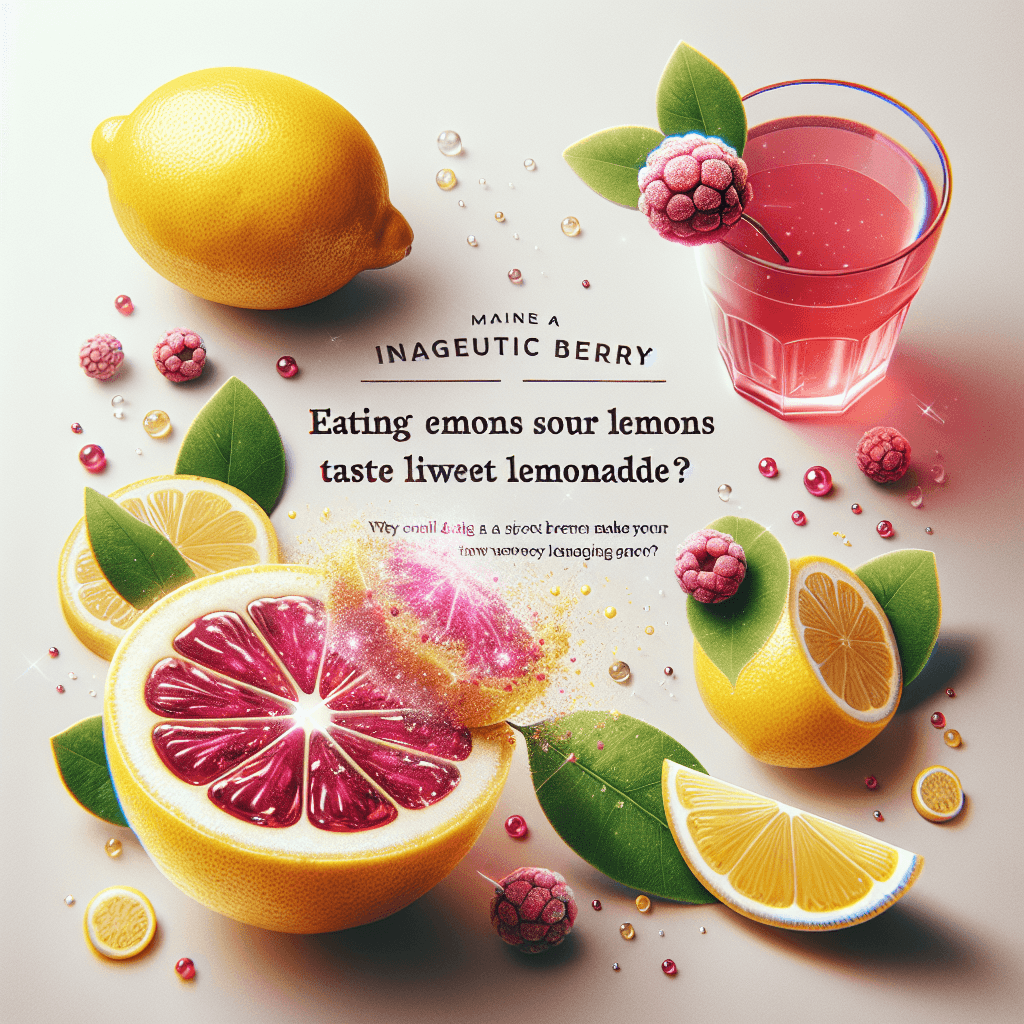
Why does eating a specific berry make sour lemons taste like sweet lemonade
Discover the incredible fruit that performs a delicious trick on your tongue, temporarily rewiring your taste buds to register intensely sour flavors as shockingly sweet.

Too Long; Didn't Read
TLDR: The miracle berry contains a protein that binds to your sweet taste receptors. This protein is activated by acid from sour foods, which then tricks your tongue into registering the sour taste as intensely sweet.
The Miracle Berry Effect: Why Does Eating a Specific Berry Make Sour Lemons Taste Like Sweet Lemonade?
Have you ever imagined biting into a tart, sour lemon and tasting nothing but sweet, sugary lemonade? It sounds like something out of a fantasy novel, but this bizarre culinary experience is entirely real. A small, unassuming red berry from West Africa holds the key to this taste-altering magic, temporarily rewiring our perception of flavor. This isn't a trick; it's a fascinating display of food science at work. This post will unravel the mystery behind this "miracle fruit," exploring the unique protein responsible for this phenomenon and explaining exactly how it convinces your brain that sour is sweet.
The Magical Fruit: Introducing Synsepalum dulcificum
The berry in question is the fruit of the Synsepalum dulcificum plant, more commonly known as the miracle berry or miracle fruit. Native to West Africa, this small, red berry has been used by local populations for centuries to sweeten traditionally sour or fermented foods, such as corn bread and palm wine.
While the plant was documented by explorer Chevalier des Marchais in the early 18th century, its remarkable properties remained largely a local secret. It wasn't until the 20th century that scientists began to seriously investigate the mechanism behind its taste-modifying effects. The berry itself is not particularly sweet and has a mild, subtly tangy flavor. The real "miracle" happens after you've eaten it.
The Secret Ingredient: Meet Miraculin
The source of the miracle berry's power is a unique protein called miraculin. This glycoprotein is the key that unlocks the sweet-tasting illusion. However, miraculin itself does not taste sweet. The secret lies in how it interacts with the taste receptors on your tongue, especially in the presence of acid.
Here's a step-by-step breakdown of the science:
- Binding to Receptors: When you eat a miracle berry and let the pulp coat your tongue, the miraculin molecules bind firmly to your sweet taste receptors.
- Lying in Wait: At a neutral pH (the normal pH of your mouth and saliva), the miraculin protein is inactive. It essentially sits on the sweet receptors without triggering them. Some research even suggests it slightly suppresses the perception of sweetness at this stage.
- Acid Activation: The magic begins when you introduce something acidic, like the citric acid from a lemon or the acetic acid from vinegar. The introduction of acid causes the pH on your tongue to drop.
- The Sweet Switch: This drop in pH causes the miraculin protein to change its shape. This new, altered shape allows it to "super-activate" the sweet receptors it's bound to. Your brain receives an intense signal of sweetness, which is so powerful that it completely overpowers the sour taste you would normally perceive.
Essentially, miraculin acts like a switch. It turns your sweet receptors on, but only when an acid flips that switch. The effect isn't permanent; it typically lasts between 30 and 60 minutes, until your saliva gradually washes the protein away from your taste buds.
From Sour to Sweet: The Experience and Potential
The experience of eating after a miracle berry has given rise to "flavor tripping" parties, where guests sample a variety of acidic foods to experience the transformation. Some of the most dramatic changes include:
- Lemons and Limes: Taste like incredibly sweet candy or lemonade.
- Vinegar: Loses its sharp bite and can taste like sweet apple juice.
- Sour Cream and Goat Cheese: Take on the flavor of a rich, sweet cheesecake.
- Grapefruit and Unripe Strawberries: Become delightfully sweet and palatable.
Beyond a novelty food experience, miraculin has captured the interest of researchers for its potential applications. It offers a way to make foods taste sweet without adding any sugar or calories, making it a potential tool for individuals with diabetes or those looking to manage their weight. Furthermore, some studies have explored its use in helping chemotherapy patients. A common side effect of chemotherapy is a persistent metallic or bitter taste, which can suppress appetite. By masking these unpleasant tastes and enhancing sweetness, the miracle berry can help make food more enjoyable for these patients.
Conclusion
The miracle berry is a perfect example of how complex and fascinating our sense of taste truly is. What seems like magic is, in fact, a clever biochemical process driven by the miraculin protein. By binding to our sweet receptors and activating them only in the presence of acid, this incredible fruit temporarily rewires our perception, turning the sourest of foods into a sweet treat. It's a powerful reminder that what we taste is not just about the food itself, but a complex interaction between the molecules on our tongue and the signals sent to our brain.


