
Why does one hiccup almost always lead to a whole series of them
That first hiccup isn't a solo act; it’s the trigger for a bizarre neurological feedback loop that traps your body in an unstoppable, frustrating encore.

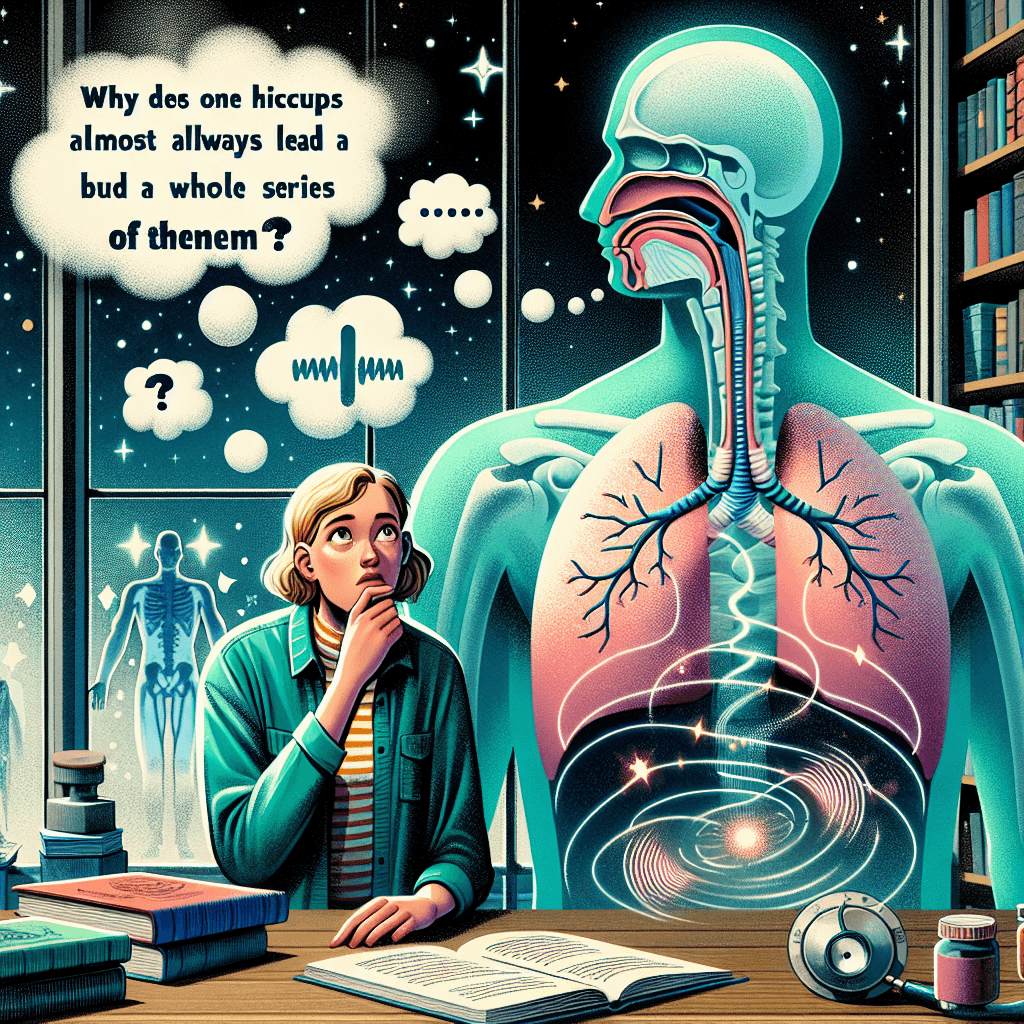
Too Long; Didn't Read
TLDR: The first hiccup is a nerve spasm that irritates the nerve itself, creating a feedback loop that triggers more spasms until the nerve is calmed or reset.
The Hiccup Cascade: Why Does One Hiccup Almost Always Lead to a Whole Series of Them?
It’s a universally familiar, and often frustrating, experience. A single, sudden “hic!” erupts from your chest, and you immediately brace yourself. You know it’s not just a one-off event; it’s the opening act for an involuntary, rhythmic performance. But why does this happen? Why is a lone hiccup such a rarity, almost always followed by a whole series of its noisy brethren? The answer isn't just a quirky coincidence but lies deep within our body's complex neural wiring and a fascinating reflex that gets stuck on a loop. This post will unravel the physiological reasons behind the hiccup cascade, exploring the anatomy of a hiccup and the self-perpetuating cycle that keeps it going.
The Anatomy of a Single "Hic"
Before we can understand why hiccups come in waves, we need to break down what a single hiccup actually is. It’s a two-part event orchestrated by a reflex you can't control.
- The Spasm: The main character in this story is your diaphragm, the large, dome-shaped muscle at the base of your lungs that is essential for breathing. A hiccup begins with a sudden, involuntary contraction or spasm of this muscle. This spasm forces you to suck in air very quickly.
- The "Hic" Sound: Almost immediately after the spasm (about 35 milliseconds later, according to research), your vocal cords snap shut. The structure responsible for this is the glottis, the opening between the vocal cords. The abrupt halt of incoming air against the closed glottis is what produces the characteristic "hic" sound.
This entire sequence is not a conscious action but a reflex, much like a knee-jerk reaction at the doctor's office.
The Nerve Signal That Won't Quit: The Hiccup Reflex Arc
Every reflex in the body follows a specific neural pathway called a "reflex arc." The hiccup is no different. This arc is the key to understanding the chain reaction.
- The Trigger: The arc begins when something irritates the nerves that connect to the diaphragm. The primary nerves involved are the phrenic nerve (which controls the diaphragm) and the vagus nerve (a long nerve that runs from the brain to the abdomen). Common triggers include eating too quickly, drinking carbonated beverages, sudden changes in temperature, or even emotional stress.
- The Control Center: The irritation signal travels up these nerves to a "hiccup center" in your brainstem.
- The Action: The brainstem immediately sends a signal back down the phrenic nerve, ordering the diaphragm to contract forcefully and involuntarily. This causes the spasm, the glottis closes, and you hiccup.
The Vicious Cycle: How One Hiccup Triggers the Next
Here we arrive at the core of the question. A single hiccup rarely resolves the initial nerve irritation. In fact, the very act of hiccuping can create a self-perpetuating loop.
The sudden, forceful contraction of the diaphragm and the rapid intake of air can re-stimulate the already sensitive vagus and phrenic nerves. The jolt of the spasm itself can act as a new trigger, sending another "irritation" signal right back to the hiccup center in the brainstem.
Think of it like a faulty smoke alarm. The initial smoke (the trigger) sets it off. But the loud blaring of the alarm itself (the hiccup) vibrates the sensor, tricking it into thinking there's still smoke and causing it to keep blaring. Each hiccup essentially "resets" the reflex arc, creating the perfect conditions for the next one to fire. The hiccup center remains in a state of high alert, ready to launch another spasm at the slightest provocation, leading to the familiar rhythmic pattern.
How to Break the Loop: The Science Behind Common Cures
This loop-based theory also explains why many popular hiccup "cures" work. They are all designed to interrupt or override the hiccup reflex arc.
- Holding your breath: This increases the level of carbon dioxide (CO2) in your blood, which helps calm the diaphragm and can interrupt the faulty nerve signals.
- Drinking water or eating sugar: These actions require coordinated swallowing, which stimulates the vagus nerve in a steady, controlled way. This new, strong signal can "reset" the reflex arc and override the erratic hiccup signals.
- A sudden scare: A jolt of fright triggers the "fight or flight" response, flooding your system with adrenaline and overwhelming the hiccup reflex with a more urgent set of neural commands.
Conclusion
So, the next time you find yourself caught in a seemingly endless bout of hiccups, you’ll know exactly what’s happening. It’s not just a random annoyance, but a fascinating physiological feedback loop. A single hiccup is the result of an involuntary reflex arc, and the cascade that follows is caused by the hiccup itself re-irritating the very nerves that started the problem. This vicious cycle keeps the signal firing until something—whether it’s time or a deliberate interruption like holding your breath—finally breaks the chain. While they may be inconvenient, understanding the science behind the hiccup cascade reveals just how intricate and interconnected our body's systems truly are.


