
Why does one type of octopus mate by throwing its detachable arm at the female
Forget flowers—one octopus species prefers a more hands-off approach to romance by tearing off its reproductive arm and launching it at the female. We dive into the bizarre evolutionary strategy behind the ultimate long-distance relationship.

Too Long; Didn't Read
TLDR: To avoid being eaten by the larger, cannibalistic female, the male octopus detaches his special sperm-filled arm and throws it at her to mate safely from a distance.
Love on the Fly: Why Does One Type of Octopus Mate by Throwing Its Detachable Arm at the Female?
When you think of romance in the animal kingdom, you might picture the elaborate dances of birds of paradise or the loyal bonds of wolves. You probably don't imagine a suitor literally throwing a part of his body at his potential mate and then swimming off to die. Yet, in the vast, mysterious expanse of the open ocean, one creature has perfected this very strategy. The argonaut octopus has a reproductive method so bizarre it baffled scientists for centuries. This post will dive deep into the fascinating world of the argonaut to understand why this tiny male octopus mates by detaching its specialized arm and sending it on a solo mission.
Meet the Argonaut: A Tale of Two Sizes
To understand this unique mating behavior, we first need to meet the players. The argonaut, also known as the paper nautilus, is not your typical bottom-dwelling octopus. It lives a pelagic lifestyle, drifting through the open ocean. The most striking thing about argonauts is their extreme sexual dimorphism—a fancy term for the size difference between males and females.
- The Female: The female argonaut is a giant in comparison to her mate, growing up to 30 centimeters (12 inches) long. She is famous for creating a beautiful, paper-thin, ridged shell that she uses as a floating nursery for her eggs.
- The Male: The male, on the other hand, is a true dwarf. He rarely grows larger than 2 centimeters (less than an inch) and has no shell. He is often hundreds of times smaller than the female he seeks.
This dramatic size difference is the first major clue to understanding their strange mating ritual. For a male so tiny, a direct, personal approach to a giant, potentially cannibalistic female is a life-threatening proposition.
The Hectocotylus: A Self-Propelled Sperm Packet
The "detachable arm" is not just any arm. It's a highly specialized reproductive tool called a hectocotylus. In most male octopuses, the hectocotylus is one of their eight arms, modified to transfer sperm packets, called spermatophores, into the female's mantle cavity. The male typically uses this arm to carefully place the sperm, and then he retracts it.
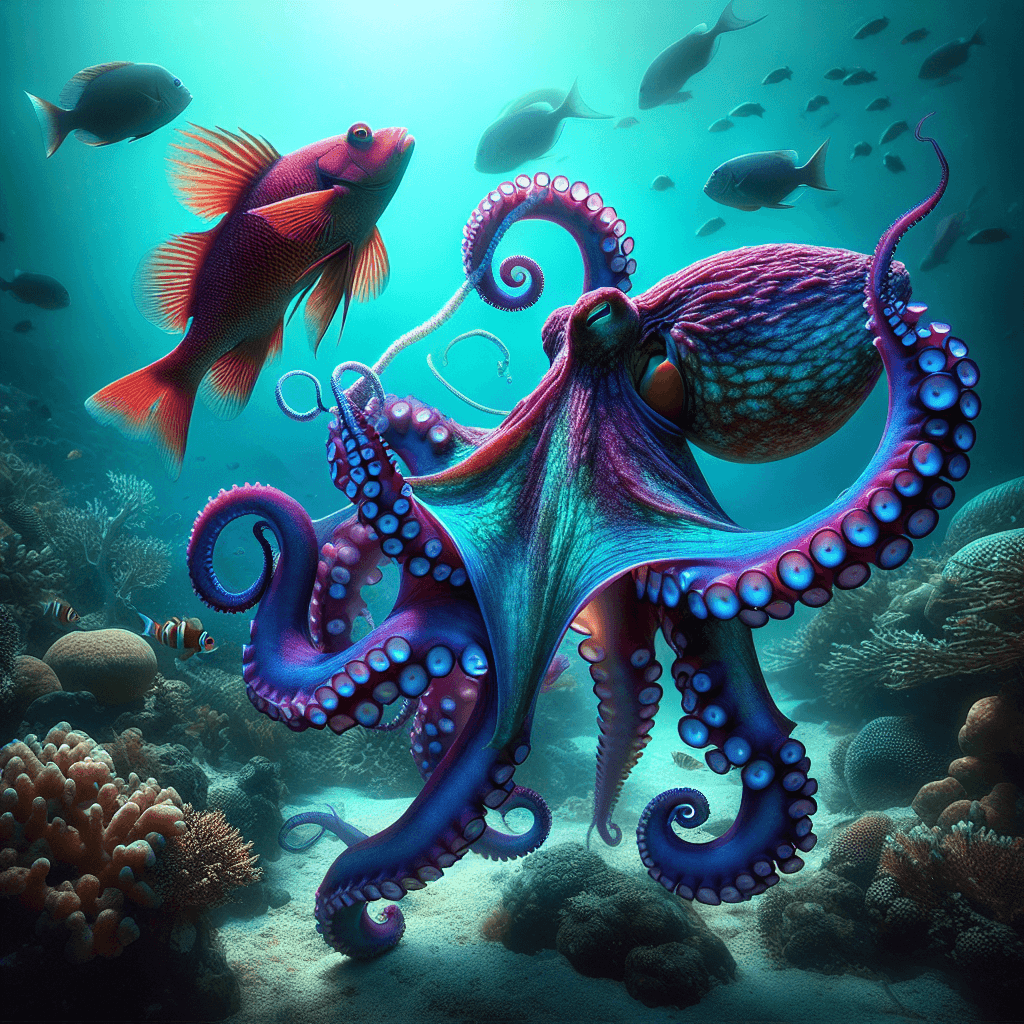
The argonaut male takes this to an entirely new level. His hectocotylus develops in a pouch under his eye. When he encounters a female, a truly remarkable event occurs: the arm, loaded with sperm, breaks off from his body. This autonomous arm then swims over to the female and crawls into her mantle cavity, where it latches on and releases its sperm. After this ultimate sacrifice, the male argonaut swims away, having fulfilled his biological purpose, and dies shortly after.
For a long time, this detached, wriggling arm was a source of great confusion for marine biologists. When first discovered inside female argonauts in the 19th century, scientists believed it was a parasitic worm, naming it Hectocotylus octopodis. It wasn’t until later that they realized it was the male's missing limb.
Why This Bizarre Strategy? Survival and Opportunity
So, why go to such extreme lengths? Evolution doesn't favor bizarre behaviors without a good reason. The argonaut's strategy is a brilliant solution to several overlapping challenges.
1. Avoiding Sexual Cannibalism
The most immediate advantage is safety. By mating from a distance, the tiny male completely avoids the risk of being mistaken for a snack by his colossal partner. He can deliver his genetic material without ever getting within the female's lethal reach. It’s the ultimate form of remote reproduction, ensuring his lineage continues even though his own life ends.
2. The Vastness of the Ocean
Life in the open ocean is a lonely one. Unlike reef octopuses that have a specific territory, argonauts drift through an immense three-dimensional space. Finding a mate is a rare, once-in-a-lifetime event. This "mate-and-die" strategy, known as semelparity, is common in animals with short lifespans and infrequent reproductive opportunities. The detachable hectocotylus ensures that when that rare encounter finally happens, it's successful. The arm can act independently, ensuring fertilization even if the encounter is fleeting.
3. A Numbers Game
A single female argonaut can carry multiple hectocotyli from different males inside her mantle cavity. This means she can store sperm and fertilize her eggs over time, maximizing her reproductive output from the few male encounters she has. For the males, it’s a high-stakes lottery where leaving a piece of themselves behind is the only way to play.
A Final, Detached Thought
The mating ritual of the argonaut octopus is a stunning example of how life adapts to solve the most difficult of challenges. What seems strange to us is, in fact, a perfectly evolved solution to the pressures of size, predation, and the sheer loneliness of the open ocean. It reminds us that the natural world is filled with incredible strategies for survival that go far beyond what we might imagine. So, the next time you think of romantic gestures, remember the argonaut male—a creature who proves that sometimes, the greatest act of love is letting a part of yourself go.


