
Why does some sliced roast beef have a weird rainbow shimmer on its surface
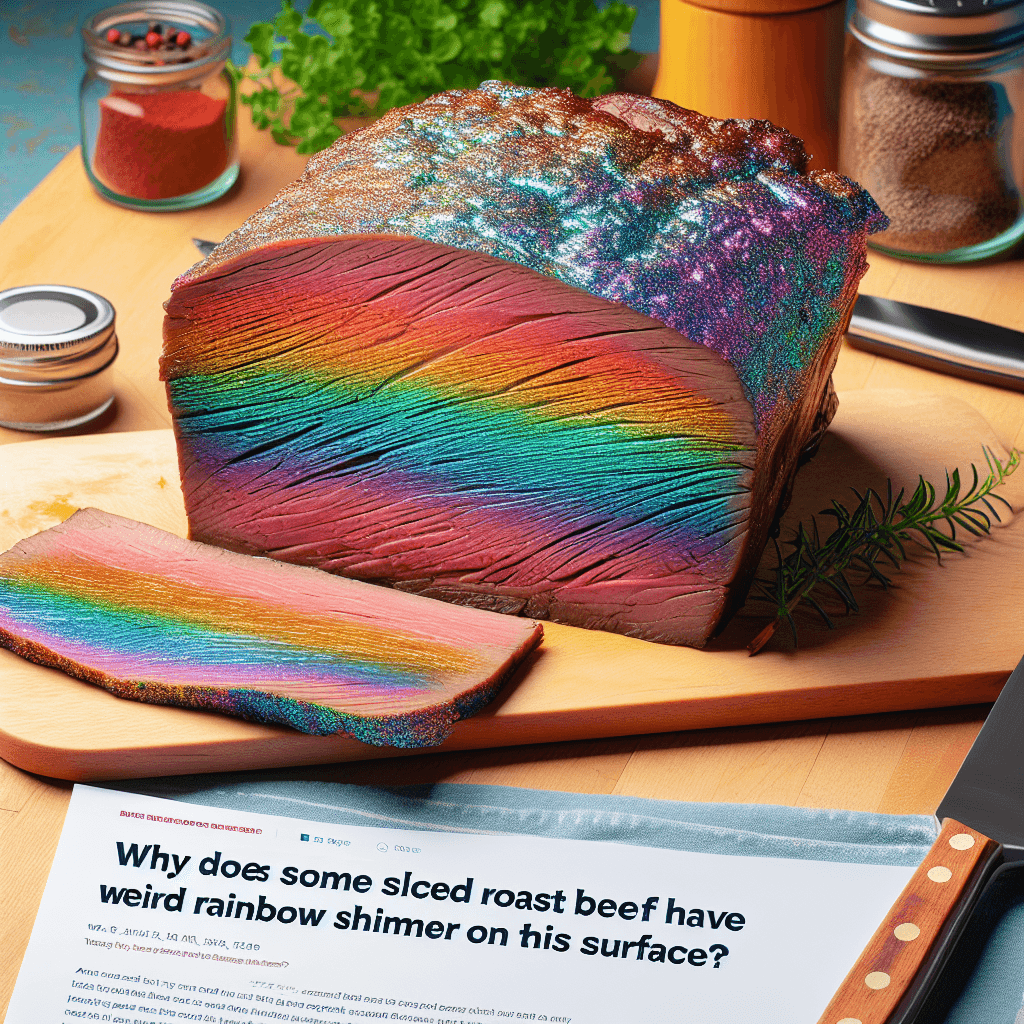
Ever spotted that strange, oily rainbow on your sliced roast beef and worried it was spoiled? The truth isn't a sign of spoilage, but a fascinating trick of light that happens right on your sandwich.

Too Long; Didn't Read
TLDR: The rainbow shimmer on sliced roast beef is a harmless physical effect, not spoilage. Slicing creates microscopic grooves on the muscle that split light into different colors, similar to the back of a CD. The meat is perfectly safe to eat.
The Rainbow Sheen on Your Roast Beef: Why Some Sliced Meat Shimmers and if It's Safe
You’re about to make the perfect roast beef sandwich. You pull the freshly sliced meat from the deli container, and then you see it: a strange, metallic, rainbow-colored shimmer across the surface. Your first thought is likely, "Is this spoiled?" It’s a common moment of culinary confusion that has led to countless good slices of beef being thrown in the trash. But what if that iridescent sheen isn't a sign of spoilage at all? This post will demystify the weird rainbow on sliced roast beef, explaining the fascinating science behind the phenomenon and confirming, once and for all, whether it’s safe to eat.
The Shimmering Truth: A Trick of the Light
First, let's get the most important question out of the way: a rainbow shimmer on your roast beef is, in almost all cases, perfectly safe. This colorful effect is not caused by bacteria, chemical preservatives, or spoilage. It's a physical phenomenon known as iridescence.
You've seen iridescence before, even if you didn't know its name. It's the same effect that creates the beautiful, shifting colors on the surface of a soap bubble, in a patch of oil on wet pavement, or on the back of a CD. In all these cases, the colors are not a result of pigments but are created by the way light interacts with a finely structured surface. The meat is simply playing a trick on your eyes, and it’s a sign of quality, not contamination.
The Science Behind the Spectacle: Diffraction Grating Explained
So, what exactly is happening on the surface of your roast beef? The rainbow effect is due to a process called light diffraction. When meat is sliced, particularly against the grain with a very sharp blade, its muscle fibers are cut into a very precise, ordered pattern.
This creates a microscopic, grooved surface. Here’s how these elements come together to create the rainbow:
- Muscle Fibers: Meat is composed of long, tightly packed muscle fibers. When these are sliced cleanly, they form parallel rows.
- The Perfect Slice: A sharp slicer cutting against the grain creates a uniform, ridged surface at a microscopic level. This surface acts as a "diffraction grating."
- Light Bounces and Splits: When white light hits this grooved surface, it is split into its component spectral colors—the colors of the rainbow. Different colors bend at slightly different angles, so the color you see depends on the angle at which you are viewing the meat.
- Moisture's Role: The natural moisture and fats present in the meat form a thin film on the surface, which enhances this light-splitting effect, making the colors more vibrant.
Because the shimmer depends on the angle of light and your viewing perspective, you might notice that the colors shift or disappear entirely as you move the slice of beef.
Why Isn't Every Slice a Rainbow?
If this is a natural process, you might wonder why you don't see it on every piece of sliced meat. Several factors must align for the iridescence to appear:
- The Cut: The effect is most prominent in lean, well-structured muscles.
- The Blade: A very sharp blade is necessary to create the clean, uniform grooves. A dull knife will tear the fibers rather than slicing them, disrupting the pattern.
- The Angle: The meat must be sliced against the grain to expose the ends of the muscle fibers in a perfect cross-section.
- Meat Type: While common in roast beef, this iridescence is also frequently seen on other meats, especially cured products like ham and corned beef, where the curing process can make the muscle structure more defined.
How to Actually Tell if Your Roast Beef is Bad
Knowing that the rainbow shimmer is harmless is reassuring, but it's still crucial to recognize the real signs of spoilage. Unlike the harmless, light-reflecting sheen, spoiled meat will have clear indicators that engage your other senses. Be on the lookout for:
- An Off-Smell: Your nose is your best tool. Spoiled meat will have a sour, putrid, or ammonia-like odor.
- A Slimy Texture: If the surface of the meat feels sticky or has a slimy film, it's a sign of bacterial growth.
- Dull Discoloration: True spoilage often appears as a dull gray or greenish color that is within the meat itself, not just a shimmer on the surface that changes with the light.
Conclusion: Embrace the Rainbow
The next time you unwrap a few slices of roast beef and see that rainbow shimmer, you don't need to be alarmed. That metallic sheen isn't a warning sign but rather a fascinating display of physics right in your kitchen. It’s a testament to the intricate structure of the muscle and the precision of the blade that sliced it. By understanding the science behind this iridescence, you can confidently distinguish it from the real signs of spoilage, preventing unnecessary food waste. So go ahead and make that sandwich—and maybe take a moment to appreciate the science that makes it shimmer.


