
Why does the United States government maintain a massive underground stockpile of 1.4 billion pounds of cheese
Hidden deep within Missouri’s limestone caves lies a 1.4-billion-pound secret that smells suspiciously like cheddar. Discover the bizarre history and economic mystery behind America’s massive underground cheese fortress and why the government is still hoarding it today.

Too Long; Didn't Read
The United States maintains a 1.4-billion-pound cheese stockpile in underground Missouri caves primarily to stabilize the dairy market. This surplus originated in the 1970s when the government agreed to purchase excess dairy from farmers to prevent a price collapse. Today, the massive reserve serves as a price floor for the industry and supplies federal food assistance programs.
The Big Cheese: Why Does the United States Government Maintain a Massive Underground Stockpile of 1.4 Billion Pounds of Cheese?
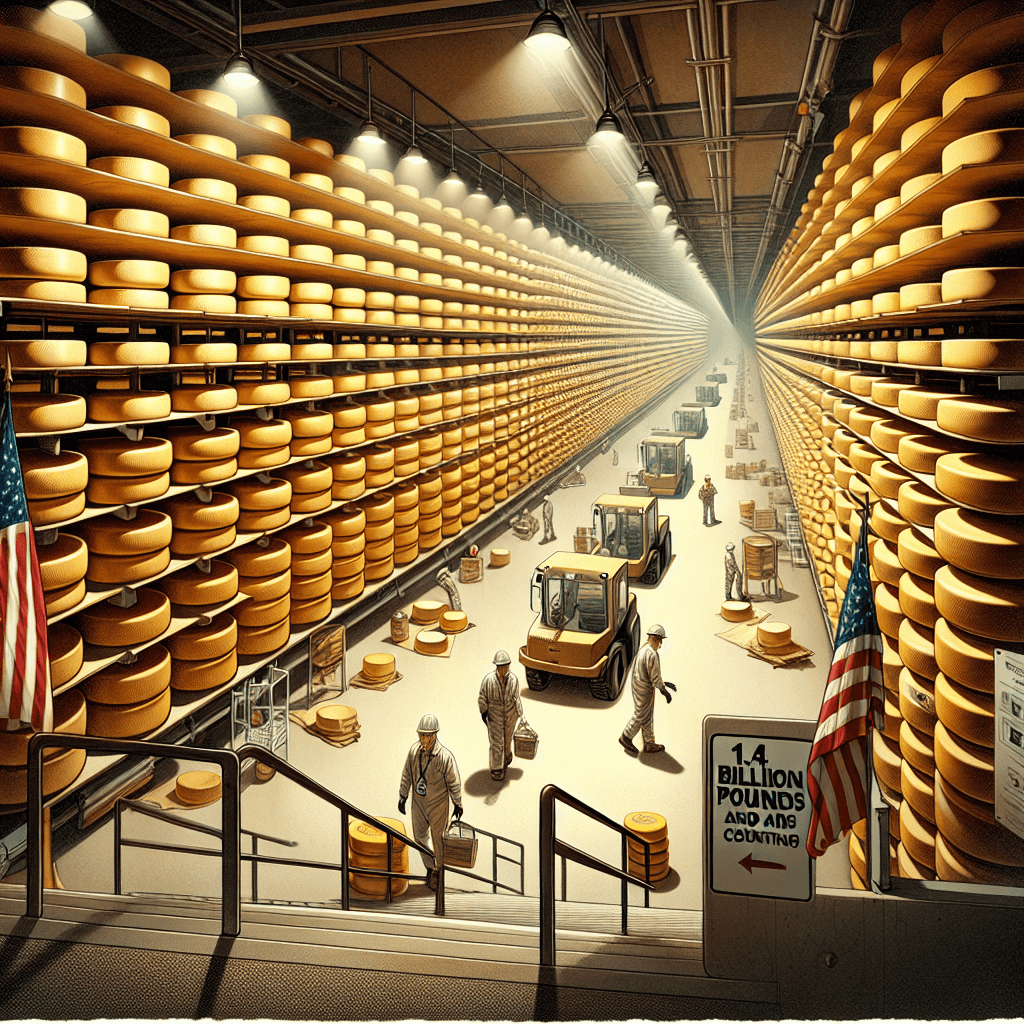
Deep beneath the rolling hills of Springfield, Missouri, lies a subterranean labyrinth of limestone caves that houses one of the world’s most unusual strategic reserves. This isn’t a cache of gold or a secret military arsenal; instead, it is a staggering collection of dairy products. As of recent years, the inventory of American cheese sitting in cold storage reached a record-breaking 1.4 billion pounds. While the image of a "cheese cave" sounds like the stuff of culinary legends, its existence is rooted in complex economic policies and decades of agricultural history. This blog post explores the logistical, historical, and economic reasons behind why the United States government maintains a massive underground stockpile of 1.4 billion pounds of cheese.
The Origins of the Surplus: A Post-War Pivot
The story of the American cheese stockpile begins in the 1970s. During this era, the United States faced high inflation and a struggling dairy industry. To support farmers, the administration of President Jimmy Carter enacted a policy that increased the support price of milk. The goal was to ensure dairy farmers remained profitable even during market downturns.
However, this policy created an unintended incentive: because the government guaranteed it would buy milk and dairy products if the market wouldn't, farmers ramped up production significantly. By the early 1980s, the government was purchasing billions of dollars worth of surplus dairy every year. Since liquid milk is highly perishable, the Department of Agriculture (USDA) processed it into more shelf-stable forms, specifically butter, non-fat dry milk, and blocks of processed cheddar cheese.
Why Does the Government Intervene?
The primary reason for this massive accumulation is market price stabilization. The dairy industry is notoriously volatile, influenced by everything from weather patterns to international trade disputes. The USDA uses the stockpile as a tool to manage this volatility:
- Protecting Producers: By acting as the "buyer of last resort," the government prevents milk prices from dropping so low that farmers are forced into bankruptcy.
- Managing Supply and Demand: When production outpaces consumption, the government absorbs the excess to prevent a market glut.
- Ensuring Food Security: The stockpile acts as a buffer, ensuring there is a consistent supply of dairy nutrients available for national nutrition programs.
The Logistics: Why Underground Caves?
The choice of Springfield, Missouri, as the primary hub for this stockpile is a matter of efficiency and geography. The "Springfield Underground" is a former limestone mine that offers millions of square feet of climate-controlled storage.
Storing cheese in these caves provides several advantages:
- Natural Insulation: The limestone maintains a naturally cool temperature, significantly reducing the electricity costs required to keep the cheese at the ideal 36°F (2°C).
- Structural Integrity: The solid rock ceilings are incredibly strong, allowing for massive pallets of cheese to be stacked safely.
- Central Location: Missouri’s central location in the United States makes it an ideal logistics hub for distributing the product to various states.
Where Does All That Cheese Go?
The government does not simply let the cheese sit indefinitely; it is a rotating inventory. According to reports from the USDA’s Farm Service Agency, the cheese is distributed through various channels to ensure it doesn't go to waste.
- The "Government Cheese" Era: In the 1980s, the surplus became so large that President Ronald Reagan authorized the distribution of five-pound blocks of cheese to low-income families and the elderly.
- National School Lunch Program: A significant portion of the stockpile is allocated to public schools to provide affordable, nutritious meals.
- Food Banks and Assistance Programs: The USDA frequently transfers cheese to the Emergency Food Assistance Program (TEFAP) to support local charities and food pantries.
- Commercial Sales: Occasionally, if market prices rise, the government may sell portions of the surplus back into the private sector.
Conclusion
The existence of a 1.4-billion-pound cheese reserve is more than a quirky piece of Americana; it is a testament to the intricate—and often difficult—balancing act of national agricultural policy. While the stockpile has drawn criticism over the decades for its cost and the potential for waste, it remains a vital tool for stabilizing the dairy market and providing a nutritional safety net for millions of citizens. Understanding why the United States government maintains a massive underground stockpile of 1.4 billion pounds of cheese helps us appreciate the complex systems that keep our food supply stable. As long as the dairy industry remains a cornerstone of the American economy, these quiet limestone caves will likely continue to hold their massive, savory treasures.


