Why is it a legal requirement to own at least two guinea pigs in Switzerland
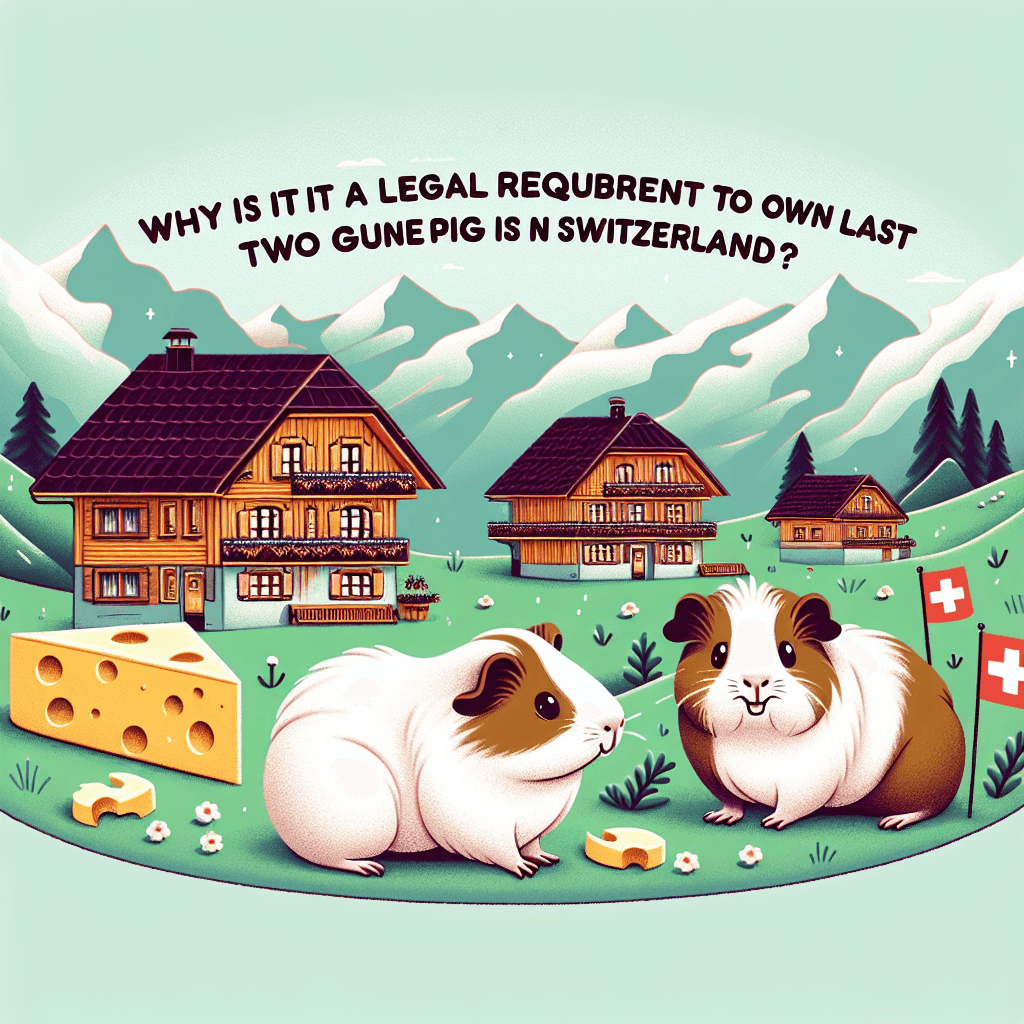
In Switzerland, keeping a single guinea pig isn’t just lonely—it’s actually illegal. Discover the fascinating reason why these social creatures are legally guaranteed a companion to ensure they never have to live a day in solitude.

Too Long; Didn't Read
Switzerland legally requires owning at least two guinea pigs because they are highly social animals that suffer from loneliness and isolation when kept alone. Under a 2008 animal rights law, keeping a single guinea pig is considered animal cruelty, ensuring these pets always have a companion for their mental well-being.
The Social Science of Pet Ownership: Why Is It a Legal Requirement to Own at Least Two Guinea Pigs in Switzerland?
In many parts of the world, bringing home a single pet is seen as a matter of personal preference or available space. However, in Switzerland, doing so with certain species could actually land you in legal trouble. Since 2008, Swiss animal welfare legislation has made it illegal to keep "social species" in isolation. This means that if you want to own a guinea pig, you must own at least two. This unique law often surprises outsiders, but it is rooted in a deep commitment to animal rights and biological necessity. The purpose of this blog post is to explore the legal framework and scientific reasoning behind why it is a legal requirement to own at least two guinea pigs in Switzerland, ensuring these small creatures lead a life that respects their natural instincts.
The Swiss Animal Protection Ordinance of 2008
Switzerland is globally recognized for having some of the strictest animal welfare laws in existence. The cornerstone of the requirement to own multiple guinea pigs is the Swiss Animal Protection Ordinance (OPAn), which was significantly updated in 2008. This legislation shifted the focus from merely preventing physical abuse to ensuring the "dignity" and psychological well-being of the animal.
According to the Swiss Federal Food Safety and Veterinary Office (FSVO), certain animals are classified as "social species." This category includes not only guinea pigs but also parrots, goldfish, and social rodents like rats and mice. Under the law, keeping these animals alone is legally defined as an act of cruelty because it denies the animal the ability to engage in natural social behaviors essential for their mental health.
The Science of Sociality: Why Guinea Pigs Need Companions
To understand why the Swiss government took such a firm stance, one must look at the biology of the guinea pig (Cavia porcellus). In the wild, guinea pigs are herd animals that live in close-knit groups. They rely on their peers for:
- Communication: Guinea pigs have a complex language of squeaks, chirps, and purrs used to signal emotions or warnings to the group.
- Security: As prey animals, they feel extreme stress when isolated. The presence of others provides a sense of safety, allowing them to sleep and eat more peacefully.
- Mental Stimulation: Interaction with their own kind prevents the lethargy and depression often seen in solitary pets.
Biologists have noted that a human can never truly replace another guinea pig. While owners provide food and affection, they cannot communicate in the same frequency or provide the 24-hour physical presence that a fellow "cavy" offers.
The "Rent-a-Guinea-Pig" Solution
One of the most fascinating outcomes of this legal requirement is how Swiss society handles the "last survivor" problem. When one guinea pig in a pair passes away, the owner is technically in violation of the law if they do not immediately find a new companion for the survivor. However, this creates a cycle where the owner may feel forced to buy new pets indefinitely.
To solve this dilemma, specialized animal breeders and rescue organizations offer "rent-a-guinea-pig" services. This allows an owner to:
- Adopt a companion for their aging pet.
- Provide the surviving animal with social interaction for the remainder of its life.
- Return the "rented" guinea pig to the rescue center once their original pet passes away, thereby ending the cycle of ownership legally and ethically.
Broader Implications for Animal Welfare
The requirement for guinea pigs is part of a much larger philosophy regarding animal "dignity" in Switzerland. The law stipulates various social and environmental requirements for different species:
- Goldfish: They are considered social and must have companions. Additionally, the law forbids "flushing" them down the toilet; they must be euthanized humanely.
- Cats: If a cat is kept indoors alone, it must be able to see other cats through a window or have regular contact with humans.
- Dogs: Prospective dog owners were previously required to take a theoretical and practical course before owning a pet, though this specific regulation has shifted to the cantonal (state) level in recent years.
Conclusion
The legal requirement to own at least two guinea pigs in Switzerland serves as a powerful reminder that pet ownership is a responsibility that extends beyond basic feeding and sheltering. By codifying the social needs of animals into law, Switzerland recognizes that psychological well-being is just as vital as physical health. These regulations ensure that guinea pigs are not treated as inanimate toys, but as sentient beings with specific biological needs for companionship. For anyone considering a pet in Switzerland, the message is clear: the animal's natural social structure must come first. This progressive approach sets a high bar for animal welfare globally, encouraging owners to see the world—and their living rooms—from the perspective of their pets.