
Why does wasabi burn your sinuses while chili peppers burn your tongue
It’s a tale of two different chemical attacks: one molecule launches an airborne assault on your sinuses, while the other wages a lingering war on your tongue.

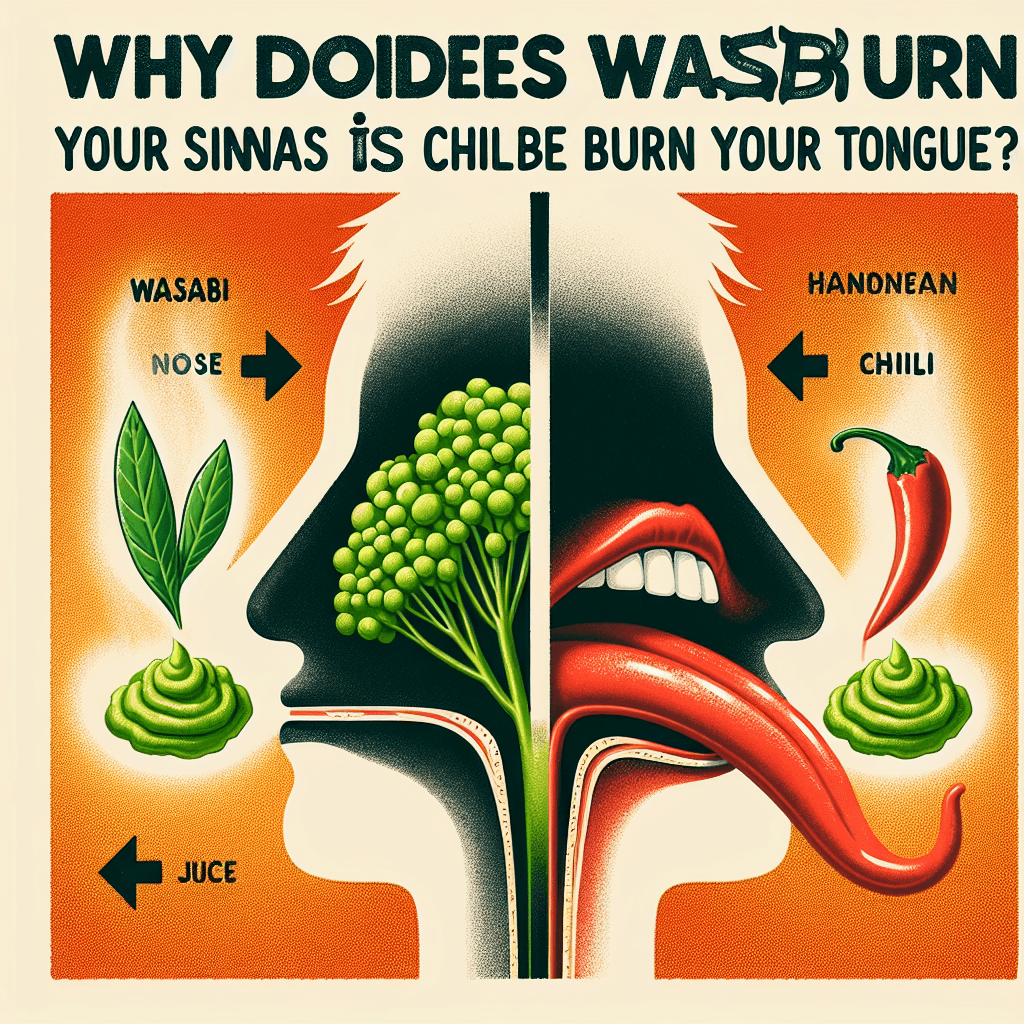
Too Long; Didn't Read
TLDR: The spicy chemical in wasabi is a lightweight vapor that travels up into your sinuses. The spicy chemical in chili peppers is a heavy oil that sticks to the pain receptors on your tongue.
The Science of Spice: Why Does Wasabi Burn Your Sinuses While Chili Peppers Burn Your Tongue?
Have you ever taken a bold bite of sushi, only to be hit with a sudden, sharp, and eye-watering sensation that feels like it’s clearing your sinuses for the first time in years? Then, on another day, you bravely try a ghost pepper hot sauce and experience a completely different kind of fire—a slow, smoldering burn that builds on your tongue and lingers for minutes. Both are described as "hot" or "spicy," yet the experiences are worlds apart. This isn't just your imagination; it's a fascinating story of two different molecules on two very different missions. This post will break down the chemistry behind the burn, revealing why wasabi targets your head while chili peppers set your mouth on fire.
The Slow Burn: Meet Capsaicin, The Chili Pepper's Weapon
The lingering, mouth-searing heat from chili peppers comes from a single family of chemical compounds, the most famous of which is capsaicin. This is the molecule behind the spiciness of everything from a mild jalapeño to the fearsome Carolina Reaper.
Capsaicin is a large, heavy, oil-based molecule. Because of its size and oily nature, it doesn't easily turn into a gas. When you eat a chili pepper, the capsaicin molecules stay put right where they land: on your tongue and in your mouth.
Here’s where the magic happens. Your mouth is lined with pain receptors called TRPV1 (pronounced "trip-vee-one"). These receptors are your body's dedicated heat detectors, designed to warn you if you’re about to drink scalding coffee or eat food that's too hot. Capsaicin has the perfect shape to bind to these receptors, essentially tricking them into sending a false alarm to your brain. Your brain receives a signal that says, "Warning! Mouth is on fire!" even though there's no actual temperature change. Because capsaicin is heavy and oil-soluble, it sticks to the fatty membranes in your mouth, leading to that characteristic long, slow, and persistent burn.
The Head Rush: Wasabi's Volatile Vapors
The sharp, fleeting jolt from wasabi (and its relatives, horseradish and mustard) is caused by a completely different compound: allyl isothiocyanate (AITC).
Unlike the heavy, oily capsaicin, AITC is a small, lightweight, and water-soluble molecule. Most importantly, it is volatile, which means it readily evaporates and travels as a gas. Interestingly, AITC isn't just sitting in the wasabi root. It's only created when the plant's cells are crushed—for instance, when it's grated to make a paste. This crushing action mixes two otherwise separate substances in the plant, triggering a rapid chemical reaction that produces the fiery AITC.
When you eat wasabi, the volatile AITC gas doesn't linger in your mouth. Instead, it travels up the back of your throat into your nasal cavity. There, it encounters a different set of pain receptors, primarily the TRPA1 receptors, which are highly concentrated in your sinuses. These receptors are designed to detect chemical irritants, like smoke or pollutants. The AITC vapor triggers these receptors, creating that intense, sinus-clearing rush that feels like it's going straight to your brain. Because the AITC molecules are so light and dissipate quickly, the sensation is powerful but remarkably brief.
A Head-to-Head Comparison: Capsaicin vs. Allyl Isothiocyanate
To put it simply, the two spicy experiences come down to a difference in molecular delivery systems.
-
Capsaicin (Chilies):
- Molecule: Large, heavy, and oil-soluble.
- Delivery: Stays in the mouth, sticking to the tongue and cheeks.
- Receptor: Targets TRPV1 (heat sensors) in the mouth.
- Sensation: A slow-building, long-lasting, smoldering burn.
-
Allyl Isothiocyanate (Wasabi):
- Molecule: Small, lightweight, and volatile (a gas).
- Delivery: Travels as a vapor into the nasal passages.
- Receptor: Targets TRPA1 (irritant sensors) in the sinuses.
- Sensation: A sharp, rapid, eye-watering rush that fades quickly.
A Tale of Two Burns
So, the next time you sit down for a meal, you’ll understand the fundamental difference between the two primary forms of "heat" on your plate. The chili's burn is a terrestrial fire, a heavy molecule that clings to your tongue and refuses to let go. The wasabi's kick, on the other hand, is an airborne assault, a volatile vapor that shoots straight for the sinuses for a quick but memorable attack. This incredible diversity in the plant kingdom gives us a rich culinary landscape, where we can choose our preferred brand of fiery sensation—be it a slow, lingering burn or a quick, head-clearing jolt.


