Why does wool keep you warm even when it is wet
Discover the bizarre chemical reaction that allows wool to perform a seemingly impossible feat: generating its own heat to keep you warm, even when it's completely soaked.

Too Long; Didn't Read
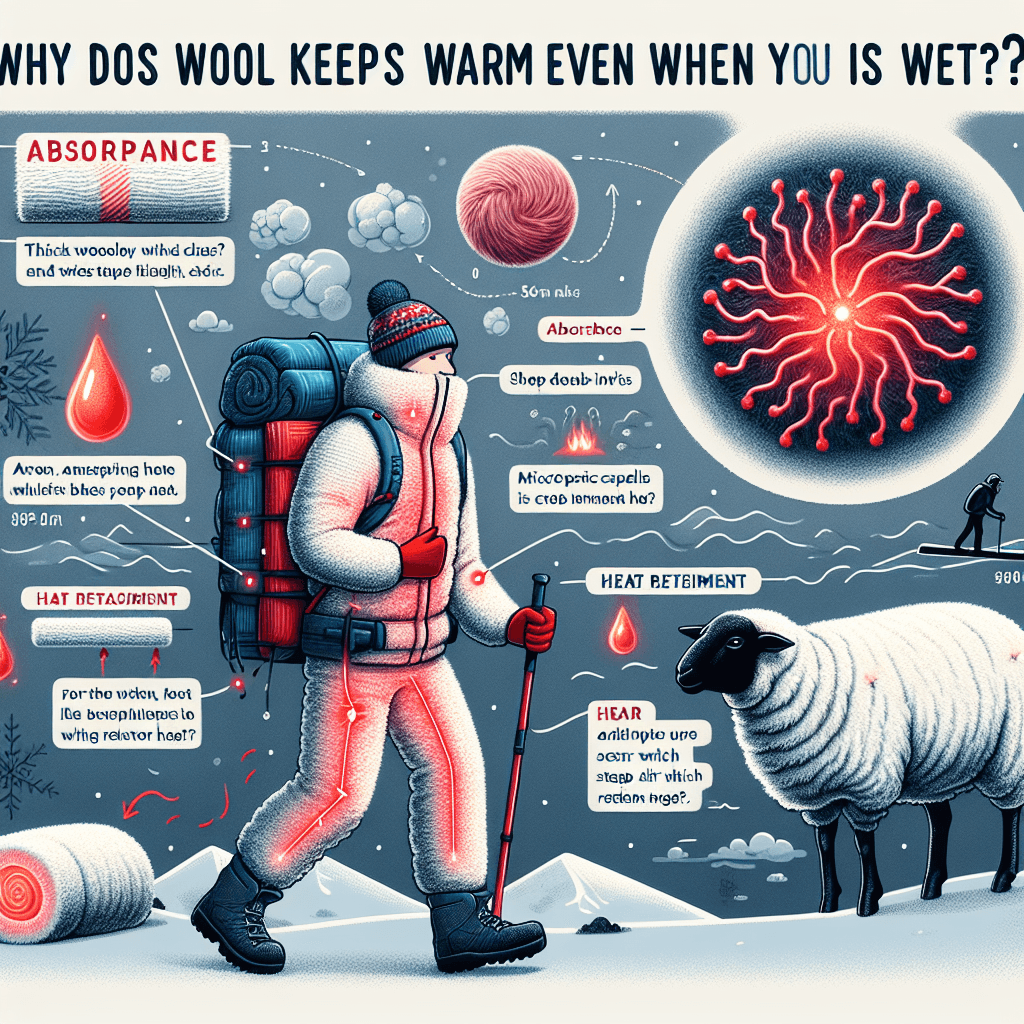
TLDR: Wool generates heat as it absorbs moisture, and its crimped fibers trap insulating air pockets that don't collapse when wet.
The Magic of Wool: Why Does Wool Keep You Warm Even When It Is Wet?
Imagine you’re on a mountain hike when the sky unexpectedly opens up. A cold rain begins to soak through your clothes. If you’re wearing a cotton t-shirt, you know the feeling: a heavy, clammy fabric clinging to your skin, rapidly stealing your body heat. But if you’re wearing wool, the experience is remarkably different. You might feel damp, but you stay surprisingly warm. This isn’t folklore passed down by shepherds; it’s a scientific marvel woven into the very structure of the fiber. So, why does wool keep you warm even when it is wet? This post will unravel the science behind one of nature’s most effective performance fabrics.
It’s All in the Fiber: Structure and Insulation
The first secret to wool’s warmth lies in its physical structure. Unlike a smooth, synthetic fiber, a single strand of wool is a complex, three-dimensional masterpiece.
- The Crimp: Wool fibers aren't straight; they have a natural waviness or "crimp." When these fibers are spun into yarn and woven into fabric, this crimp creates millions of tiny air pockets. This trapped air is a fantastic insulator, creating a thermal barrier that slows the transfer of heat from your body to the cold environment.
- The Scaly Exterior: Under a microscope, you’d see that each wool fiber is covered in overlapping scales, similar to the shingles on a roof. This outer layer, called the cuticle, is naturally water-resistant and helps shed liquid water.
Even when wool gets damp, the crimp helps the fabric maintain its loft and structure. The air pockets don’t collapse like they do in a saturated cotton garment, so wool retains much of its insulating power.
Nature's Smart Heater: The Science of Adsorption
Here is where the real magic happens. Wool’s ability to stay warm when wet isn’t just about trapping air; the fiber itself actively generates heat in a unique chemical process.
When water comes into contact with wool, it doesn’t just sit on the surface. The inner core of the fiber, known as the cortex, is highly hygroscopic, meaning it actively draws in water vapor. As the hydrogen bonds of the water molecules bind to the molecules within the wool fiber, they release a small but significant amount of energy as heat.
This process is called adsorption, and the heat it creates is known as the "heat of sorption." It’s an exothermic reaction—a process that releases heat. This means that as wool gets wet, it is literally generating warmth, counteracting the cooling effect of the moisture. In fact, a wool garment can absorb up to 30% of its own weight in water vapor before it even begins to feel damp to the touch, all while releasing heat in the process.
Wicking vs. Soaking: How Wool Manages Moisture
The final piece of the puzzle is wool’s brilliant moisture management system, which creates a more comfortable microclimate next to your skin.
Wool has a fascinating dual personality: the scaly outer surface is hydrophobic (water-repelling), while the inner core is hydrophilic (water-loving).
This combination makes wool an incredible wicking fabric. It pulls moisture vapor (sweat) away from your skin and transports it into the core of the fiber, leaving your skin feeling much drier. Cotton, on the other hand, is entirely hydrophilic; it absorbs liquid moisture like a sponge and holds it directly against your skin, leading to rapid conductive heat loss that makes you feel cold and clammy.
Because wool traps moisture within its core and keeps its surface relatively dry, it prevents that chilling, evaporative cooling effect that makes being wet in other fabrics so miserable.
Conclusion
Wool’s ability to keep you warm when wet is no old wives' tale. It's a powerful combination of smart structure and sophisticated chemistry. From the insulating air pockets created by its natural crimp to the heat-generating reaction of adsorption, every aspect of the fiber is designed for thermal regulation. Its unique ability to wick moisture away from the skin while repelling liquid water from the outside solidifies its status as a superior natural insulator. So, the next time you pull on a wool sweater or base layer, you can appreciate the intricate science that makes it one of the most reliable and comfortable materials for facing the elements, wet or dry.