
Why does your brain think you are being poisoned when you read in a moving car
Ever wonder why a simple book can trigger a biological “poison alarm” during a road trip? Discover the fascinating sensory glitch that convinces your brain you’ve been toxified—and why your body’s survival instinct is to make you feel sick.

Too Long; Didn't Read
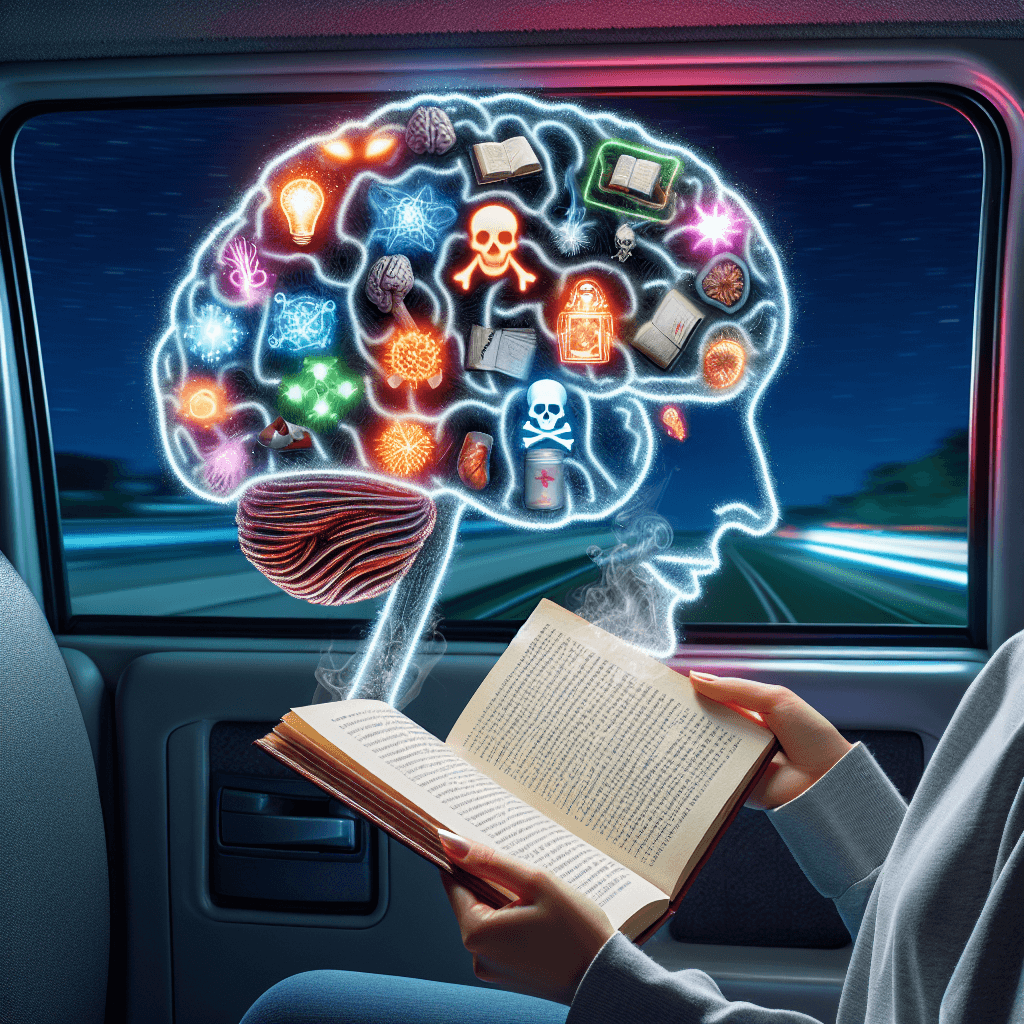
Reading in a car causes a sensory conflict where your eyes see a static object while your inner ear feels movement. Your brain interprets this mismatch as a sign of hallucinogenic poisoning and triggers nausea to expel the nonexistent toxins.
The Evolutionary Glitch: Why Does Your Brain Think You Are Being Poisoned When You Read in a Moving Car?
Imagine you are settling into a long road trip. You open a captivating novel or scroll through your phone to pass the time. Within minutes, the words begin to blur, your head starts to throb, and a familiar wave of nausea washes over you. This phenomenon, known as motion sickness or kinetosis, affects millions of people worldwide. But have you ever wondered why your body reacts so violently to a seemingly harmless activity? The answer lies in a fascinating evolutionary "glitch." When you read in a moving vehicle, your brain receives conflicting signals from your senses, leading it to reach a startling—and incorrect—conclusion: that you have been poisoned. Understanding why does your brain think you are being poisoned when you read in a moving car requires a look into human physiology and our evolutionary history.
The Science of Sensory Conflict
To understand this reaction, we must first look at how the brain processes movement. Your brain relies on three distinct systems to maintain balance and spatial orientation:
- The Visual System: Your eyes tell the brain where you are in space and what direction you are moving.
- The Vestibular System: Located in the inner ear, this system consists of fluid-filled canals that detect acceleration, rotation, and tilt.
- Proprioception: Receptors in your muscles and joints that tell your brain about your body’s position.
Under normal circumstances, these three systems work in perfect harmony. When you walk, your eyes see the ground moving, your inner ear feels the rhythm of your steps, and your muscles signal exertion. However, reading in a car disrupts this harmony.
The Great Disconnect
When you focus on a book or a screen, your visual system reports to the brain that you are stationary. To your eyes, the book is a fixed, non-moving object. Simultaneously, your vestibular system is detecting the vibrations, turns, and speed changes of the vehicle.
This creates a massive sensory mismatch. The brain receives a signal from the ears saying, "We are moving at 60 miles per hour," while the eyes insist, "We are sitting perfectly still." According to research in neuroscience, this conflict occurs in the thalamus, the brain's central relay station for sensory information.
Why the Brain Defaults to "Poison"
From an evolutionary standpoint, cars, planes, and trains are very recent inventions. For the vast majority of human history, the only way a person could experience such a profound sensory disconnect—where the body feels movement that the eyes cannot see—was through the ingestion of neurotoxins.
In nature, certain poisonous plants or berries can interfere with neural signaling, causing hallucinations or vestibular disruptions. Because our ancestors did not have to worry about the physics of high-speed travel, the human brain evolved a fail-safe mechanism: if the senses don't match up, assume a toxin has been ingested.
The Role of the Area Postrema
Once the thalamus detects this sensory conflict, it triggers a response in the area postrema, a structure in the medulla of the brainstem often referred to as the "vomit center." The area postrema is responsible for inducing emesis (vomiting) to expel toxins from the body. Consequently, your brain initiates a "purge" response to protect you from a poison that doesn't actually exist. You feel nauseous because your brain is trying to save your life from a phantom threat.
Factors That Influence the Intensity
Not everyone experiences this "poisoning" response with the same intensity. Several factors can dictate how sensitive your brain is to these conflicting signals:
- Age: Children between the ages of 2 and 12 are generally more susceptible, while many people "grow out" of the most severe symptoms.
- Visual Focus: Staring at a fixed point inside the car (like a book) is much worse than looking out the window, where your eyes can confirm the movement your ears feel.
- Ventilation: Lack of fresh air can exacerbate the feeling of nausea, as the brain is already in a heightened state of stress.
How to Calm Your Brain
If you are prone to motion sickness, the goal is to resolve the sensory conflict. Experts suggest looking at the horizon; this allows your eyes to see the movement that your inner ears are feeling, syncing the signals once more. Other methods include:
- Switching to Audio: Listening to a podcast or audiobook allows you to enjoy a story without fixing your eyes on a static object.
- Sitting in the Front Seat: This provides a wider field of vision of the road ahead, reducing the mismatch.
- Closing Your Eyes: By removing the visual input entirely, you eliminate the conflicting "stationary" signal, leaving the brain with only the movement data from the ears.
Conclusion
The reason why does your brain think you are being poisoned when you read in a moving car is a testament to the power of human evolution. While it feels like an inconvenient weakness, it is actually a highly sophisticated survival mechanism designed to protect you from environmental toxins. Your brain is simply using an ancient defense system to solve a modern problem. By understanding that motion sickness is a result of sensory conflict, you can take practical steps to align your vision with your physical movement, convincing your brain that you are, in fact, perfectly safe. Next time you feel that wave of nausea, remember: your brain isn't trying to make you miserable; it's just trying to be your hero.


