
Why doesn't a giraffe get a head rush when it bends down to drink
With blood pressure double that of a human, a giraffe bending down for a drink should be a recipe for a fatal head rush. Uncover the incredible feat of biological engineering that makes this seemingly impossible act possible.

Too Long; Didn't Read
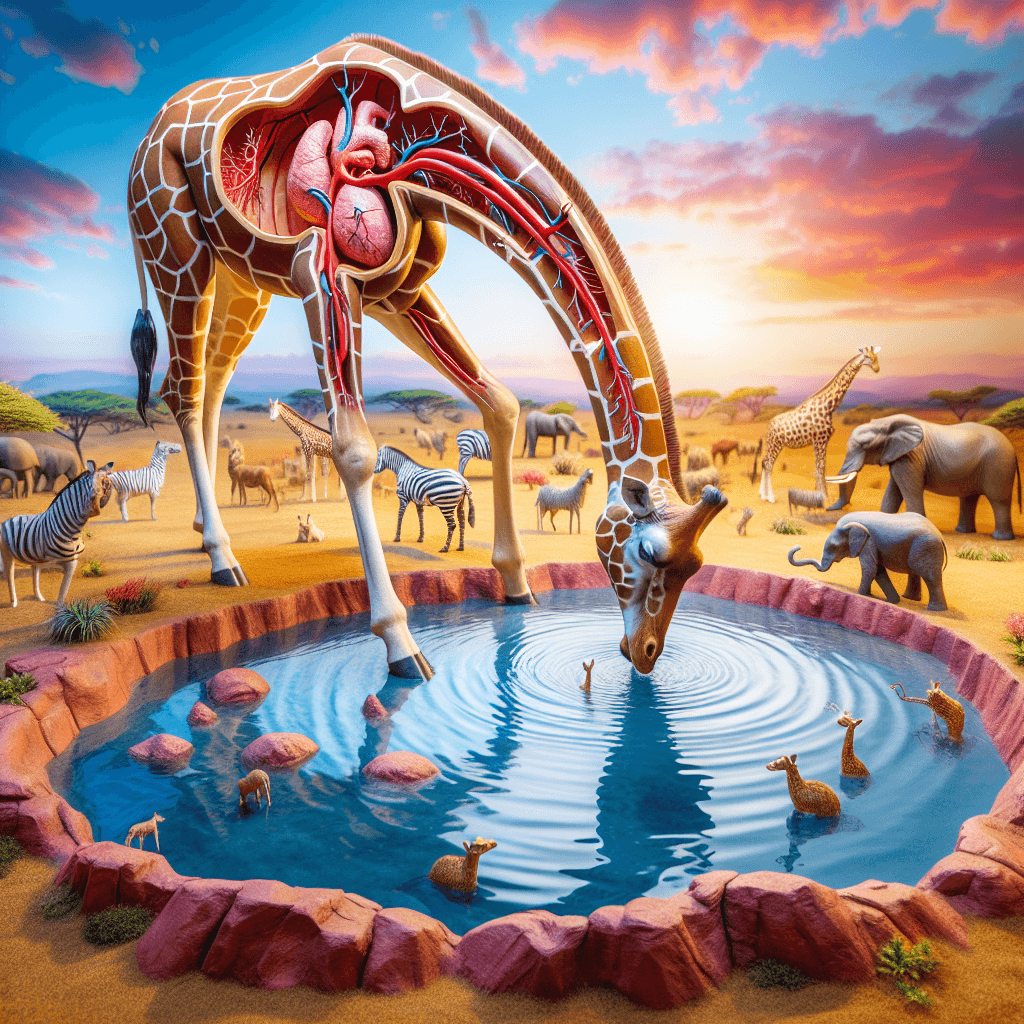
TLDR: Giraffes have a specialized circulatory system with one-way valves, elastic blood vessels, and a sponge-like web of arteries near the brain. This system regulates their extremely high blood pressure, preventing a rush of blood to the head when they bend down and stopping them from fainting when they stand up.
Blog Post Title: Nature's Engineering Marvel: Why Doesn't a Giraffe Get a Head Rush When It Bends Down to Drink?
Introduction
Have you ever stood up too quickly and felt that dizzying, light-headed sensation? That's a head rush, caused by a sudden drop in blood pressure to your brain. Now, imagine you're a giraffe, lowering your head nearly six feet to the ground for a drink and then lifting it back up just as quickly. Logic suggests this should cause a catastrophic, potentially fatal, surge of blood pressure. Yet, giraffes do this daily without so much as a wobble. This incredible feat isn't magic; it's a masterpiece of evolutionary engineering. This post will explore the fascinating physiological adaptations that make up the giraffe's intricate circulatory system, answering the question: why doesn't a giraffe get a head rush?
The Heart of the Matter: A Super-Powered Pump
The first piece of the puzzle lies in the giraffe's remarkable heart. To pump blood all the way up its long neck to the brain, a giraffe needs a cardiovascular system operating under extreme pressure.
- A Powerful Engine: A giraffe's heart is a two-foot-long, 25-pound powerhouse.
- Extreme Blood Pressure: It generates a blood pressure that is roughly double that of a healthy human. This immense pressure is essential to overcome gravity and ensure a steady supply of oxygenated blood reaches the brain when the giraffe is standing tall.
However, this same high pressure creates a dangerous problem. When the giraffe lowers its head to drink, gravity is no longer an obstacle. That powerful pump could send a tidal wave of high-pressure blood directly to the brain, causing massive damage. This is where the giraffe's other adaptations come into play.
The Rete Mirabile: A Pressure-Regulating Wonder
Perhaps the most critical adaptation is a specialized network of blood vessels at the base of the brain called the Rete Mirabile, which is Latin for "wonderful net." This intricate web of arteries and veins acts as a biological pressure damper.
When the giraffe lowers its head, the initial surge of blood doesn't slam directly into the brain. Instead, it flows into the Rete Mirabile. This network expands, temporarily collecting a large volume of the excess blood, much like a sponge soaking up water. This process effectively buffers the brain from the sudden, dramatic increase in pressure, preventing a "head rush" and protecting the delicate brain tissue from damage.
Smart Plumbing: Valves and Vessels
A giraffe's circulatory system is also equipped with a series of clever "plumbing" solutions that help manage blood flow and pressure throughout its body.
- One-Way Valves: The large jugular veins in the giraffe's neck contain a series of one-way valves. When the head is down, these valves close to prevent the large volume of blood in the head and neck from flowing back down with gravity when the head is lifted. Conversely, they help manage the pooling of blood in the head when it's lowered.
- Natural Compression Socks: A giraffe's skin, particularly on its long legs, is incredibly thick and tight. This taut skin acts like a natural G-suit or a set of high-grade compression socks. It prevents blood from pooling in the lower extremities due to the high pressure and the pull of gravity, ensuring it remains in circulation where it's needed most.
When the giraffe swiftly raises its head, this entire system works in reverse. The Rete Mirabile releases its stored blood, the powerful heart continues its work, and the valves ensure blood flows in the correct direction, preventing the giraffe from fainting due to a sudden drop in blood pressure to the brain.
Conclusion
The giraffe's ability to drink water without consequence is a stunning example of evolutionary problem-solving. It's not one single trick but a sophisticated, interconnected system of adaptations. From its incredibly powerful heart and high-pressure circulatory system to the brilliant pressure-regulating Rete Mirabile and its specialized valves and skin, the giraffe is a walking marvel of hydraulic engineering. So, the next time you see one of these magnificent creatures gracefully lowering its head to a waterhole, you can appreciate the complex biological machinery at work, perfectly designed to solve a very tall problem.


