
Why doesn't cooking with wine or beer make your food alcoholic
That splash of wine in your pasta sauce does more than add flavor, but the reason it won't get you tipsy is a matter of simple, fascinating chemistry.

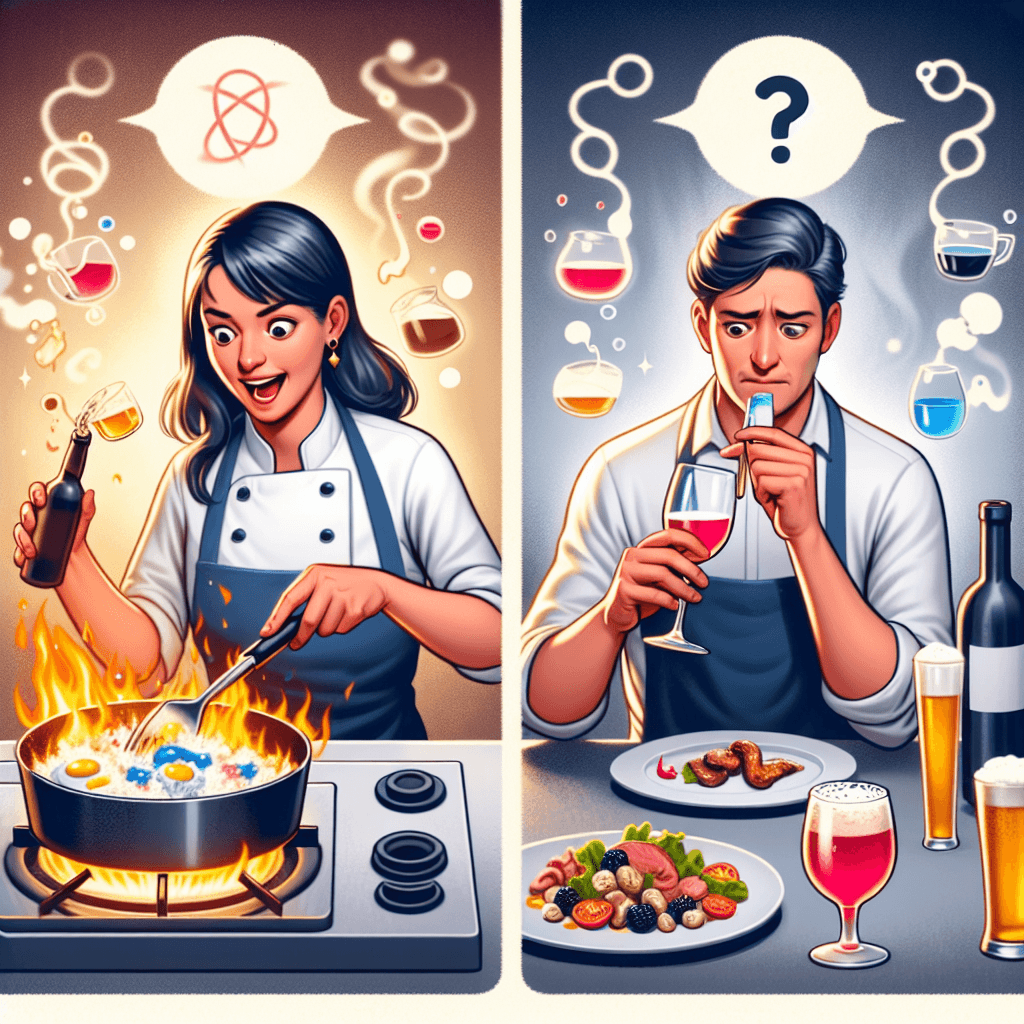
Too Long; Didn't Read
TLDR: Heat makes the alcohol evaporate during cooking, leaving behind the flavor but not enough alcohol to have an intoxicating effect. The longer you cook it, the less alcohol remains.
The Sobering Truth: Why Doesn't Cooking with Wine or Beer Make Your Food Alcoholic?
Have you ever watched a chef confidently splash a generous glug of red wine into a simmering sauce and wondered, "Is this dish safe for everyone to eat?" It's a common culinary question rooted in a simple misunderstanding. Many of us were taught that all the alcohol "burns off" the second it hits a hot pan. While cooking with wine, beer, or spirits adds incredible depth and complexity to a dish, the science of what happens to the alcohol is a bit more nuanced than that. This post will demystify the process, exploring the science behind alcohol evaporation and revealing just how much, if any, alcohol is left on your plate.
The Myth of Instant Evaporation
The popular belief that alcohol vanishes instantly during cooking stems from a kernel of scientific truth: alcohol's boiling point is lower than water's. Ethanol, the type of alcohol in beverages, boils at 173°F (78°C), while water boils at 212°F (100°C). Logically, it seems the alcohol should evaporate completely before the water even begins to simmer.
However, in a sauce, stew, or marinade, alcohol and water mix to form a solution. This mixture complicates things. Instead of evaporating separately, they evaporate together, though the alcohol still evaporates at a faster rate. This means that simply bringing a dish to a boil for a few moments is not enough to eliminate all the alcohol content. The idea of it all "flashing off" in seconds is, for the most part, a myth.
It's All in the Technique: What Determines How Much Alcohol Stays?
The amount of alcohol that remains in a finished dish is not a fixed number; it depends heavily on the cooking method, time, and even the type of cookware used. Several key factors are at play:
- Cooking Time: This is the single most significant factor. The longer a dish is cooked, the more alcohol will evaporate. A quick flambé will leave a significant amount of alcohol behind, while a stew that simmers for hours will have very little.
- Heat Level: Higher temperatures accelerate evaporation. A rolling boil will reduce alcohol content faster than a gentle simmer.
- Surface Area: A wide, shallow pan exposes more of the liquid to the air, allowing alcohol to evaporate more efficiently than it would in a deep, narrow pot.
- Lid On or Off: Cooking with the lid off is crucial for alcohol reduction. A lid traps the evaporating alcohol vapor, which then condenses and drips back into the food.
The Numbers Game: What the Research Shows
So, how much alcohol actually remains? Fortunately, we don't have to guess. A landmark study funded by the U.S. Department of Agriculture (USDA) provided concrete data on alcohol retention in cooking. The findings are often surprising:
- Alcohol added to a boiling liquid and removed from heat: 85% of alcohol remains.
- Alcohol flambéed: 75% of alcohol remains.
- Simmered or baked for 15 minutes: 40% of alcohol remains.
- Simmered or baked for 1 hour: 25% of alcohol remains.
- Simmered or baked for 2.5 hours: 5% of alcohol remains.
As you can see, it takes a significant amount of time to cook away most of the alcohol. Even after more than two hours of simmering, a small percentage is still present.
The Bottom Line: Can Your Coq au Vin Make You Tipsy?
This brings us back to the original question: can this remaining alcohol make your food intoxicating? For the vast majority of people, the answer is a definitive no.
Let's consider a typical beef bourguignon recipe that calls for one cup of red wine (at 12% ABV) and serves four people. After simmering for two hours, about 10% of the alcohol might remain. The total amount of pure alcohol left in the entire pot would be minuscule. Divided into four servings, the amount of alcohol each person consumes is negligible—far less than you would find in a non-alcoholic beer or even some fruit juices. You would have to eat an impossibly large portion to feel any effect.
The purpose of cooking with alcohol is to add flavor. Alcohol is a fantastic solvent for flavor compounds in ingredients like herbs and spices, helping them meld into the dish and creating a richer, more complex taste profile that water alone cannot achieve.
Conclusion
While it's a myth that all alcohol burns off instantly, it's also true that the final amount left in a properly cooked dish is too small to cause intoxication. The key factors are time and technique. A long, slow simmer in an uncovered pot will significantly reduce the alcohol content to trace amounts. So, you can confidently enjoy that delicious, wine-infused risotto or beer-braised short rib, appreciating the depth of flavor it brings to the table. The only thing you'll be intoxicated by is the fantastic taste.


