
Why is it so difficult to find truly blue-colored food in nature
From ruby-red strawberries to vibrant green lettuce, we eat the rainbow—so why is true blue, one of the most beloved colors, almost entirely missing from nature's menu?

Too Long; Didn't Read
TLDR: Blue is a very difficult and rare pigment for plants to create chemically. Most blue-looking foods, like blueberries, are actually using red or purple pigments that only appear blue due to specific acidity levels or structural tricks that scatter light.
The Rarest Color on the Menu: Why Is It So Difficult to Find Truly Blue-Colored Food in Nature?
Take a moment and try to picture a naturally blue food. Your mind probably jumped straight to blueberries. But what if I told you that blueberries aren't truly blue? If you crush one, you’ll find the juice and flesh are a deep reddish-purple. This simple experiment highlights a fascinating botanical mystery: in the vast and vibrant spectrum of colors found in nature, true blue is remarkably elusive, especially on our plates. While our planet is covered in blue skies and oceans, the living world, particularly the plant kingdom, has largely left blue off its palette. This post will delve into the chemical, physical, and evolutionary reasons why finding genuinely blue-colored food is such a rare treat.
The Pigment Problem: Nature Lacks a True Blue
The colors of fruits and vegetables come from chemical compounds called pigments, which absorb some wavelengths of light and reflect others. The color we see is the light that gets reflected. Plants are masters at producing a wide array of pigments:
- Chlorophylls: Provide the dominant green in leaves.
- Carotenoids: Create a brilliant spectrum of yellows, oranges, and reds, seen in carrots and tomatoes.
- Anthocyanins: A class of flavonoids responsible for most reds, purples, and, very rarely, blues.
The core of the problem is that plants never evolved a stable, true-blue pigment. Creating a molecule that specifically reflects high-energy blue light is biochemically complex and metabolically expensive. From a plant's perspective, blue light is one of the most energy-rich parts of the spectrum, making it far more valuable for photosynthesis. It's simply more efficient for most plants to absorb this energy rather than reflect it away.
The Anthocyanin "Trick": Chemistry’s Constant Battle
So, how do we get any blue foods at all? The answer lies with the versatile anthocyanins. These pigments are like nature's mood rings; their color changes dramatically depending on the pH level of their environment.
- In acidic conditions, anthocyanins appear red or pink (think raspberries).
- In neutral conditions, they are purple (like in an eggplant).
- Only in alkaline conditions do they display a true blue hue.
This presents a major challenge because the vast majority of plant cells and the soil they grow in are naturally acidic, not alkaline. To create a blue color, a plant must perform incredible molecular acrobatics. It has to modify the anthocyanin molecules and bind them with metal ions (like aluminum) or other pigments in a complex structure to force and stabilize a blue appearance within an otherwise acidic environment. This is a difficult and energy-intensive process, which is why so few plants have bothered to evolve it for their fruits.
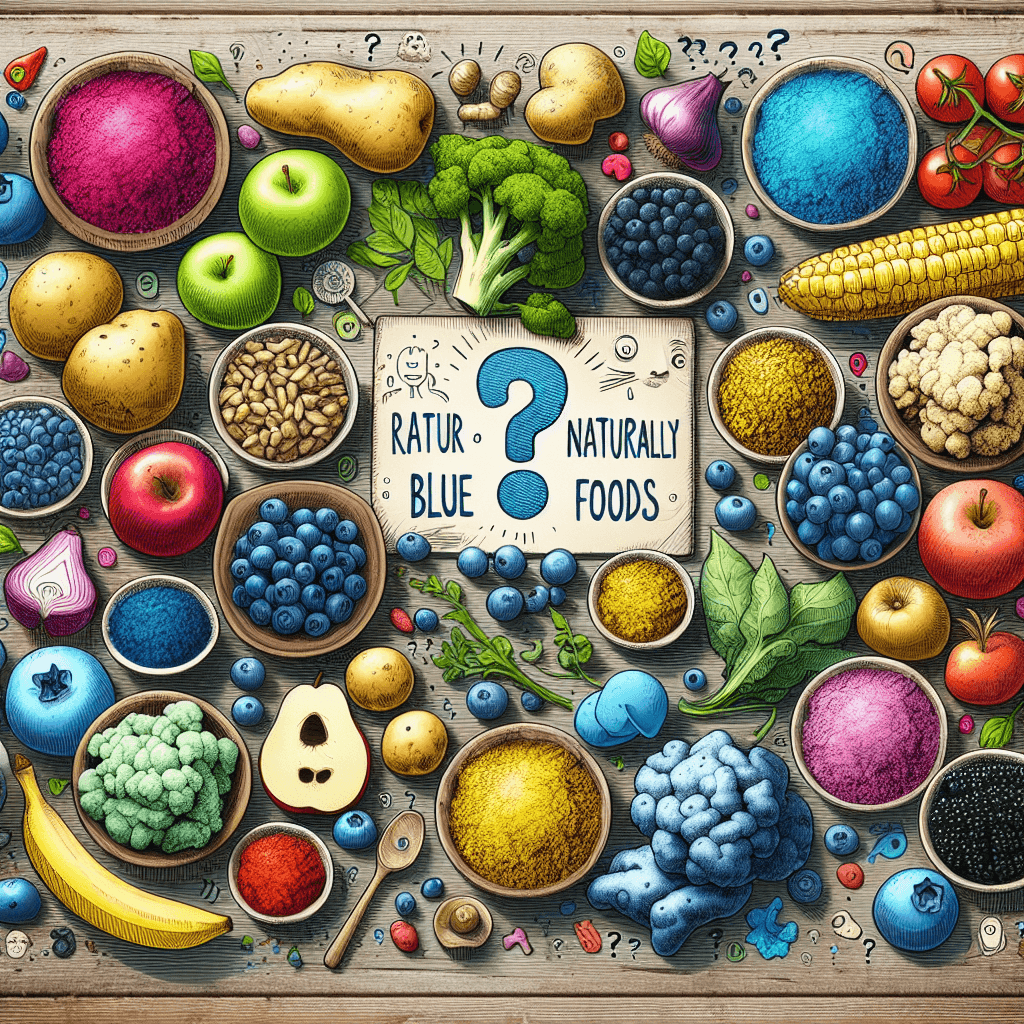
Even the poster child for blue food, the blueberry, relies on a trick. Its skin is packed with dark purple anthocyanins. The "blue" we perceive is largely an illusion created by a waxy, semi-translucent layer on the fruit's surface that scatters light, making the dark purple underneath appear as a dusty, faded blue.
Structural Color: A Rare Feat of Physics
Pigments aren't the only way to create color. Nature has another, more sophisticated method: structural color. This isn't about chemistry but physics. Instead of using a molecule to absorb light, structural color is produced when microscopic structures on a surface interfere with light waves, scattering and reflecting only specific colors. This is how the iridescent blue of a Morpho butterfly's wing or a peacock's feather is created.
In the plant kingdom, this is extraordinarily rare. The most striking example is the marble berry (Pollia condensata), which produces the most intense blue color known in nature. However, its brilliant shell is all structure—it contains no blue pigment at all. And, crucially for our topic, it's inedible, consisting of a hard shell with little to no pulp inside.
The Verdict from Evolution
Ultimately, the scarcity of blue food comes down to evolutionary pressure. A fruit's color is its advertisement, designed to attract animals that will eat it and disperse its seeds. Red is a powerful signal for birds, while many other fruits in the purple and dark red range effectively attract a variety of mammals. Bees, which are key pollinators, can see blue and ultraviolet light well. However, for a fruit, attracting a seed-dispersing animal is key, and purple and red hues have proven more than effective enough. There simply hasn't been a strong evolutionary incentive for plants to go through the immense chemical trouble of producing blue fruit when other colors work just as well, if not better.
In conclusion, the rarity of blue on our plates is no accident. It's a direct result of complex plant biology, where the lack of a true blue pigment, the chemical difficulty of manipulating anthocyanins, and a lack of evolutionary drivers have all converged. Most of what we call "blue" in our food—from blueberries to blue corn—is actually a shade of purple playing a trick on our eyes. So, the next time you see a blue-hued food, you can appreciate it not just for its color, but for the remarkable chemical and physical feats nature had to perform to create it.


