
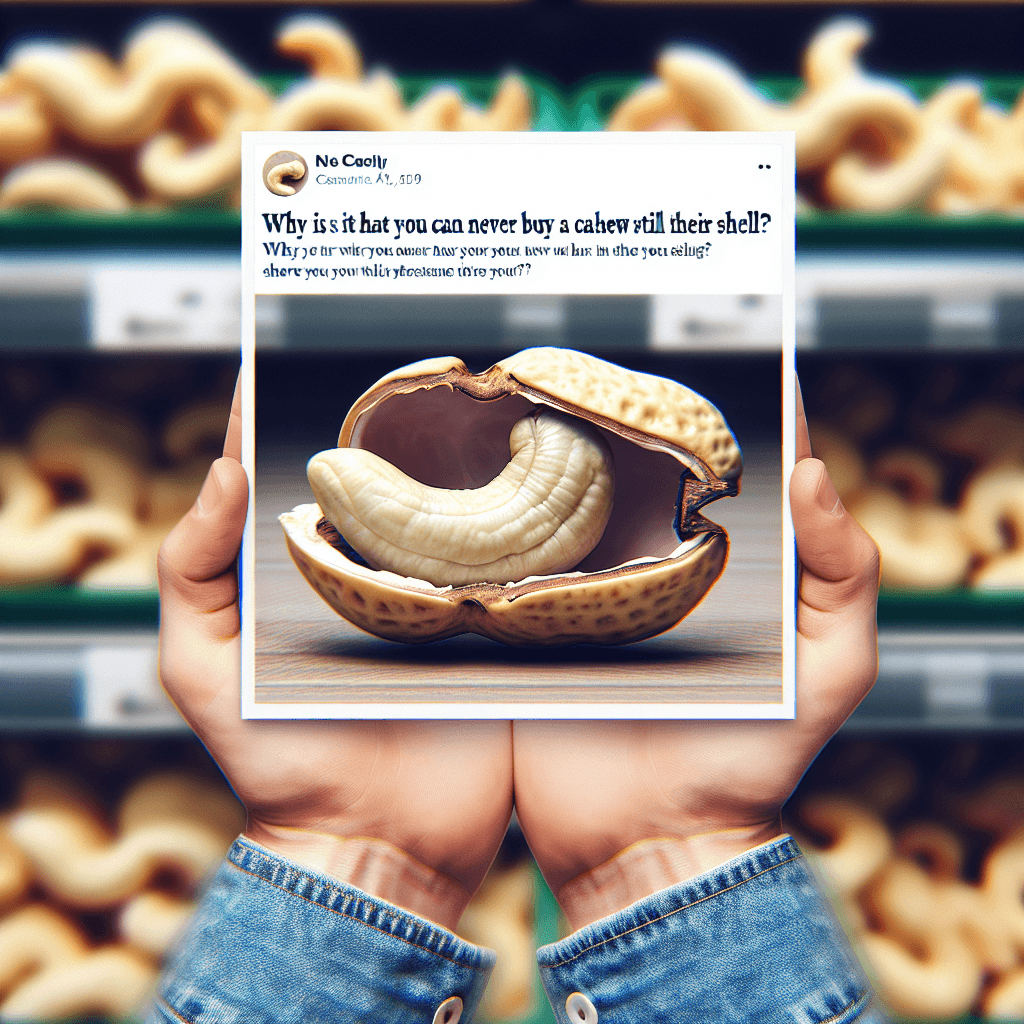
Why is it that you can never buy a cashew still inside its shell
You can find almost every other nut sold in its shell, but trying to do the same with a cashew could be a toxic mistake. Discover the dangerous secret hidden within this snack's outer layer that prevents it from ever reaching store shelves whole.

Too Long; Didn't Read
Cashews are never sold in their shells because the outer hull contains urushiol, the same toxic chemical found in poison ivy. This caustic oil causes severe skin rashes and must be carefully removed through professional roasting and processing to make the nut safe for consumption.
The Toxic Truth: Why is it that you can never buy a cashew still inside its shell?
Have you ever noticed that while you can buy peanuts, pistachios, and walnuts in their shells, cashews are always sold pre-shelled? Whether they are roasted, salted, or raw, the cashew nut is perpetually naked on the grocery store shelf. This isn't just a matter of convenience or a marketing gimmick; it is a vital safety measure. The mystery behind the missing shell involves a botanical connection to poison ivy and a chemical substance that can cause severe physical reactions. Understanding why is it that you can never buy a cashew still inside its shell requires a look into the fascinating—and slightly dangerous—biology of the cashew tree.
The Unusual Anatomy of the Cashew
To understand why the shell is missing, we first have to look at how the cashew grows. Unlike most nuts, the cashew is actually a seed that grows on the outside of a "false fruit" known as the cashew apple. This vibrant, pear-shaped accessory fruit is edible and sweet, though highly perishable, which is why it is rarely seen outside of tropical regions.
At the bottom of this apple hangs a kidney-shaped drupe. This is the true fruit, and inside this hard, grayish shell sits the cashew seed we love to eat. However, the shell itself is not just a protective casing; it is a chemical fortress designed to deter predators.
The Toxic Secret: Urushiol
The primary reason you will never find a cashew in its shell at your local market is a substance called urushiol. If that name sounds familiar, it’s because urushiol is the same oily organic allergen found in poison ivy, poison oak, and poison sumac. Cashews belong to the Anacardiaceae family, which includes these notorious irritants.
The cashew shell consists of two layers. Between these layers is a caustic resin known as Cashew Nut Shell Liquid (CNSL). This resin is packed with urushiol and anacardic acids. According to botanical researchers, even a small amount of contact with this oil can cause:
- Severe skin rashes and allergic contact dermatitis.
- Painful blistering and swelling.
- Chemical burns if the oil is concentrated.
Because the oil is so potent, the shells must be removed in a controlled environment before the product is safe for public consumption.
The Intense Journey from Tree to Table
Since the shell is toxic, the process of extracting the nut is incredibly labor-intensive and requires specialized heat treatment. You cannot simply crack a cashew open like a peanut. To make a cashew safe to eat, it must undergo several steps:
- Drying: The harvested drupes are sun-dried to reduce moisture.
- Roasting or Steaming: The raw cashews are subjected to high temperatures. This serves a dual purpose: it makes the brittle shells easier to crack and, more importantly, it neutralizes the toxic urushiol.
- Shelling: Once treated, the shells are removed. Historically, this was done manually, which often led to workers suffering from skin irritation. Today, many facilities use mechanical shellers, though manual labor is still common in certain regions.
- Peeling: After the shell is gone, the nut still has a thin skin called the testa, which contains tannins and must also be removed.
Even "raw" cashews found in health food stores have actually been steamed or heat-treated to ensure they are free of urushiol contamination. Truly raw cashews would be a significant health hazard to the consumer.
Shipping, Safety, and Economics
Beyond the immediate health risks of urushiol, there are practical economic reasons why cashews are sold shelled. The shells of cashews are thick and heavy, making up a significant portion of the drupe's total weight. Shipping the shells would drastically increase transportation costs for a part of the plant that the consumer cannot use.
Furthermore, the Cashew Nut Shell Liquid (CNSL) extracted during processing is a valuable byproduct. According to industrial reports, CNSL is used in the production of friction linings (like brake pads), resins, and specialized coatings. By processing the nuts at the source, manufacturers can safely dispose of the toxins, reclaim the valuable oils, and ship a lighter, consumer-ready product.
Conclusion
The reason why is it that you can never buy a cashew still inside its shell is a matter of public safety. The presence of urushiol makes the shell a dangerous biological hazard, capable of causing the same painful reactions as poison ivy. Through a rigorous process of steaming, roasting, and careful extraction, the cashew is transformed from a toxic botanical curiosity into the creamy, delicious snack we enjoy today.
Next time you reach for a handful of cashews, you can appreciate the complex and careful processing required to bring them to your table. If you are interested in the science of your food, exploring the unique defenses of the Anacardiaceae family is a great place to start learning more about the intersection of botany and nutrition.


