Why is the foam on a glass of beer white when the beer itself is golden
It's a paradox you've seen in every pint: a rich, golden liquid that somehow produces a pure white foam. The secret is a fascinating trick of the light, and it's the same reason snow is white.

Too Long; Didn't Read
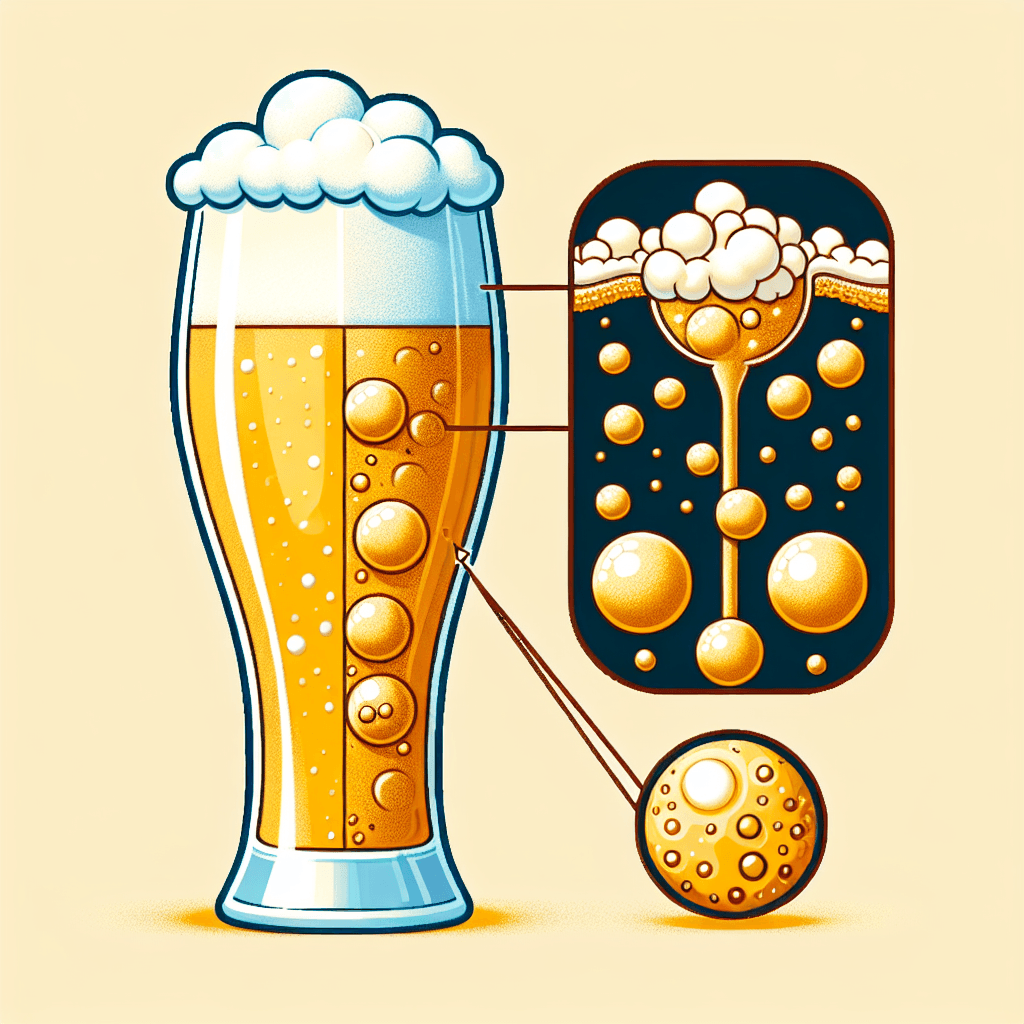
The walls of the tiny bubbles in beer foam are stretched so thin that the beer's golden color disappears. Light then scatters off these countless surfaces in all directions, making the foam appear white.
The Beer Conundrum: Why is the Foam on a Glass of Beer White When the Beer Itself is Golden?
Have you ever paused before that first satisfying sip of a freshly poured beer, admiring the golden hue of the liquid and the crisp, cloud-like foam crowning the glass? If you have, you might have wondered about a curious paradox: if the beer is amber, gold, or even dark brown, why is the head almost always a brilliant white? This isn't just a quirk of brewing; it's a fascinating display of physics at work in your pint glass. The answer has nothing to do with dyes or bleach but everything to do with bubbles, light, and the very structure of the foam itself. This post will break down the science behind this common phenomenon, revealing why that golden liquid produces a perfectly white head.
It’s All About Scattering Light
The core of the answer lies in a principle of physics known as light scattering. When you look at the liquid beer in your glass, light passes through it with relative ease. The compounds in the beer, derived from malt and hops, absorb certain wavelengths of light and let others pass through. For a golden lager, the liquid absorbs most colors but allows the yellow, orange, and amber wavelengths to reach your eyes, which is why we perceive it as golden. The liquid acts as a single, uniform substance.
Beer foam, however, is not a single substance. It is a complex structure made of two things:
- Liquid beer
- Gas (mostly carbon dioxide)
The foam consists of countless microscopic bubbles packed tightly together. When light enters this frothy maze, it no longer has a clear path. Instead, it collides with the thin, curved walls of thousands of individual bubbles. Each time light hits a bubble wall, it is bent (refracted) and bounced (reflected) in a new, random direction. This process, where light is bounced around chaotically by many different surfaces, is called scattering.
A Tale of Two Glasses: Liquid vs. Crushed
A great analogy is to think of a solid piece of clear glass versus a pile of crushed glass. The single piece of glass is transparent because light can pass through it directly. But if you shatter that same piece of glass into thousands of tiny shards, the resulting pile will look white.
Why? Because the many surfaces of the tiny shards scatter light in every possible direction. No single wavelength is absorbed or transmitted more than another. The same principle applies to snow; individual snowflakes are clear, but a blanket of snow appears bright white because of the light scattering off innumerable ice crystals. Your beer foam is the "crushed glass" or "snow" to the liquid beer's "solid pane."
The Anatomy of a Beer Bubble
To fully understand the scattering effect, we need to look at what makes up the wall of a single bubble. The film of liquid surrounding each pocket of CO2 is incredibly thin. While this liquid is technically the same golden beer, it’s stretched so finely that it's essentially transparent. There simply aren’t enough color-imparting molecules in any one spot on that thin film to absorb light and give it a golden appearance.
This film is stabilized by proteins from the malt and bitter compounds from hops called isohumulones. These molecules act like a scaffold, giving the bubbles structure and longevity—a key marker of a quality beer. But from a color perspective, their most important feature is that they create a vast network of mostly-clear surfaces.
When white light from the sun or a lightbulb (which contains all the colors of the rainbow) hits this network, it gets scattered equally. Because the bubble surfaces are so numerous and randomly oriented, they don't favor one color over another. All the colors of the spectrum are reflected back to your eye in equal measure. When our brain receives all wavelengths of visible light at once, it interprets that signal as the color white.
Conclusion
So, the next time you order a pint, you'll know that the white head isn't a different substance—it's the same beer, transformed by the physics of light. The foam’s white color isn't due to a lack of pigment but rather the presence of a complex structure. The countless tiny, transparent bubbles act as a collective prism, scattering all colors of light equally and reflecting them back to you as brilliant white. It's a simple observation that reveals the intricate interplay between chemistry and physics that goes into creating the perfect glass of beer. So, raise your glass and toast to the science that makes your beverage not only taste great but also look so appealing.