
Why is there no actual lead in the lead of a modern pencil
Despite its name, there isn't a single atom of lead in your pencil. Discover the story of mistaken identity that gave a common, non-toxic mineral its dangerously misleading name.

Too Long; Didn't Read
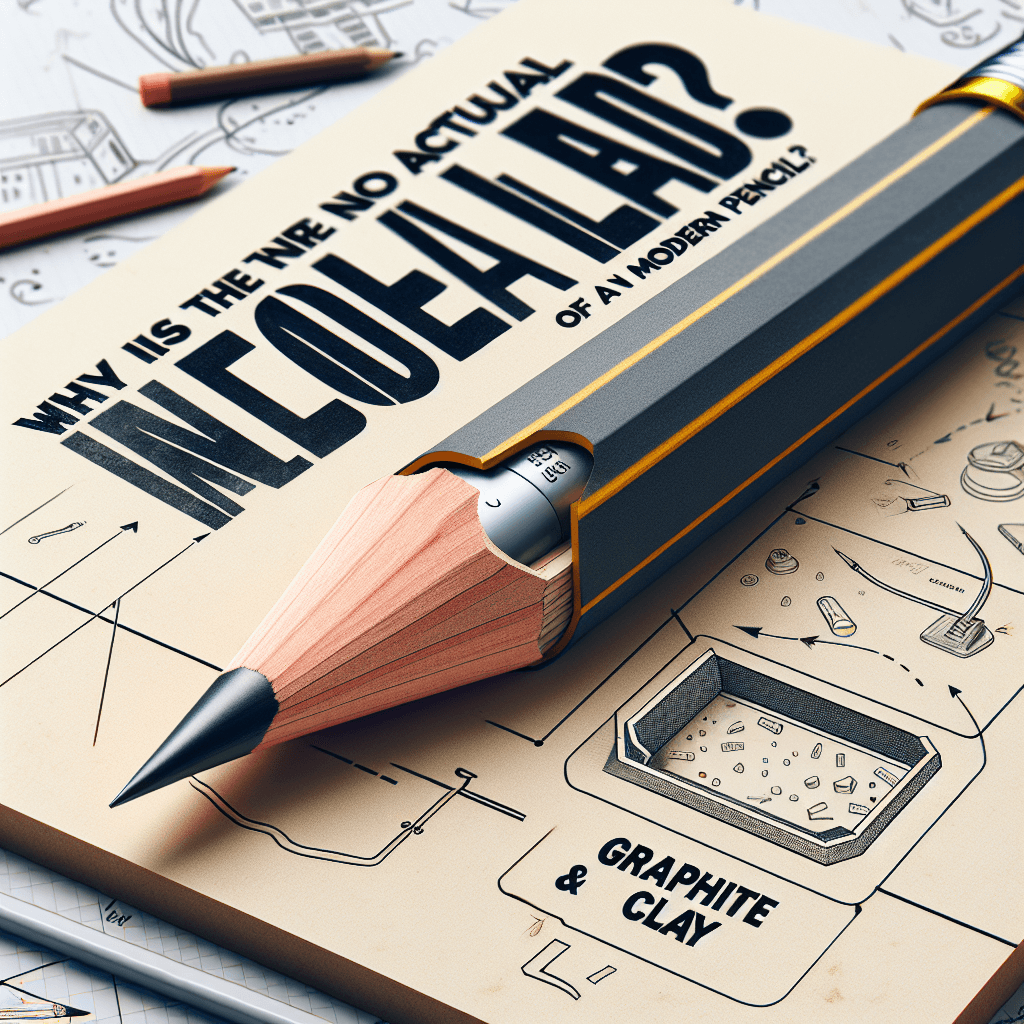
TLDR: Modern pencil lead is not lead; it is a non-toxic mix of graphite and clay. The name is a historical mistake from when graphite was thought to be a form of lead and early writing instruments used actual lead styluses.
Blog Post Title: Graphite, Not Lead: Solving the Mystery of Why There Is No Actual Lead in the Lead of a Modern Pencil
Have you ever chewed on the end of a pencil, only to be warned by a teacher or parent about the dangers of "lead poisoning"? It’s a common childhood memory, rooted in a widespread and surprisingly persistent myth. The truth is, that gray writing core you've been using your whole life contains absolutely no lead. The pencil, one of the most ubiquitous tools in the world, has been the subject of a centuries-long case of mistaken identity. This post will unravel this historical mix-up, explain what your pencil "lead" is actually made of, and clarify why this harmless misconception has endured for so long.
A Case of Mistaken Identity
The story begins in the 16th century with a massive, pure deposit of a dark, solid mineral discovered in Borrowdale, England. This substance was perfect for marking things, especially sheep, and was found to be a superior alternative to the actual lead styluses used by the Romans. Because it was dark, soft, and left a mark, people assumed it was a form of lead. They even gave it a name derived from the Latin for lead ore: plumbago.
This name stuck. For over 200 years, the world believed this material was a type of lead. It wasn't until 1779 that a Swedish chemist named Carl Wilhelm Scheele heated the substance and discovered it was not lead at all, but a crystallized form of carbon. A few years later, in 1789, German mineralogist Abraham Gottlob Werner gave it its modern name, graphite, from the Greek word graphein, meaning "to write." Despite this scientific correction, the term "lead" was already deeply embedded in our language, and it has remained a part of the common lexicon for pencils ever since.
The Modern Pencil Core: A Recipe of Graphite and Clay
So, if it's not lead, what exactly are you writing with? The core of a modern pencil is a carefully crafted mixture of two simple, non-toxic ingredients:
- Graphite: The finely ground carbon that provides the dark pigment.
- Clay: A natural binder that holds the graphite particles together.
The manufacturing process involves mixing these two powders with water to form a paste, which is then extruded into the long, thin rods we recognize as pencil cores. These rods are dried and then fired in a kiln at extremely high temperatures.
The magic of the modern pencil lies in the ratio of these two ingredients. By adjusting the amount of clay mixed with the graphite, manufacturers can create different degrees of hardness. This is what the numbers and letters on the side of your pencil (like #2, HB, 2B, or 4H) signify.
- More Clay, Less Graphite: Results in a harder, lighter-marking core (designated with an "H"). A 9H pencil is extremely hard and used for precise technical drawings.
- More Graphite, Less Clay: Results in a softer, darker-marking core (designated with a "B" for blackness). A 9B pencil is very soft and ideal for artistic shading.
- HB or #2: This is the perfect middle ground, providing a balance of darkness and durability, making it the standard for everyday writing.
The Real Health Concern: A Tale of Paint, Not Graphite
The enduring fear of "lead poisoning" from pencils isn't entirely baseless—it’s just misdirected. While graphite is non-toxic, the real danger in the past came from the paint used on the outside of the pencil. Decades ago, some paints did contain lead. Therefore, a child who habitually chewed on a vintage pencil could have been at risk for lead exposure from the paint, not the graphite core. Today, regulations in most countries, including the United States and Europe, strictly control the materials used in consumer products like pencils, ensuring the paint is lead-free and safe.
Conclusion
The pencil in your hand is a testament to a fascinating historical error. What we call "lead" is actually graphite, a safe and versatile form of carbon that was mistaken for the toxic metal centuries ago. This simple mix-up, combined with historical concerns over lead-based paint, created a myth that has proven as durable as an HB pencil itself. So, the next time you hear someone mention pencil lead, you can share the true story of graphite and clay—a simple, elegant combination that has empowered writing, drawing, and creativity for generations.


