
Why was the S.O.S. distress signal chosen if it doesn't stand for anything
Contrary to popular belief, S.O.S. doesn't stand for "Save Our Souls"—its true origin lies in a simple, unmistakable rhythm designed to cut through chaos.

Too Long; Didn't Read
TLDR: SOS does not stand for anything. It was chosen because its Morse code sequence of three dots, three dashes, and three dots (...---...) is a simple, continuous, and distinct pattern that is easy to recognize as a distress signal, even with interference.
Decoding the Dots and Dashes: Why was the S.O.S. distress signal chosen if it doesn't stand for anything?
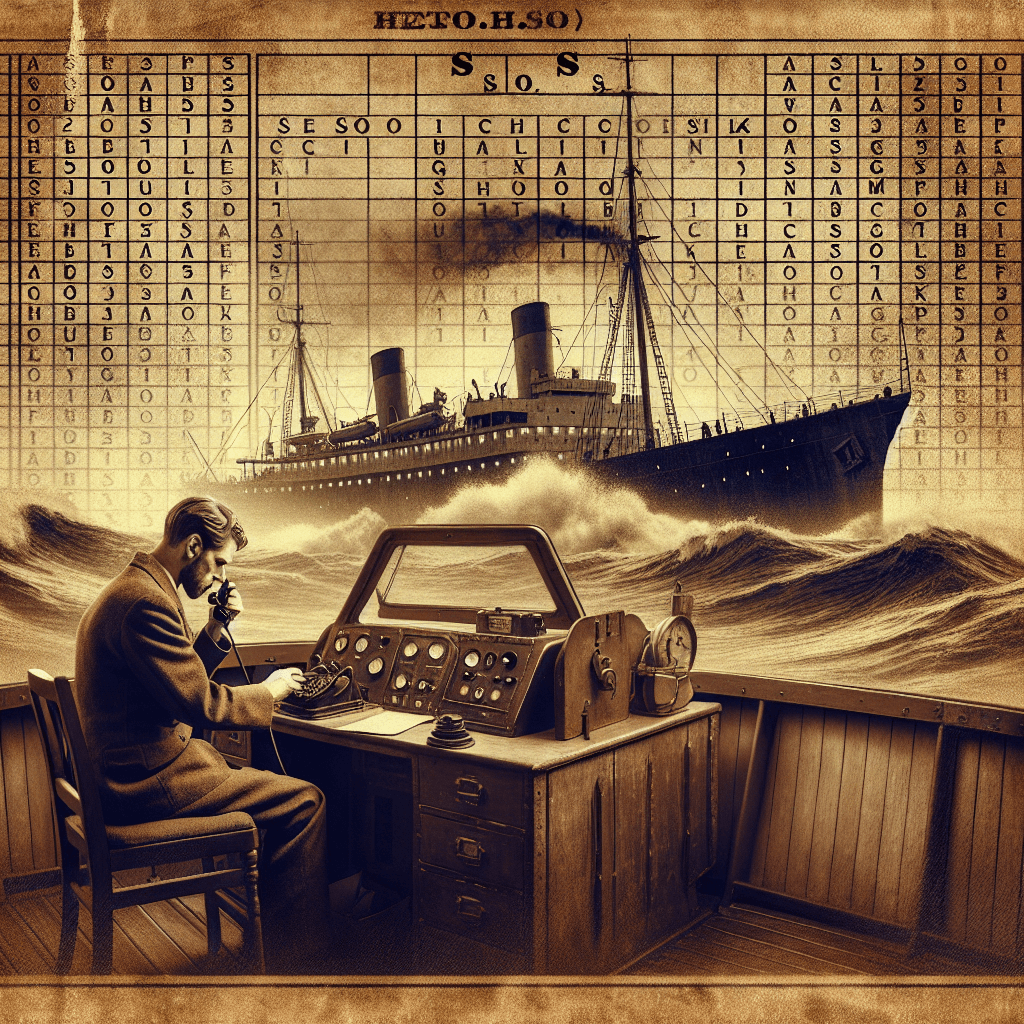
The frantic tapping of three dots, three dashes, and three more dots is a sound universally recognized as a desperate plea for help. In countless films and historical accounts, from the sinking of the Titanic to dramatic maritime rescues, the S.O.S. signal signifies a moment of ultimate crisis. But have you ever wondered what it actually stands for? The popular belief is that it's an acronym for "Save Our Souls" or "Save Our Ship." The surprising truth, however, is that S.O.S. was chosen for a reason that is far more practical and brilliant than any catchy phrase. This post will debunk the common myths and reveal the purely technical genius behind the world's most famous distress call.
The Pre-S.O.S. Era: A Cacophony of Calls
In the early days of wireless radiotelegraphy at the turn of the 20th century, communication at sea was chaotic. There was no single, internationally recognized distress signal. Instead, different organizations and nations used their own distinct calls.
One of the most common signals was "CQD," used by the Marconi Company, which controlled most of the ship-to-shore radio equipment at the time. "CQ" was a general call to all stations (meaning "Seek You"), and the "D" was added to signify "Distress." The problem was that CQD (-.-. --.- -.. in Morse code) was just one of many signals. This lack of standardization created dangerous confusion. A ship in distress using one company's signal might not be understood by a potential rescuer using another's. A universal language of emergency was desperately needed.
The Birth of a Universal Signal: Simplicity is Key
Recognizing this critical safety issue, delegates gathered at the second International Radiotelegraph Convention in Berlin in 1906 to establish a global standard. They needed a signal that was simple, unique, and impossible to misinterpret, even in the worst conditions. They didn't look for a clever acronym; they looked at the raw language of radio: Morse code.
The signal they chose was ...---....
This specific sequence was selected for one powerful reason: its unmistakable rhythm.
- Three dots (
...) form the Morse code for the letter "S." - Three dashes (
---) form the Morse code for the letter "O."
When transmitted together as a single, continuous string (...---...), the pattern is unambiguous. Unlike CQD, which is sent as three separate letters with pauses in between, the S.O.S. sequence is a fluid, unbroken call. This unique structure makes it stand out from all other radio chatter and allows it to be easily recognized by a radio operator, even through heavy static, weak signals, or when sent by an inexperienced hand in a panic. The letters "S," "O," and "S" were simply a convenient way to label this distinctive pattern.
Debunking the Myths: "Save Our Souls"
So, where did "Save Our Souls" and "Save Our Ship" come from? These are what's known as backronyms—phrases created after the fact to fit the letters. They served as useful mnemonic devices, making the signal easy for sailors and the public to remember.
The widespread adoption and fame of S.O.S. were tragically cemented by the sinking of the RMS Titanic in 1912. The ship's radio operators initially sent out the older CQD signal before switching to the new, official S.O.S. signal, making it one of the most famous uses of the call in history. This event seared the letters S-O-S into the public consciousness, and the "Save Our Souls" myth grew along with its legend. The signal was formally adopted by the United States in 1908 and remained the maritime distress standard for most of the 20th century, eventually being supplemented by voice and satellite-based systems.
Conclusion
The story of S.O.S. is a perfect example of function over form. It wasn’t chosen for a sentimental phrase but for its sheer, foolproof practicality. The ...---... sequence is a testament to elegant, life-saving design—a signal engineered to cut through the noise and chaos of a crisis with a clear, unmistakable rhythm. While "Save Our Souls" is a memorable and poignant phrase, the true reason for the signal's existence is a far more compelling story of international cooperation and technical ingenuity. It’s a simple pattern that, for nearly a century, was the world’s clearest and most vital sound of last resort.


