
Why were grasshoppers once put on trial and excommunicated by the church
In an era before pesticides, the church waged war on ravenous grasshoppers not with poison, but with a formal trial, a court-appointed lawyer, and the divine threat of excommunication.

Too Long; Didn't Read
TLDR: In medieval Europe, devastating insect plagues were seen as divine punishment or demonic acts. To solve the problem, the church held official ecclesiastical trials, appointing lawyers for the insects and ordering them to leave. If the pests didn't comply, they were formally excommunicated as a final spiritual measure to end the famine-causing devastation.
Pest Control, Medieval Style: Why Were Grasshoppers Once Put on Trial and Excommunicated by the Church?
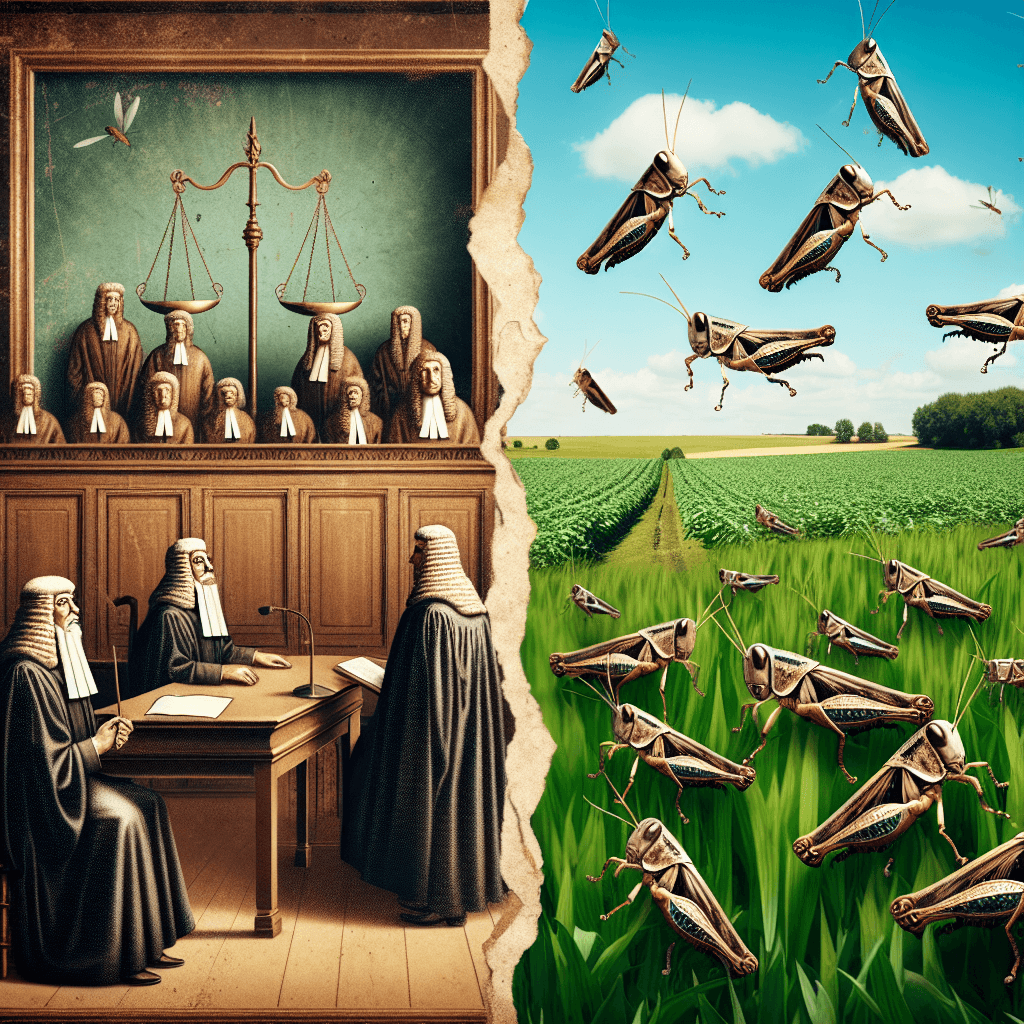
Imagine a courtroom drama. A prosecutor lays out a devastating case of property destruction and trespassing on a massive scale. A defense attorney rises to offer a passionate counter-argument. A judge listens intently before delivering a solemn verdict. Now, picture the defendants: a swarm of grasshoppers. This scene, while sounding like surreal fiction, was a genuine historical reality in medieval and early modern Europe. For centuries, ecclesiastical courts formally prosecuted and sentenced animal pests, from weevils to rats, for their destructive behavior. This post explores the fascinating legal, religious, and social reasons behind the seemingly bizarre practice of putting grasshoppers on trial.
The Medieval Worldview: A Universe Under God's Law
To understand why a community would sue a swarm of insects, we must first step into the medieval mindset. In a world before modern science, every event—from a bountiful harvest to a devastating plague—was seen through a theological lens.
- Divine Order: It was believed that God created a perfectly ordered universe where every creature had its place. A plague of grasshoppers destroying crops was a profound disruption of this divine order.
- Sin and Punishment: Such disasters were often interpreted as divine punishment for the sins of the local community. The insects were seen as agents of God's wrath.
- The Power of the Church: The Church was the ultimate authority, not just in spiritual matters but in legal and civil ones, too. Its courts were believed to have jurisdiction over all of God's creation, including the animal kingdom.
Within this framework, a legal proceeding wasn't an act of absurdity; it was a righteous and logical attempt to restore balance. By using the formal mechanisms of justice, people sought to appeal to God, demonstrate their repentance, and command the natural world to return to its proper order.
A Courtroom for Critters: The Legal Process
Animal trials were not chaotic mob justice; they followed a surprisingly formal legal procedure. When a plague of grasshoppers descended, the afflicted community would petition the local bishop. The ecclesiastical court would then initiate a case against the pests.
The process typically included several key steps:
- Investigation: A court official would be sent to the fields to assess the damage and formally identify the culprits.
- Summons: The grasshoppers would be officially summoned to appear before the court. A bailiff would read the summons aloud in the fields they occupied, commanding them to attend the hearing or face judgment in absentia.
- Legal Representation: In a remarkable commitment to due process, the court would appoint a lawyer to represent the accused grasshoppers. This defense attorney would argue on their behalf, often making sophisticated theological and legal points. They might argue, for instance, that the grasshoppers were also God’s creatures, simply following their natural instinct to eat and had a right to sustenance.
- Verdict and Sentencing: After hearing arguments from both the prosecution (representing the villagers) and the defense, the judge would deliver a verdict. If found guilty, the grasshoppers would not be sentenced to death but would be ordered to leave the area by a specified date. The most severe sentence was excommunication—a formal religious curse that cut them off from God's grace and protection.
More Than Just a Spectacle: The Purpose of the Trials
While it's easy to dismiss these trials as a superstitious spectacle, they served crucial functions for the community. Firstly, it was a profound act of faith. By engaging in a just legal process, the community believed it was appealing to God’s own sense of justice to intervene and lift the plague.
Secondly, it provided a powerful psychological outlet. In the face of a disaster that threatened their very survival, the trial gave people a sense of agency. Instead of suffering passively, they were actively and collectively responding to the crisis within the rules of their worldview. Finally, the trials reinforced the Church’s authority, publicly demonstrating its power to mediate between humanity and the forces of nature, solidifying its central role in every aspect of medieval life.
In conclusion, the trial and excommunication of grasshoppers was far from a simple act of foolishness. It was the logical product of a world where law, faith, and nature were inseparable. These proceedings represented a society’s attempt to impose human justice on a chaotic natural world, using the most powerful tools they had: legal procedure and religious ritual. While our methods for pest control have certainly changed, these strange historical events offer a compelling window into our ancestors’ complex relationship with the world around them and their enduring quest to find order and meaning in the face of disaster.


