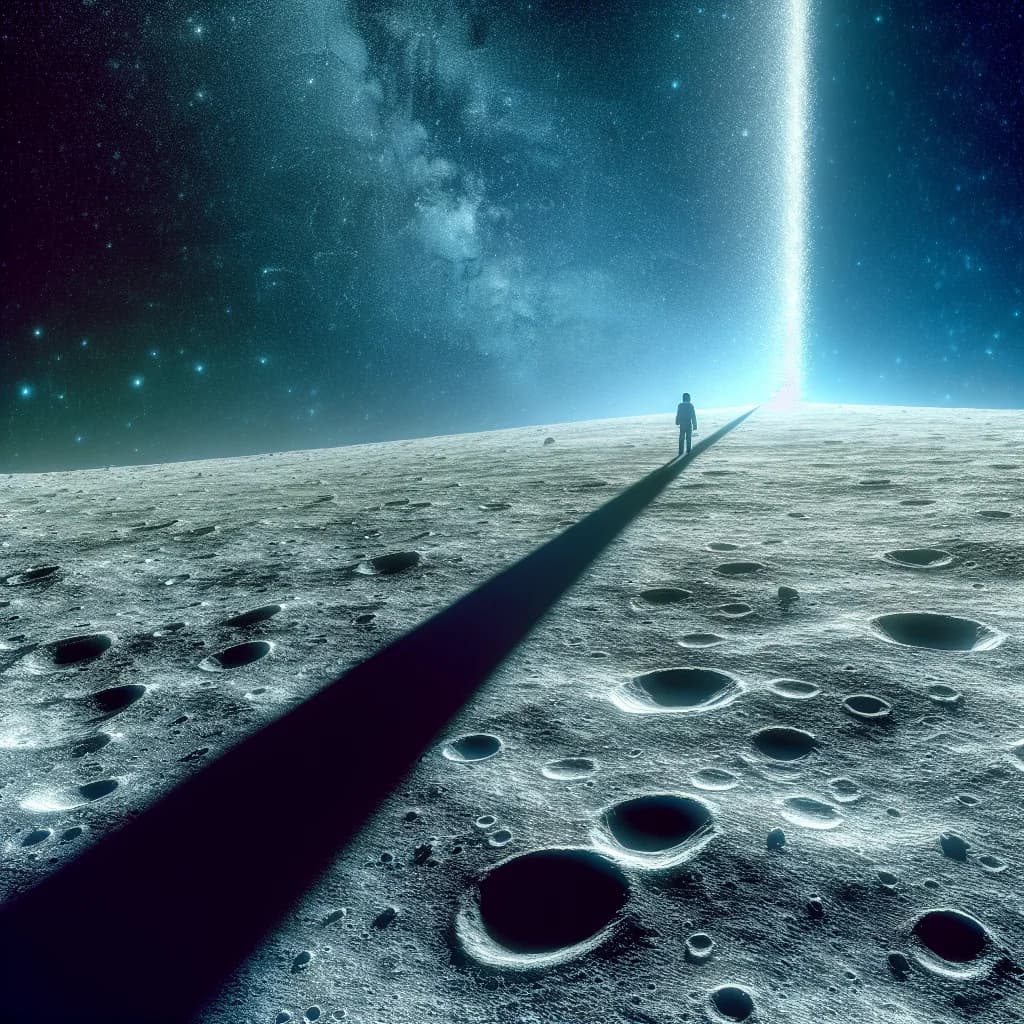
Could you finish a game of chess during the twelve-minute fall from Verona Rupes, the solar system’s tallest cliff
Plummet off the solar system’s tallest cliff and you’ll have twelve heart-pounding minutes of freefall to contemplate your fate—or perhaps a checkmate. Discover the surreal physics of Verona Rupes, where a record-breaking drop lasts long enough to finish a grandmaster match before you touch down.

Too Long; Didn't Read
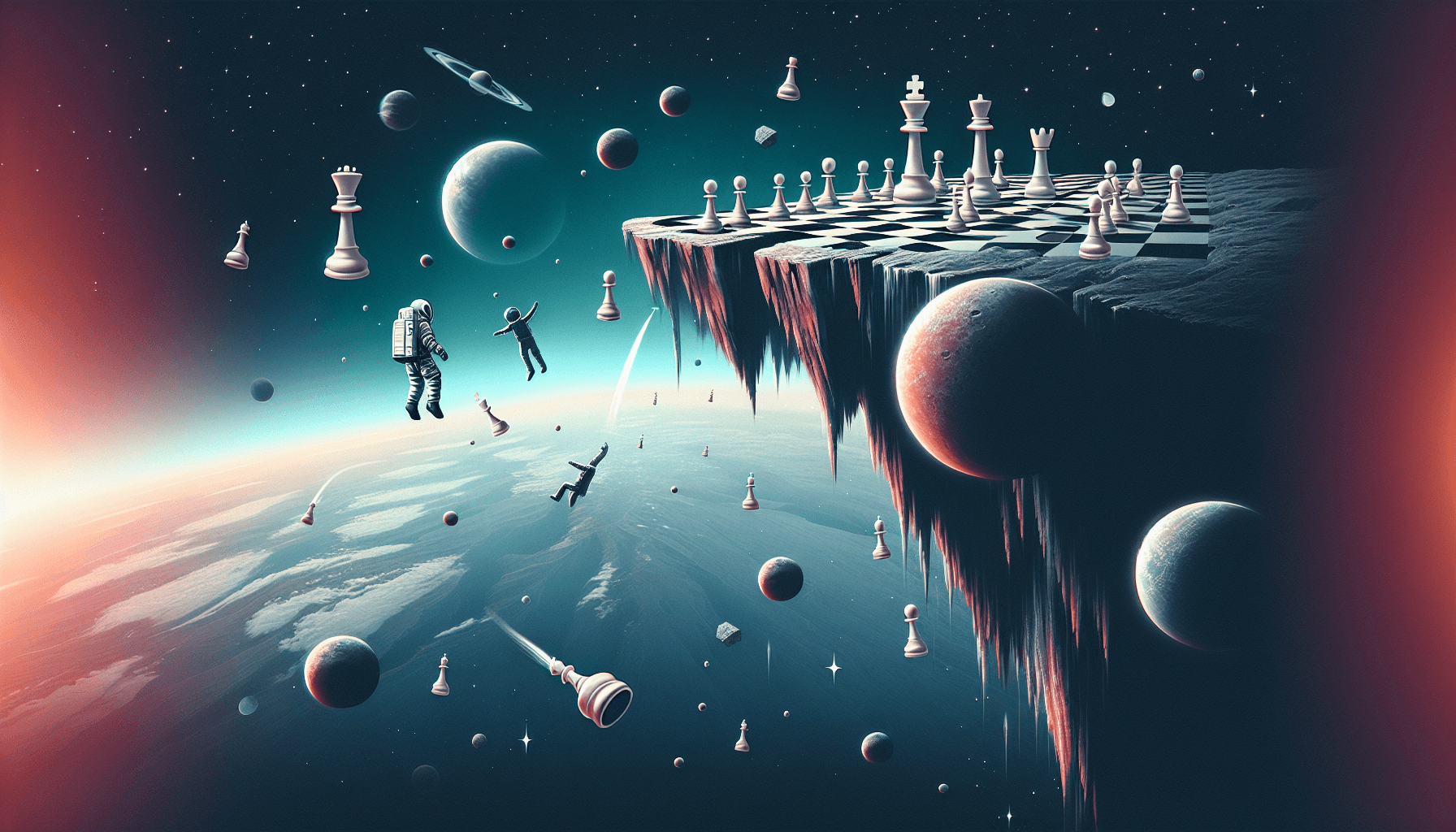
Falling from the solar system's tallest cliff takes about 12 minutes due to Miranda's low gravity. While a traditional match usually lasts longer, there is enough time to finish multiple blitz or bullet chess games before hitting the ground.
The Ultimate Vertical Gambit: Could You Finish a Game of Chess During the 12-Minute Fall from Verona Rupes?
Imagine standing on the precipice of Verona Rupes, a cliff on Uranus’s moon, Miranda, that makes Earth’s tallest peaks look like mere pebbles. Reaching nearly 20 kilometers (12 miles) into the thin Uranian sky, this is the tallest known cliff in our solar system. If you were to step off the edge, you wouldn’t meet the ground for a staggering twelve minutes. This provides a uniquely high-stakes "clock" for a game of chess. But is twelve minutes enough time to achieve checkmate before your descent concludes?
To answer this, we must look at the foundational parameters of Miranda’s environment, specifically its exceptionally low gravity. By applying Newtonian mechanics to calculate the duration of the fall and cross-referencing these findings with the statistical pacing of competitive chess, we can determine if this hypothetical "Grandmaster of the Cliffside" scenario is truly possible.
The Physics of a 12-Mile Freefall
On Earth, a fall from 20 kilometers would be over in a flash of terminal velocity. However, Miranda is a small, icy moon with a surface gravity of only 0.079 m/s²—roughly 0.8% of Earth’s gravity. Because Miranda lacks a significant atmosphere, there is no air resistance to slow you down. You are in a state of pure, mathematical freefall.
Using the kinematic equation for distance ($d = ½at²$), where $d$ is 20,000 meters and $a$ is 0.079 m/s², the descent time calculates to approximately 711 seconds, or 11.85 minutes. For the sake of our experiment, we will round this to a generous twelve minutes. During this time, you would accelerate to a final speed of about 56 meters per second (125 mph) upon reaching the surface. While fast, the lack of air resistance means you wouldn't feel the "wind" of the fall; you would simply feel weightless, drifting alongside your chessboard in a serene, silent vacuum.
The Chess Clock: Blitz vs. Rapid
The feasibility of the game depends entirely on the format. Chess games are generally categorized by their time controls:
- Classical: Can last several hours. (Impossible)
- Rapid: Typically 10 to 60 minutes per player. (Tight, but potentially feasible)
- Blitz: Usually 3 to 5 minutes per player. (Highly likely)
- Bullet: 1 to 2 minutes per player. (Multiple games possible)
An average professional chess game lasts about 40 moves. If we assume a "Rapid" format of 10 minutes per player, the total potential game time is 20 minutes—longer than our fall. However, if both players move with "Blitz" urgency, the game would likely conclude in under 8 minutes. This leaves roughly 4 minutes of "leeway" before the descent concludes at the base of the Rupes.
Logistical Challenges in the Void
While the clock is on your side, the environment is not. To play chess during a fall on Miranda, you must account for the physical constraints of space:
- Magnetism is Mandatory: In a zero-gravity descent, a standard wooden board is useless. Without gravity to hold them down, your pawns would drift away at the slightest touch. A magnetic board is essential to keep the game "pinned" to the surface.
- The Spacesuit Handicap: Miranda is incredibly cold (around -350°F). You would be wearing a pressurized suit with thick, insulated gloves. This transforms "fine motor skills" into "clunky maneuvers," potentially slowing down your move rate and eating into your 12-minute window.
- The Visual Distraction: It is difficult to focus on a Sicilian Defense when you are drifting past the jagged, icy spires of a moon-sized canyon. The sheer scale of Verona Rupes—ten times the depth of the Grand Canyon—might cause even the most stoic Grandmaster to lose their concentration.
The Scientific Outcome: Checkmate or Stalemate?
Mathematically, finishing a game of chess during the fall from Verona Rupes is entirely possible, provided the players utilize "Blitz" time controls. The 711-second window is more than sufficient for a 40-move game, averaging roughly 17 seconds per move.
The core scientific principles—specifically the low gravitational constant of Miranda and the absence of atmospheric drag—are what allow for such a leisurely descent. On Earth, gravity accelerates objects at 9.8 m/s², making a 20km fall a matter of mere minutes (and much higher speeds). On Miranda, the physics of the small-scale mass allow the "clock" of the fall to sync almost perfectly with the "clock" of a fast-paced chess match.
This thought experiment serves as a fascinating reminder of how much our experience of time and motion is dictated by the mass of the rock beneath our feet. While we won't be playing "Cliffside Blitz" anytime soon, the math confirms that in the vast, quiet corners of our solar system, even the laws of physics can make room for a game of kings.