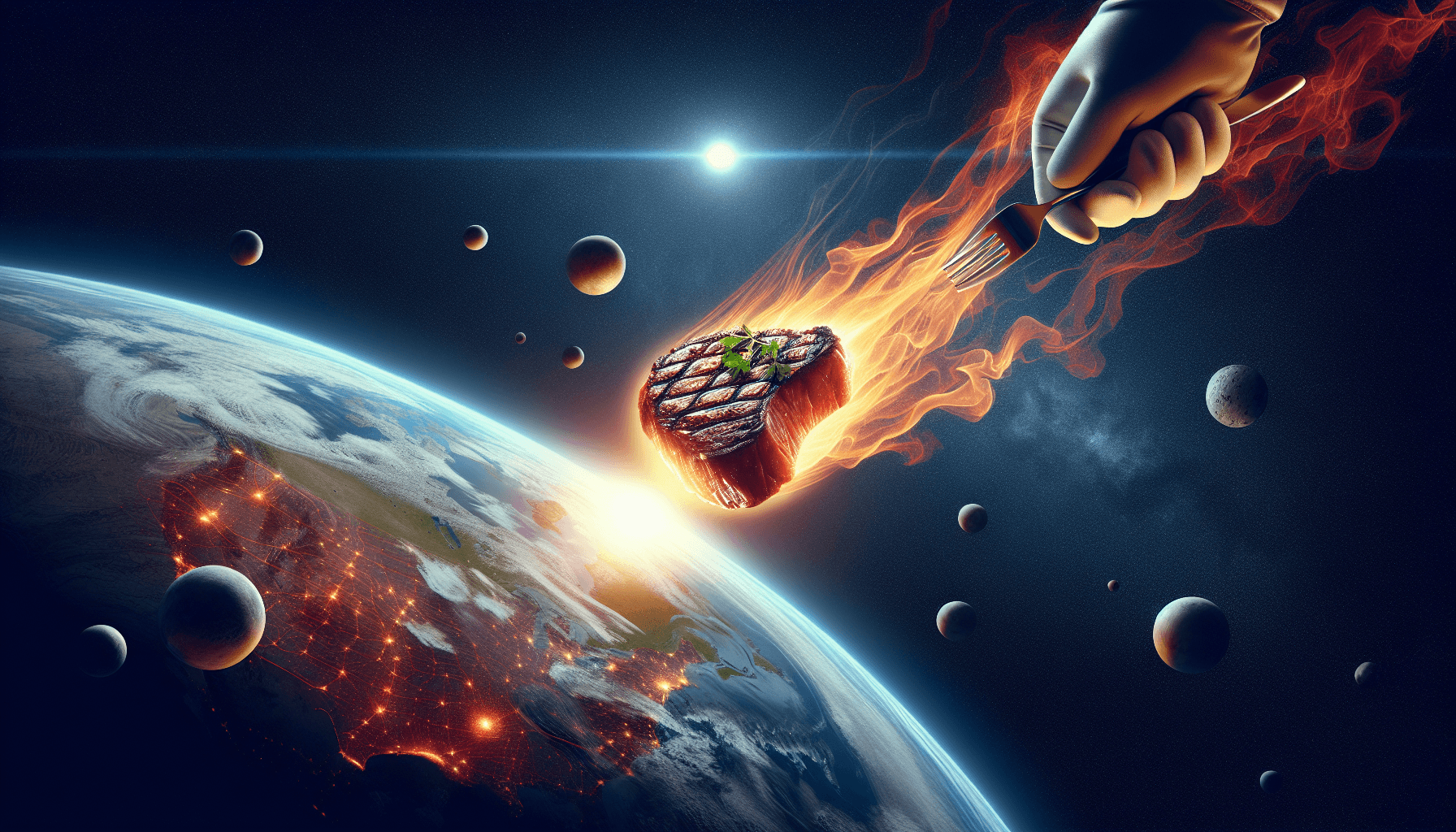
Could you perfectly cook a steak by dropping it from the edge of space and using atmospheric reentry heat
Forget the backyard grill; could the searing friction of Earth’s atmosphere turn a falling steak into a gourmet masterpiece? We explore the high-stakes physics of whether a plunge from the edge of space results in the perfect medium-rare or a charred lump of cosmic charcoal.

Too Long; Didn't Read
Dropping a steak from space results in a charred, inedible exterior and a raw, frozen interior. The heat from atmospheric reentry is too brief and intense to cook the meat through before it reaches terminal velocity and hits the ground.
From Orbit to Plate: Can You Perfectly Sear a Steak Using Atmospheric Reentry?
The dream of the ultimate "outdoor" barbecue usually involves a backyard grill and a pair of tongs. However, for the scientifically curious, the ultimate heat source isn't charcoal or propane—it is the searing friction of Earth’s atmosphere. The hypothetical scenario is captivating: could you drop a vacuum-sealed, high-quality steak from the edge of space and have it land on a plate, perfectly medium-rare? While the idea of "gastro-astronomy" sounds like a time-saver for a busy chef, the physics of such a journey involve a violent dance between thermodynamics, fluid dynamics, and structural mechanics. By analyzing the variables of orbital velocity, terminal velocity, and heat transfer, we can determine whether this cosmic cooking method is a culinary breakthrough or a recipe for disaster.
The Physics of the Fall: Altitude vs. Velocity
To understand if a steak can be cooked by the atmosphere, we must first distinguish between dropping an object from a height and entering from orbit.
The Suborbital Drop
If you were to simply release a steak from the Kármán line (the 100-kilometer mark often cited as the "edge of space"), the results would be underwhelming. Without the forward momentum of an orbit, the steak would simply fall straight down. In the thin upper atmosphere, it would accelerate quickly, but as the air becomes denser, the steak reaches its terminal velocity.
- Mass and Drag: An average 8-ounce filet mignon is relatively light and has a high surface-area-to-mass ratio.
- Result: It would likely reach a terminal velocity of roughly 30 to 40 miles per hour in the lower atmosphere. At these speeds, the friction against the air generates negligible heat. Instead of a seared steak, you would have a "frozen-then-thawed" piece of meat that has spent several minutes tumbling through the -50°C temperatures of the stratosphere.
Entering from Orbit: The Extreme Heat Phase
For real cooking to occur, we need the intense heat associated with atmospheric reentry, which requires orbital velocity. An object in Low Earth Orbit (LEO) travels at approximately 7.8 kilometers per second (about 17,500 mph).
The Mechanism of Heating
Contrary to popular belief, reentry heat isn't caused by simple friction. It is caused by adiabatic compression. As the steak hits the atmosphere at hypersonic speeds, a "bow shock" wave forms in front of it. The air molecules are compressed so rapidly that they turn into a glowing plasma, reaching temperatures exceeding 3,000°C.
- Energy Output: The kinetic energy of a steak traveling at orbital speeds is immense. To put this in perspective, the energy released during deceleration is comparable to several times the energy required to vaporize the steak entirely.
- The Heat Shield Problem: Unlike a Space Shuttle, which uses ceramic tiles to dissipate heat, a steak is an organic material subject to ablation. The outer layers would essentially turn into carbon (char) and flake away, carrying heat with them.
The Culinary Outcome: A Charcoal-Crusted Popsicle
Even if the steak survives the descent without disintegrating, the laws of heat conduction dictate a very unappetizing result.
- Extreme Gradient: Because the steak moves through the "burn zone" so quickly (often less than a minute of peak heating), the heat does not have time to conduct into the center.
- Flash Charring: The exterior would be converted into a layer of carbonized ash within seconds.
- The Frozen Core: Before being dropped, the steak would have been sitting in the vacuum of space, where temperatures can hover around -150°C.
Mathematically, the thermal conductivity of beef is too low to allow the center to reach the desired 55°C (medium-rare) before the outside is completely incinerated. You would likely recover a piece of "space debris" that is blackened and burnt on the outermost millimeter while remaining solid ice in the center.
Conclusion
The scientific verdict is clear: you cannot perfectly cook a steak by dropping it from space. The constraints of thermodynamics and the brevity of the reentry window create an impossible environment for culinary precision. While the "bow shock" of atmospheric entry provides more than enough energy to cook the meat, the delivery of that energy is too localized and intense. Instead of a gourmet meal, physics delivers a charcoal-crusted popsicle. This thought experiment highlights the incredible challenges aerospace engineers face when protecting delicate payloads; if a steak can’t survive the heat, it’s a testament to the specialized materials that allow our astronauts to return home safely. For now, the most reliable way to enjoy a steak remains a well-regulated grill right here on the ground.