Could you technically transform a peanut butter sandwich into a real diamond using extreme heat and pressure
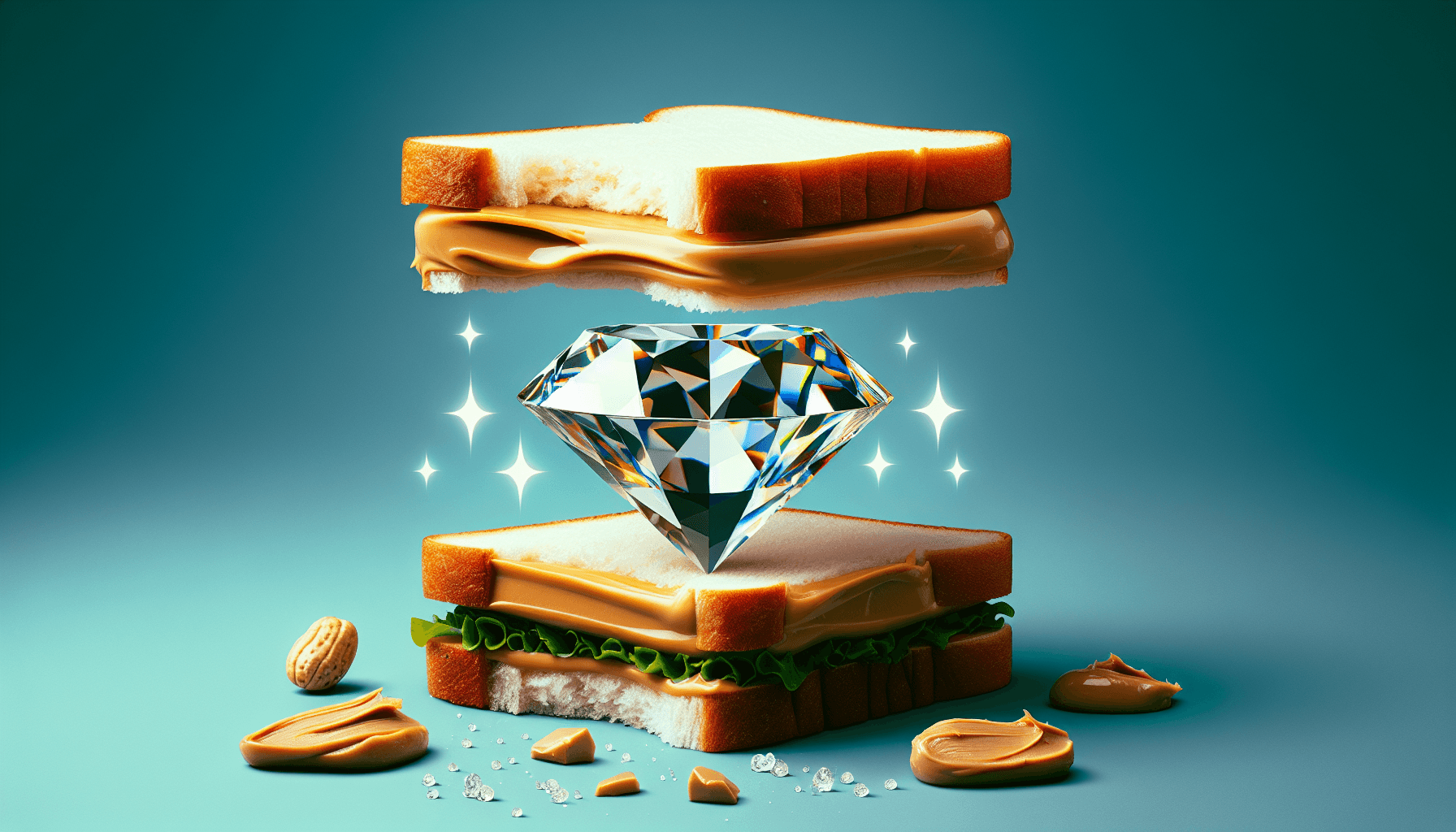
Your lunchbox might be hiding a fortune—if you have enough pressure to squeeze it. Discover the mind-bending science that could technically turn a simple peanut butter sandwich into a literal, sparkling diamond.

Too Long; Didn't Read
Yes, it is scientifically possible. Since peanut butter and bread are carbon-rich, subjecting a sandwich to extreme heat and pressure can rearrange its atoms into a diamond lattice, though the process is complex and yields very small results.
From Lunchbox to Luxury: Can You Really Turn a Peanut Butter Sandwich into a Diamond?
Imagine standing in your kitchen, staring at a standard peanut butter sandwich, and wondering if that humble combination of starch and protein could, under the right circumstances, become a girl’s best friend. It sounds like the plot of a whimsical science fiction novel, yet the question is rooted in a fascinating intersection of organic chemistry and high-pressure physics. Could you technically transform a lunchtime staple into a sparkling gemstone?
To answer this, we must look beyond the crust and the creamy spread to the atomic level. This thought experiment rests on the fact that both peanut butter and diamonds share a fundamental building block: carbon. By applying the laws of thermodynamics and the principles of mineral physics, we can determine whether extreme environmental stressors can force a sandwich to undergo a literal "glow-up."
The Carbon Connection: From Organic Matter to Crystal Lattice
At its core, a diamond is a solid form of the element carbon with its atoms arranged in a specific crystal structure called a diamond cubic. A peanut butter sandwich—comprising bread (carbohydrates), peanut butter (fats and proteins), and perhaps a bit of jelly (sugars)—is also teeming with carbon.
However, in your sandwich, these carbon atoms are bonded with hydrogen, oxygen, and nitrogen in complex organic molecules. To create a diamond, you must first isolate the carbon.
- Carbon Density: A typical peanut butter sandwich weighs roughly 150 grams. Once you remove the water content (dehydration), you are left with a significant amount of carbon-rich "char."
- The Transformation Goal: The objective is to break the existing chemical bonds of the sandwich and force the carbon atoms to reorganize into a rigid, tetrahedral lattice.
The Recipe for Pressure: High Pressure High Temperature (HPHT)
In the real world, scientists actually have experimented with this. Geoscientist Dan Frost at the Bayerisches Geoinstitut has successfully produced tiny diamonds from peanut butter. The process mimics the conditions found 500 miles below the Earth’s surface.
Step 1: Pre-Processing the Sandwich
You cannot simply put a fresh sandwich into a press. The high hydrogen content in peanut butter makes the process volatile. Under intense heat, the hydrogen is released as gas, which can lead to small, high-pressure venting events within the laboratory equipment. To avoid this, the sandwich is first "cooked" in an oxygen-free environment to turn it into a carbon-rich soot or graphite-like substance.
Step 2: Applying the Squeeze
To turn that soot into a diamond, you need a High Pressure High Temperature (HPHT) press.
- The Pressure: You must apply roughly 1.3 million atmospheres of pressure. That is approximately 18 million pounds per square inch (psi). For context, this is equivalent to balancing the weight of the entire Eiffel Tower on a single one-cent coin.
- The Heat: Simultaneously, the sample must be heated to approximately 2,200 degrees Celsius (3,992 degrees Fahrenheit). This temperature is hot enough to melt most metals and is roughly one-third as hot as the surface of the sun.
The Results: A Diamond or a Disappointment?
If you were to successfully subject your sandwich-turned-carbon to these conditions for several weeks, what would you find?
- Massive Scale Loss: Because diamonds are incredibly dense (3.51 g/cm³), the volume of your sandwich would shrink drastically. A sandwich that fills a lunchbox would likely result in a diamond no larger than a grain of sand or a very small salt crystal.
- Industrial Quality: The resulting diamond would likely be "bort"—a term for industrial-grade diamonds. Because sandwiches contain impurities like nitrogen (from protein), the diamond would likely have a yellowish tint.
- Growth Rate: Diamond growth is a slow, methodical process. Carbon atoms must find their place in the lattice one by one. In laboratory settings, it can take weeks to grow a diamond of significant size, even with a pure carbon source.
Conclusion
Technically, the answer is a resounding yes: you can transform a peanut butter sandwich into a real diamond. The laws of physics do not distinguish between carbon sourced from a trillion-dollar mine and carbon sourced from a grocery store shelf. By stripping away the hydrogen and oxygen and subjecting the remaining carbon to the crushing forces of the Earth’s mantle, the atoms have no choice but to lock together into a sparkling crystal.
Ultimately, this experiment highlights the incredible versatility of carbon. It is the same element that forms the basis of all known life, provides the energy in our food, and creates the hardest natural material on the planet. While a peanut butter diamond might be the most expensive (and least edible) sandwich in history, it serves as a brilliant reminder of the hidden potential locked within the most ordinary objects.