How can the Moon be currently rusting if it possesses no atmosphere or liquid water
Rust requires oxygen and water to form, yet the Moon—which has neither—is somehow turning red. Discover the impossible scientific twist that reveals how Earth is "infecting" its lunar neighbor from a quarter-million miles away.

Too Long; Didn't Read
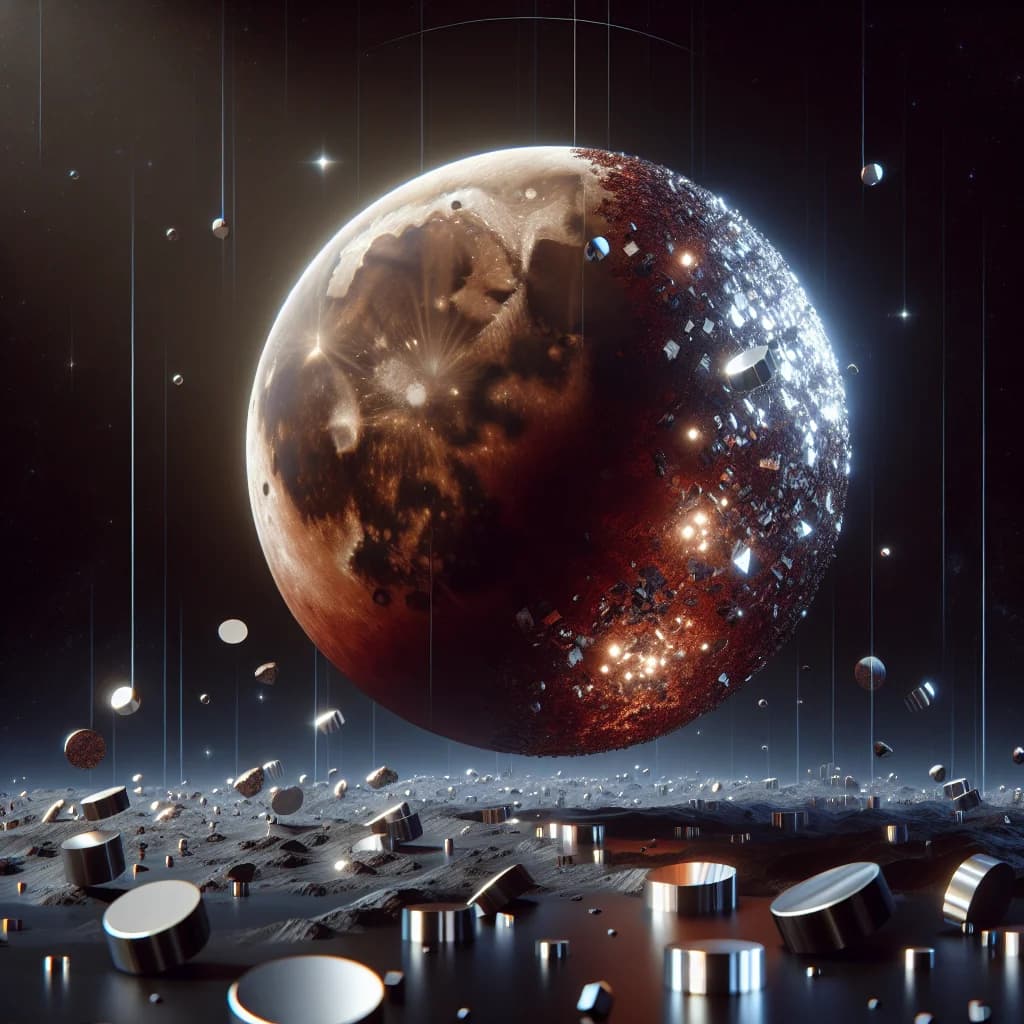
The Moon is rusting because Earth’s magnetic field acts as a bridge, transporting oxygen from our atmosphere to the lunar surface. When the Moon passes through Earth’s magnetotail, it is shielded from hydrogen-rich solar wind, allowing this oxygen to react with trace amounts of lunar water and iron-rich rocks to form hematite.
Rusting in a Vacuum: How is the Moon Oxidizing Without an Atmosphere?
For decades, we have viewed the Moon as a static, sterile sentinel—a dry, grey rock frozen in time. However, recent scientific data has revealed a startling transformation: the Moon is rusting. This discovery seems to defy the fundamental laws of chemistry taught in every middle school classroom. To create rust (iron oxide), you traditionally need three ingredients: iron, water, and oxygen. The Moon is notoriously devoid of a breathable atmosphere and flowing liquid water, and it is constantly bombarded by solar wind, which should actually prevent rust from forming. By applying the principles of planetary science, magnetospheric physics, and molecular chemistry, we can unravel this lunar mystery and discover how our own planet is effectively "painting" its neighbor red.
The Chemistry of a Cosmic Mystery
To understand why lunar rust is so surprising, we must look at the chemical process of oxidation. Rusting occurs when iron loses electrons to an oxidizer, typically oxygen, often with water acting as a catalyst. On Earth, this is easy. On the Moon, it should be impossible for two main reasons:
- Lack of Free Oxygen: The Moon’s "atmosphere" is a vacuum-like exosphere.
- The Solar Wind: The Sun blasts the Moon with a stream of hydrogen. Hydrogen is a reducing agent, meaning it adds electrons to surfaces it hits. Oxidation is the loss of electrons, so the Sun effectively acts as an "anti-ruster."
Despite these hurdles, data from the Moon Mineralogy Mapper (M3) aboard India’s Chandrayaan-1 mission identified hematite ($Fe_2O_3$) at high lunar latitudes. Hematite is a specific form of iron oxide that requires a distinct oxidative environment, prompting scientists to look toward Earth for the answer.
Ingredient 1: Earth’s Atmospheric "Leash"
The primary source of the Moon's oxygen isn't the Moon itself—it’s Earth. Our planet is surrounded by a magnetic field called the magnetosphere, which is stretched into a long "magnetotail" by the solar wind.
- The Delivery Mechanism: For about five days of every lunar month (approximately 17% of its orbit), the Moon passes through Earth’s magnetotail.
- Oxygen Transit: During this window, oxygen atoms from Earth’s upper atmosphere are swept along this magnetic tail and deposited onto the lunar surface.
- The Shield: Crucially, this magnetotail also acts as a physical barrier, blocking 99% of the solar wind’s hydrogen "anti-rusting" stream, giving the iron on the Moon a quiet window to react with the incoming oxygen.
Ingredient 2: Finding the Water Catalyst
Even with oxygen, the reaction usually requires a catalyst—water. While the Moon doesn't have rain or puddles, it does have trace amounts of water molecules bound to the lunar regolith (soil) and ice hidden in permanently shadowed craters.
The "delivery" of this water to the iron involves high-energy physics on a microscopic scale:
- Micrometeorite Bombardment: Tiny space rocks constantly pelt the Moon at speeds exceeding 10 kilometers per second.
- Thermal Activation: These impacts generate localized heat, which can liberate water molecules trapped in the soil, allowing them to mix with the iron and Earth-born oxygen.
- Scale of Impact: While each impact is tiny, billions of these events over geological timescales provide enough "molecular mobility" to facilitate the slow creep of hematite formation.
The Distribution of Red
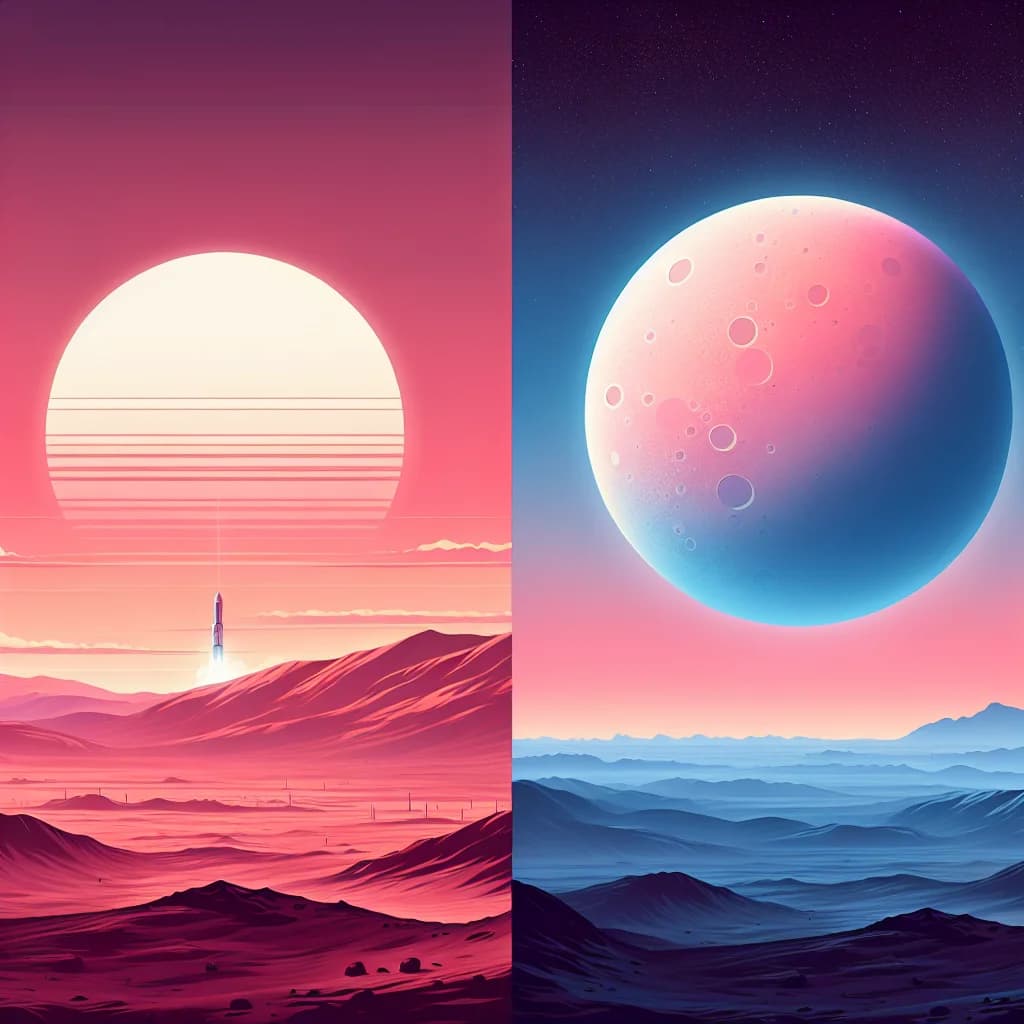
Interestingly, the rust is not spread evenly. Data shows more hematite on the "near side" of the Moon (the side facing Earth) than the far side. This disparity provides a beautiful piece of evidence: the near side receives more of Earth's "oxygen wind" than the far side. The presence of some rust on the far side suggests that trace amounts of water or internal lunar processes might be contributing, but the Earth-facing concentration confirms our planet’s role as the primary culprit.
Conclusion
The discovery of lunar rust proves that the Moon is not an isolated island in the void, but an environment deeply interconnected with our own. Through a complex interplay of planetary magnetism, atmospheric leakage, and cosmic impacts, the Moon is slowly oxidizing. This process is dictated by the fundamental principles of redox (reduction-oxidation) chemistry and magnetospheric physics, showing that even in a vacuum, the right combination of variables can trigger a transformation. This "impossible" rust serves as a powerful reminder that in science, the most baffling anomalies often lead to the most profound understanding of how celestial bodies interact across the vastness of space.