If Earth were shaped like a giant cube, would the oceans pool into six massive central lakes
Forget the horizon as you know it—on a cubic Earth, gravity would drag the oceans into six gargantuan, isolated lakes at the center of every face. Explore a surreal world where the corners tower into the vacuum of space and "down" is a direction you’ve never experienced.

Too Long; Didn't Read
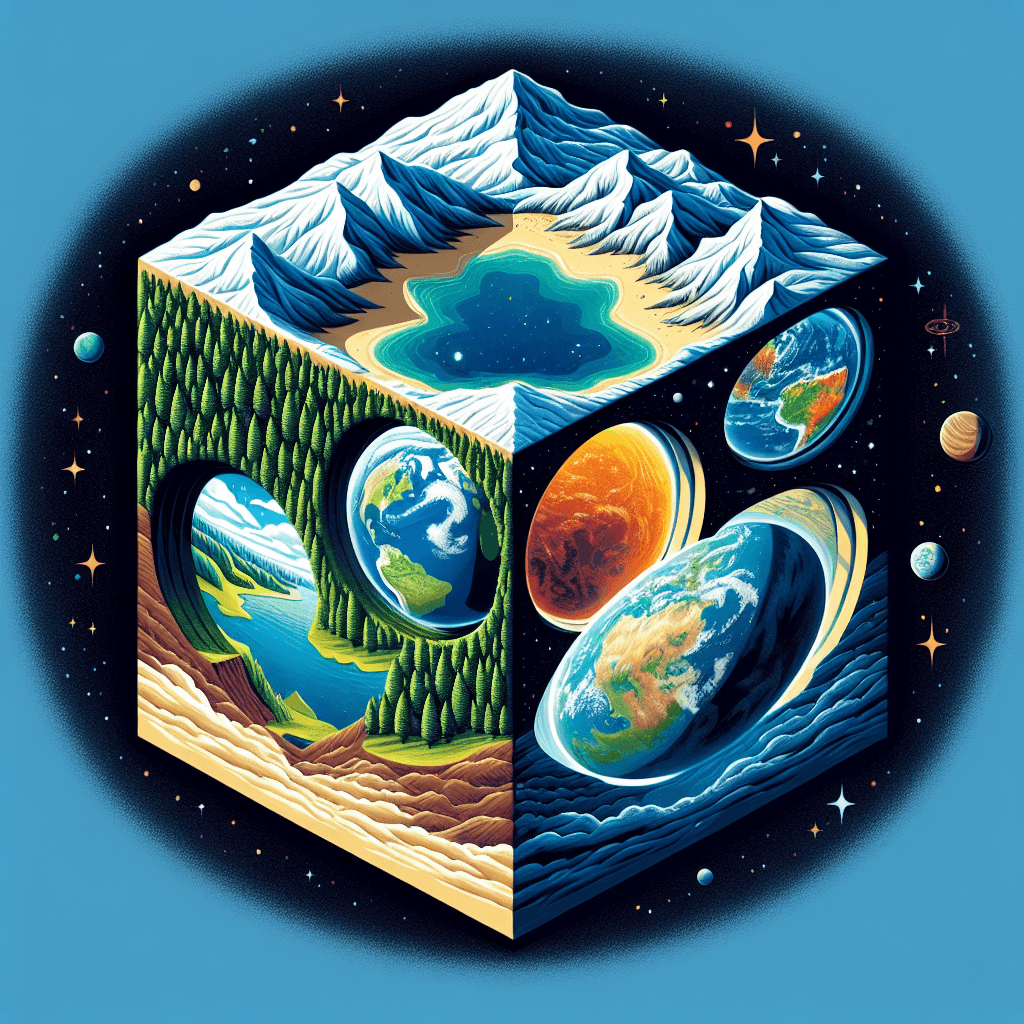
If Earth were a cube, gravity would pull all water and air toward the center of each face, as those points are closest to the center of mass. This would create six isolated circular oceans surrounded by massive, airless mountain ranges at the edges and corners.
Six Faces, Six Seas: What Would Happen if the Earth Were a Giant Cube?
Imagine waking up in a world where the horizon doesn’t curve gently away, but instead meets at a sharp, 90-degree angle. While the "Flat Earth" theory has long been debunked, the "Cubical Earth" thought experiment offers a fascinating playground for physics. If our planet were suddenly reshaped into a massive hexahedron, the laws of gravity wouldn’t simply ignore the new geometry. Instead, they would transform our familiar blue marble into a surreal landscape of isolated ecosystems. To understand this transformation, we must look at the foundational principles of Newtonian gravity and fluid dynamics to determine how water, air, and even human beings would react to a world with edges.
The Gravity of the Situation
In our spherical world, gravity pulls everything toward the center of mass, and since the surface is roughly equidistant from that center, "down" feels the same everywhere. However, on a cube, the distance from the center to the surface varies wildly.
The center of each of the six faces would be the closest point to the planet's core. As you move toward the edges and corners, you are effectively traveling "up" a massive gravitational incline. To a person standing on a cubical Earth, walking toward an edge would feel like climbing a steep mountain, even though the ground looks flat. By the time you reached a corner, you would be standing on a jagged peak over 3,000 kilometers "above" the center of the face.
The Birth of the Six Central Seas
Because water is a fluid, it always seeks the point of lowest gravitational potential. On a cubical Earth, the "lowest" points are the centers of the six faces. Consequently, the answer to our primary question is a resounding yes: the oceans would migrate away from the edges and corners, pooling into six massive, isolated bodies of water.
- Centralized Basins: Each face would feature a circular sea located precisely in the middle.
- Massive Depths: Because all the world’s water is concentrated into smaller surface areas, these lakes would be incredibly deep, potentially reaching hundreds of kilometers down.
- The Great Dividers: Between these seas, the edges and corners of the cube would consist of dry, barren rock. There would be no way to sail from one "face" to another; the edges would represent impassable, airless mountain ranges.
An Atmosphere Under Pressure
It isn't just the water that would pool; the atmosphere is also subject to gravity. Air would cluster in the center of each face, creating a thick, breathable "bubble" of sky above each ocean.
- The Bullseye Effect: At the center of each face, the air pressure would be at its highest, potentially much denser than what we experience at sea level today.
- The Thinning Sky: As you travel toward the edges, the atmosphere would thin rapidly.
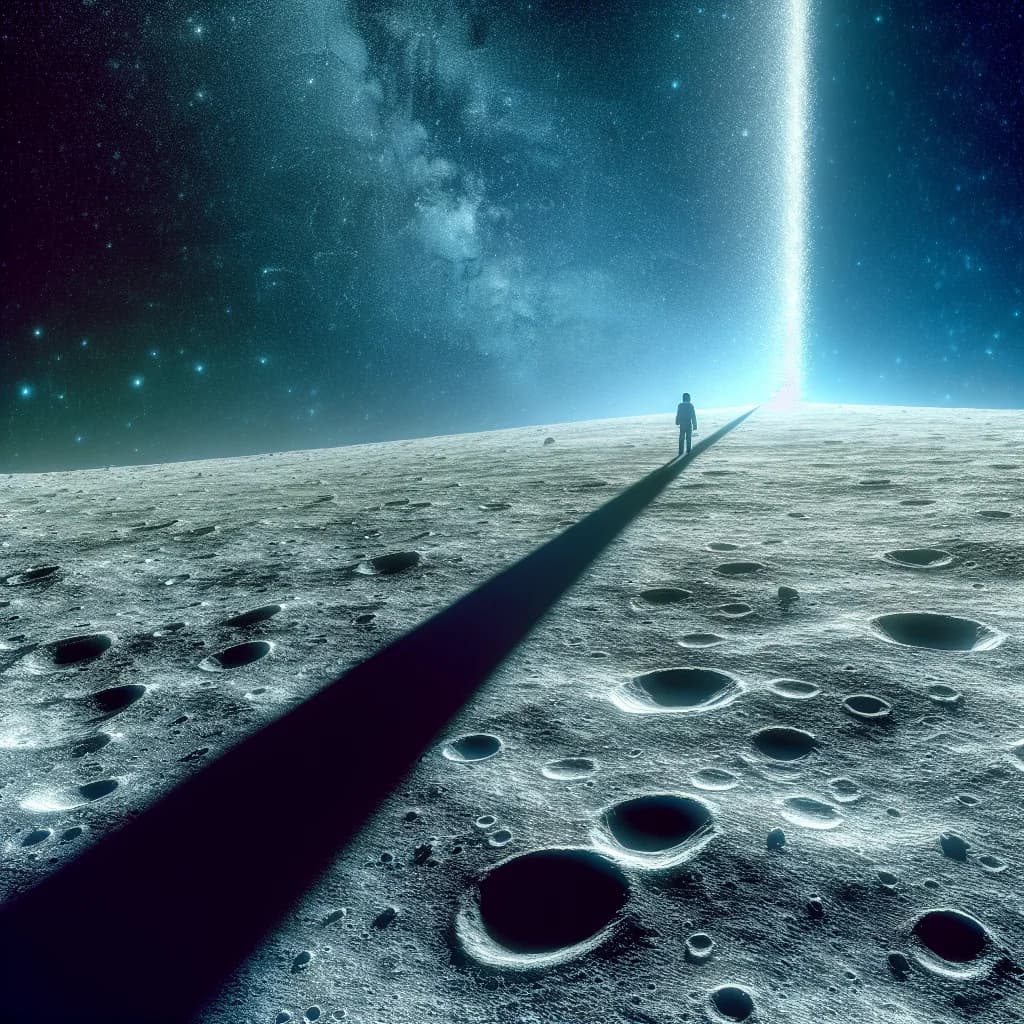
- The Vacuum Edges: The edges and corners would actually poke out beyond the Earth’s atmosphere. Standing on a corner of the cube would be equivalent to standing in the vacuum of outer space, offering a clear, unobstructed view of the stars while requiring a pressurized spacesuit to survive.
Climate and Connectivity
The environmental consequences would be unlike anything on a spherical planet. Each of the six faces would essentially become a self-contained planetoid. Because the atmosphere does not cross the edges effectively, weather patterns would be trapped within each face. You could have a raging hurricane in the "Atlantic Face" while the "Pacific Face" remains perfectly still.
Furthermore, the lack of a global ocean current system—which currently regulates Earth’s temperature—would lead to extreme temperature gradients. The centers of the faces would be temperate and moist, while the high-altitude edges would be subjected to the frigid temperatures of the upper thermosphere.
Conclusion
If the Earth were a cube, our geography would be defined by six central, circular oceans surrounded by towering, atmospheric peaks. The fundamental law of gravity, which insists on pulling all mass toward a common center, would treat the corners of the cube as massive mountains and the faces as deep valleys. This thought experiment illustrates the "hydrostatic equilibrium"—the scientific principle explaining why massive objects in space naturally pull themselves into spheres. While a cubical Earth makes for a spectacular mental exercise, we can be grateful for our spherical home, where the oceans connect us all rather than pooling into isolated, abyssal lakes.