If the Earth were a cube, would the atmosphere and oceans pool in the center of each face
Imagine a world where the corners are airless peaks piercing the void and the oceans cluster into massive, gravity-defying bubbles at the center of every face. Step inside the physics of a cuboid Earth, where the laws of nature would transform our familiar landscape into a surreal, geometric alien wonder.

Too Long; Didn't Read
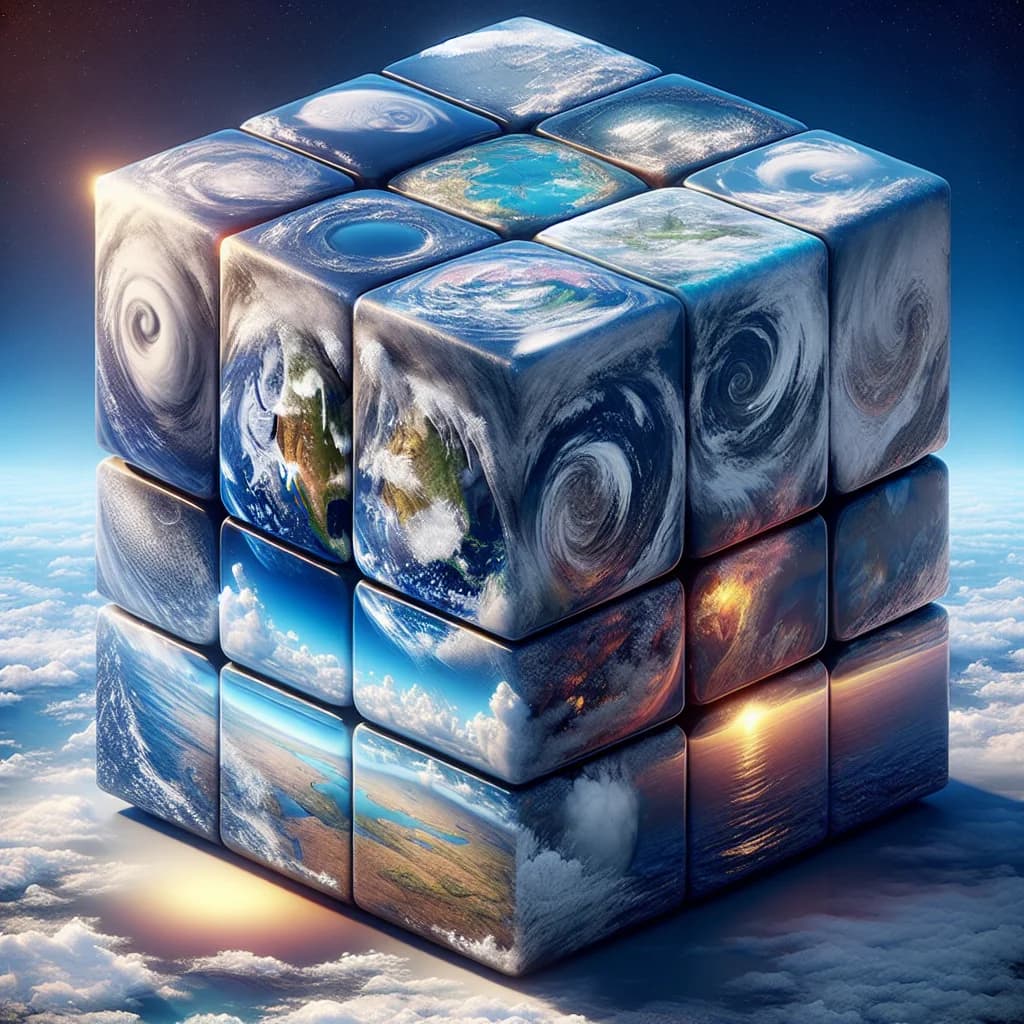
Yes. Because gravity pulls toward the center of mass, the atmosphere and oceans would bulge at the midpoint of each square face. The edges and corners would effectively become massive, airless mountains, leaving six isolated habitable zones surrounded by vacuum and rock.
What if Earth Were a Cube? Gravity, Oceans, and the Strange Physics of a Six-Sided Planet
Imagine a world where the horizon doesn’t curve gently away from you, but instead terminates in a sharp, 90-degree precipice. In this thought experiment, we replace our familiar oblate spheroid with a massive, six-sided celestial cube. While this sounds like the premise of a sandbox video game, the physical reality of a cubic Earth would be a masterclass in gravitational weirdness. To understand how life, water, and air would behave on such a world, we must look at the interplay between Newtonian gravity and fluid dynamics.
The Geometry of "Down"
The most significant change on a cubic Earth involves our perception of gravity. On a spherical planet, the center of mass is roughly the same distance from every point on the surface. Consequently, "down" is always directly beneath your feet. On a cube, however, the distance from the center of mass to the surface varies wildly.
The center of each face is the closest point to the planet’s core, while the eight corners are the most distant. If the Earth were a cube with the same volume as our current home, the distance from the center to a corner would be approximately 1.73 times greater than the distance to the center of a face. Because gravitational pull follows the inverse-square law, the corners would feel like massive, high-altitude mountain ranges. As you walked from the center of a face toward an edge, it would feel as though you were climbing a progressively steeper slope, even though the ground looked flat.
The Great Pooling: Six Circular Seas
If you poured water onto a cubic Earth, it wouldn’t spread out evenly. Fluids—both water and air—seek the lowest gravitational potential. On a cube, the "low" points are the centers of the six faces.
- Centralized Oceans: Gravity would pull every drop of water toward the center of each face. Instead of a global interconnected ocean, we would see six isolated, circular bodies of water.
- The Depth Factor: These central reservoirs would be incredibly deep. Calculations suggest that the center of each face would be submerged under miles of water, while the edges and corners of the cube would remain dry, barren, and incredibly high.
- The Shorelines: Each face would effectively become a self-contained ecosystem. Traveling from the "North Pole" face to a "Side" face would require crossing a dry, mountainous ridge where the water simply cannot reach.
An Atmosphere in a Bulge
The atmosphere would behave exactly like the oceans, pooling in the centers of the six faces. On our spherical Earth, the atmosphere is a relatively thin, uniform blanket. On a cubic Earth, the air would be thickest and most pressurized at the center of each face.
- Life at the Center: At the face centers, the atmospheric pressure would be high, potentially even denser than what we experience at sea level today. This would be the only habitable zone for humans.
- The Thinning Air: As you traveled toward the edges, the air would thin rapidly. By the time you reached the middle of an edge, the atmosphere would be comparable to the "death zone" of Mount Everest.
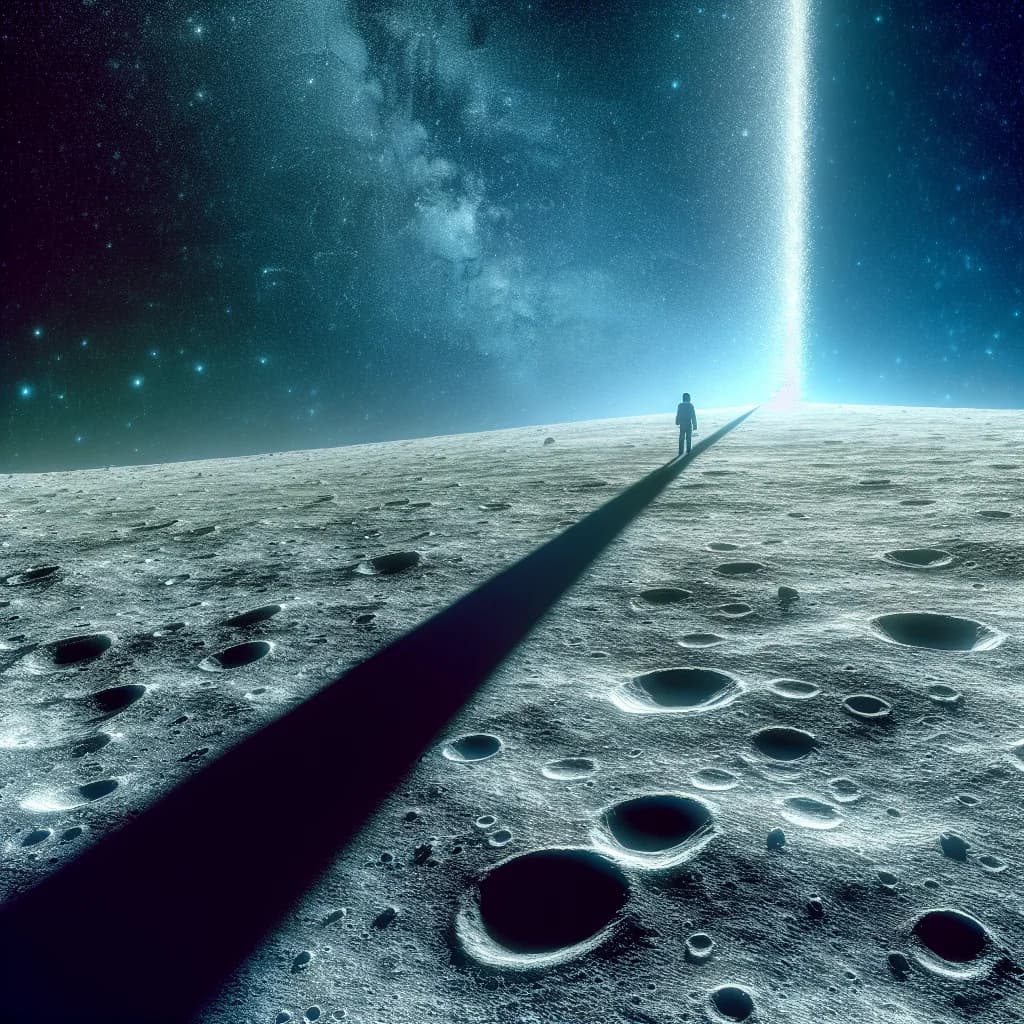
- Vacuum Corners: The corners of the cube would actually poke out past the habitable atmosphere. Standing on a corner would be equivalent to standing in the vacuum of outer space. You would need a pressurized spacesuit just to admire the view of the sharp transition into the next face.
The Verdict of Physics
In this hypothetical scenario, the Earth would not be a "world" in the sense we understand it, but rather six distinct habitable islands of air and water separated by impassable, airless mountain ridges. The physics of gravity dictates that liquids and gases will always attempt to form a sphere. On a cube, this results in the atmosphere and oceans "bulging" in the center of each face to get as close to the center of mass as possible.
Ultimately, this thought experiment highlights why massive objects in our universe—stars, planets, and large moons—are almost always spheres. Gravity is an insistent sculptor; it dislikes sharp corners and prefers the perfect symmetry of a circle. While a cubic Earth offers a fascinating look at gravitational potential, we can be thankful for our spherical home, where the air stays put and the "down" direction doesn't change just because you went for a long walk.