If you could fly through the center of our galaxy, why would it smell like raspberries and taste like rum
Forget the cold void of space—the heart of our galaxy is a giant, cosmic cocktail waiting to be discovered. Dive into the mind-bending chemistry that makes the center of the Milky Way smell like fresh raspberries and taste like a bottle of spiced rum.

Too Long; Didn't Read
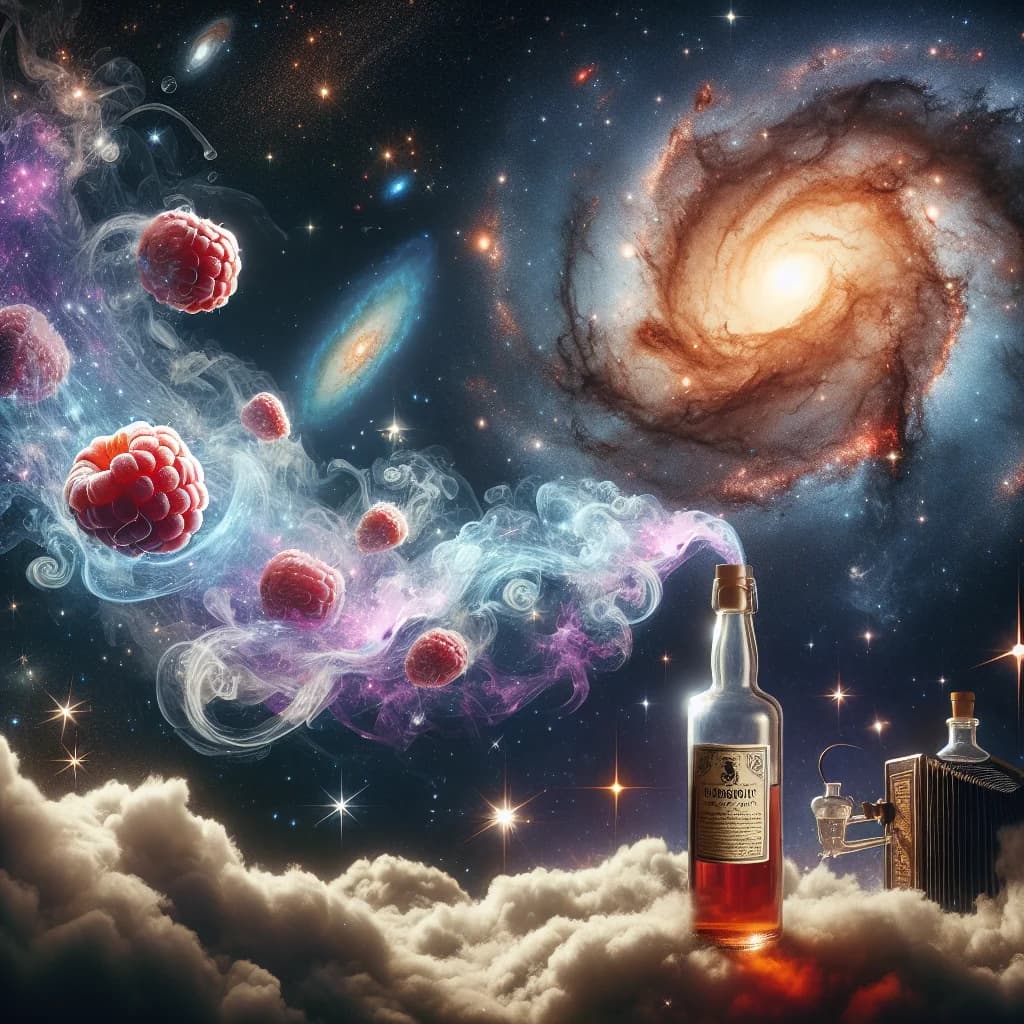
Astronomers searching for the building blocks of life in Sagittarius B2, a massive dust cloud at the Milky Way's center, discovered the presence of ethyl formate. This specific chemical compound is the same molecule responsible for the distinct flavor of raspberries and the characteristic aroma of rum.
Cosmic Cocktails and Berry Clouds: Why Does the Center of Our Galaxy Smell Like Raspberries and Rum?
Imagine, for a moment, that you are the captain of a state-of-the-art starship, navigating the swirling, celestial heart of the Milky Way. As you approach the dense center of our galaxy, far from the familiar sights of our solar system, you might expect to encounter the sterile scent of cold metal or the harsh ozone of solar radiation. However, if you could roll down a window and take a deep breath (and survive the vacuum of space, of course), science suggests you would be greeted by a surprisingly delightful aroma: fresh raspberries and a distinct hint of Caribbean rum.
This isn’t the plot of a whimsical sci-fi novel; it is a fascinating reality rooted in the complex chemistry of the cosmos. To understand this phenomenon, we must dive into the world of astrochemistry and radio spectroscopy to analyze the molecular makeup of a massive dust cloud located 26,000 light-years away.
The Galactic Kitchen: Sagittarius B2
The secret to this cosmic scent lies in a giant molecular cloud known as Sagittarius B2 (Sgr B2). Located near the center of our galaxy, this cloud is a massive nursery for new stars, and it is also one of the largest "chemical laboratories" in the universe.
Sagittarius B2 is truly gargantuan. It spans several light-years and contains billions of times more mass than our Sun. While most of the cloud consists of hydrogen and helium, it also contains a complex mixture of organic molecules. In 2009, astronomers from the Max Planck Institute for Radio Astronomy used the IRAM radio telescope in Spain to peer into this cloud, searching for the building blocks of life. What they found instead was the chemical signature of a summer dessert.
The Chemistry of Flavor: Ethyl Formate
Among the many molecules identified in the interstellar dust, one stood out: ethyl formate ($C_3H_6O_2$). This specific chemical compound is well-known to chemists on Earth for two very specific properties:
- The Smell of Rum: Ethyl formate is the primary chemical responsible for the characteristic aroma of rum.
- The Taste of Raspberries: It is also a key component that gives raspberries their unique, tangy flavor.
How Molecules Form in the Cold Void
You might wonder how such complex organic molecules can form in the freezing, irradiated vacuum of space. The process is a slow but steady cosmic dance:
- Dust Grains: Tiny particles of cosmic dust act as solid surfaces where atoms can land.
- Chemical Reactions: In the extreme cold, atoms like carbon, hydrogen, and oxygen cling to these dust grains, forming layers of ice.
- Stellar Warming: When a nearby star begins to form, its heat warms the dust, triggering chemical reactions that fuse these simple atoms into complex molecules like ethyl formate.
- Release: The molecules eventually evaporate from the dust grains, drifting into the gas cloud where they can be detected by us.
Decoding the Light: How We Know It’s There
Since we cannot actually travel to the center of the galaxy to perform a "sniff test," we rely on a scientific technique called spectroscopy. Every molecule vibrates and rotates in a unique way, emitting energy at specific frequencies. These frequencies act like a "chemical fingerprint."
By pointing radio telescopes at Sagittarius B2, scientists can pick up these faint signals. When they analyzed the radio waves coming from the center of the Milky Way, they found a perfect match for ethyl formate. It is an incredible feat of measurement: identifying a specific molecule from a distance of over 150 quadrillion miles (that’s 150 followed by 15 zeros!).
Could You Really Taste the Galaxy?
While the idea of a raspberry-flavored galaxy is enchanting, the physical reality of the cloud is quite different from a smoothie.
- Density: Even though Sagittarius B2 is massive, its molecules are spread out over an enormous volume. If you were standing in the middle of it, the "cloud" would look like a perfect vacuum to the naked eye.
- Other Ingredients: Along with the sweet ethyl formate, the cloud contains less pleasant chemicals like propyl cyanide—a molecule that is decidedly toxic.
- Atmospheric Constraints: To actually smell or taste these molecules, they would need to be concentrated in a breathable atmosphere, which unfortunately does not exist in the center of the galaxy.
Conclusion
The discovery that the center of our galaxy smells like rum and tastes like raspberries is a testament to the incredible complexity of the universe. It reminds us that the same chemical laws governing a kitchen on Earth also dictate the composition of giant clouds in deep space.
Through the lens of astrochemistry, we see that the cosmos is not just a collection of cold rocks and burning gas; it is a vibrant, evolving landscape of organic chemistry. While we may never personally cruise through the raspberry-scented clouds of Sagittarius B2, knowing they exist connects our humble sensory experiences on Earth to the grand, swirling heart of the Milky Way. The universe, it seems, has a much more sophisticated palate than we ever imagined.