If you could see the cosmic microwave background, would the night sky glow with the Big Bang’s remnants
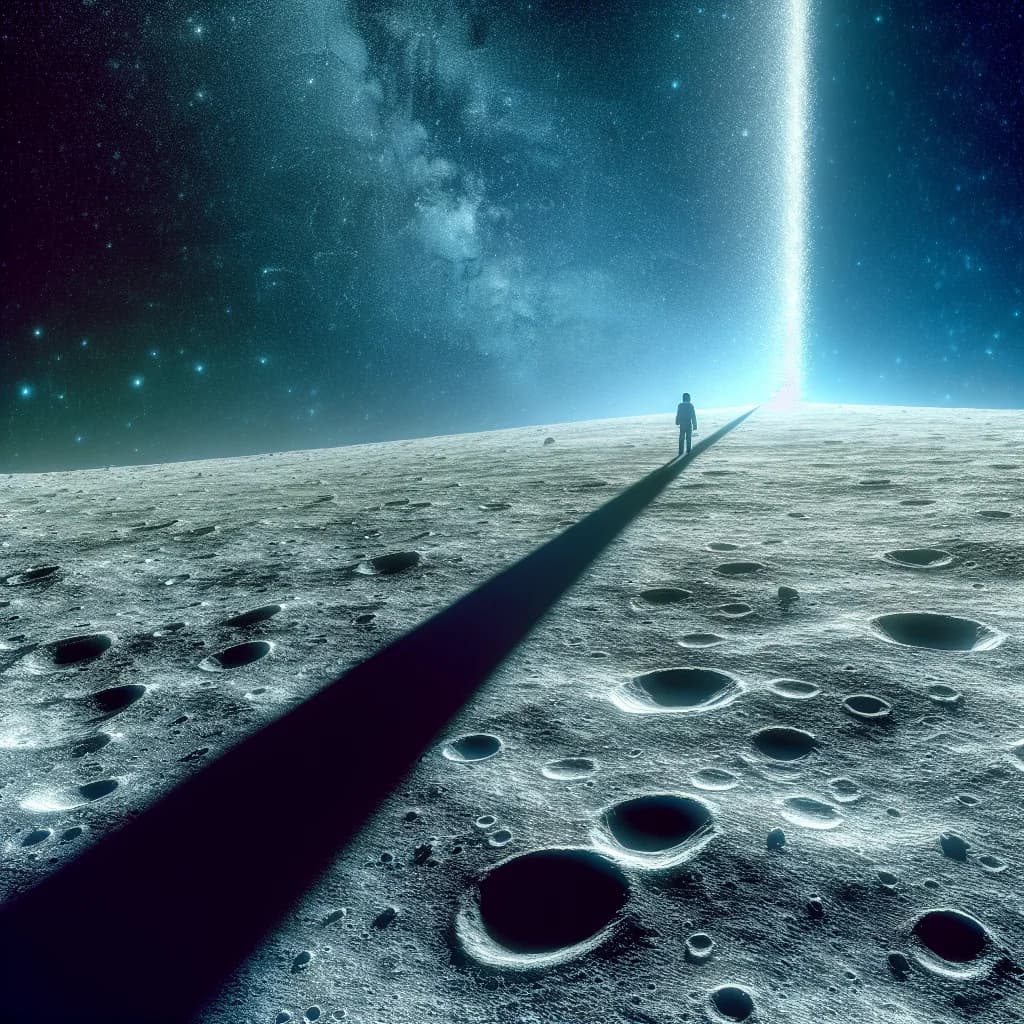
Imagine if the night sky wasn’t dark, but blazed with the golden embers of the universe’s violent birth. If you could see the hidden light of the cosmic microwave background, you’d realize we are living inside the breathtaking, permanent glow of the Big Bang itself.

Too Long; Didn't Read
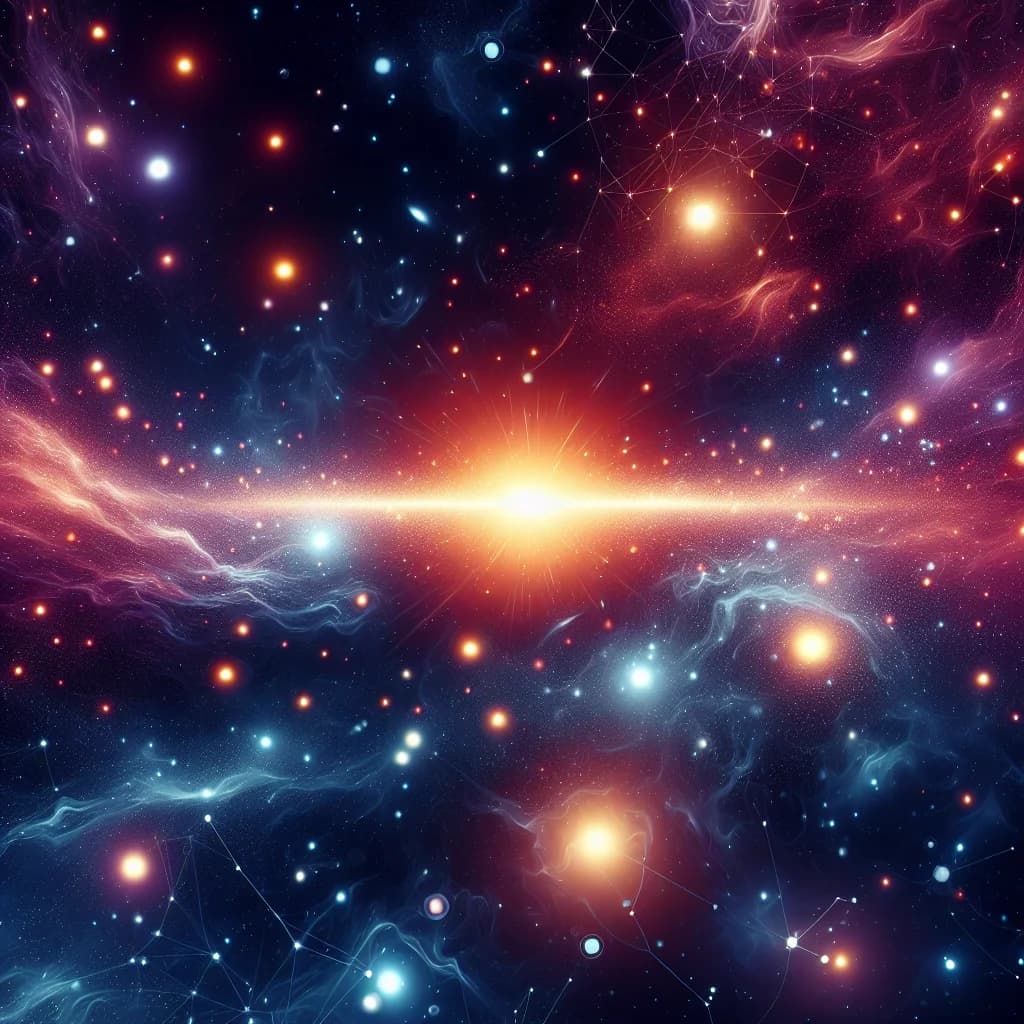
If humans could see microwave radiation, the entire night sky would glow with a uniform, ancient light from the early universe, making the darkness of space appear bright with the remnants of the Big Bang.
The Invisible Afterglow: What if Our Eyes Could See the Cosmic Microwave Background?
Imagine stepping outside on a crisp, clear night. Instead of the familiar velvet blackness punctuated by a few thousand stars, the entire dome of the sky is ablaze with a soft, steady, and omnipresent golden glow. There are no shadows from the moon because the sky itself is the light source. This isn't a scene from a sci-fi epic; it is a literal description of the universe we inhabit—we simply lack the biological hardware to see it.
The "light" in question is the Cosmic Microwave Background (CMB), the cooled-down remnant of the first light to ever travel freely through the universe. To understand what would happen if our vision shifted to perceive this radiation, we must look through the lenses of cosmology, thermodynamics, and atmospheric physics. This thought experiment explores how the fundamental expansion of space hides the most dramatic light show in existence right before our eyes.
The Physics of the Primordial Glow
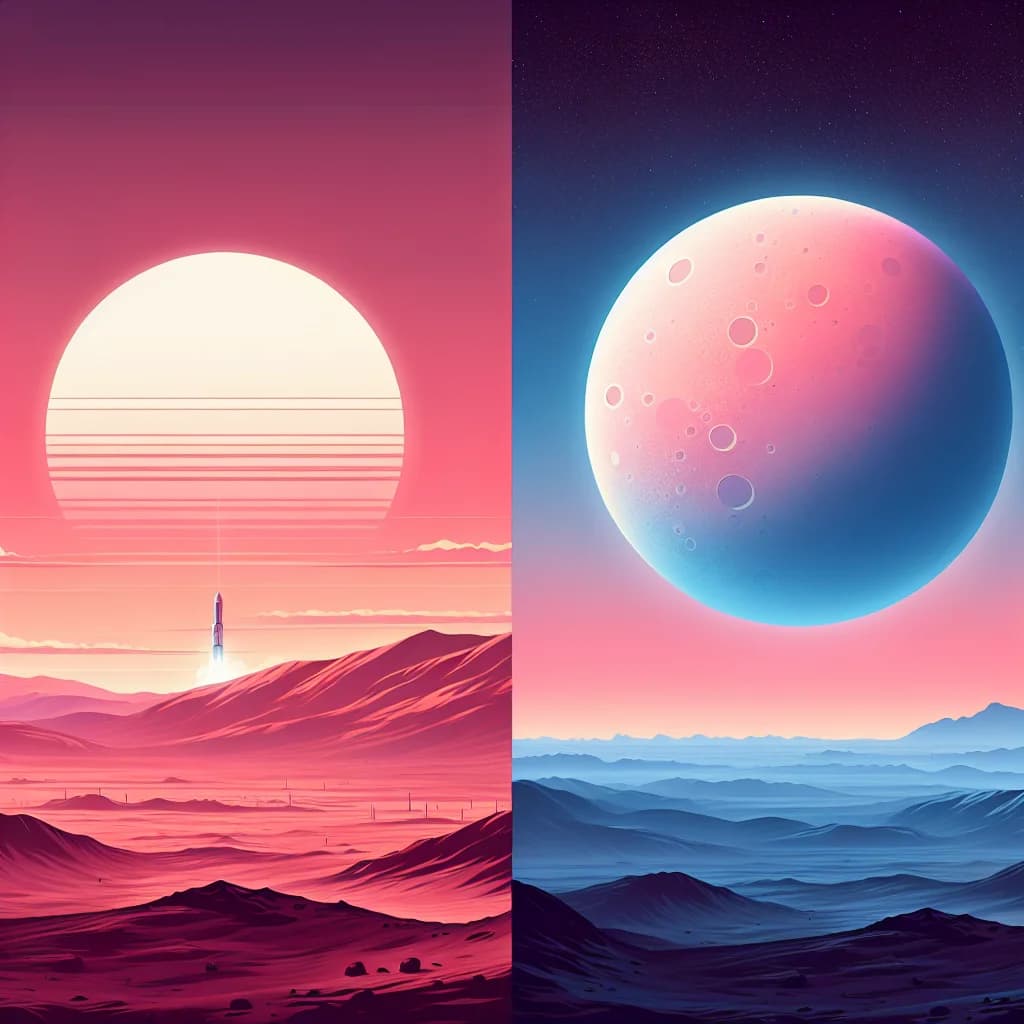
The CMB is the "fossil" of the Big Bang. About 380,000 years after the universe began, it cooled enough for atoms to form, allowing photons (light particles) to finally travel through space without bumping into a constant fog of electrons. At that moment, the entire universe was as hot as the surface of a star—roughly 3,000 degrees Kelvin.
If you were there then, the sky would have been a blinding orange-white. However, over the last 13.8 billion years, the universe has expanded. As space stretched, it also stretched the wavelength of that light, a process known as cosmological redshift.
- Then: Short, high-energy visible and ultraviolet waves.
- Now: Long, low-energy microwaves.
- The Scale: The light has been stretched by a factor of about 1,100.
Because our eyes are only evolved to see the tiny "visible" slice of the electromagnetic spectrum (wavelengths between 400 and 700 nanometers), these microwaves—now measuring about 1 to 2 millimeters—remain invisible to us.
A Sky That Never Goes Dark
If we could suddenly toggle our vision to the microwave spectrum, the "night" sky would effectively cease to exist. The CMB is isotropic, meaning it is almost perfectly uniform in every direction.
1. Constant Luminosity
Unlike the sun, which sets, or the stars, which are localized points of light, the CMB comes from everywhere. In this hypothetical scenario, the sky would be a solid wall of light. However, it wouldn't be blinding. Because the universe has expanded so much, the "temperature" of this light has dropped from 3,000K to a chilly 2.725 Kelvin (-454.7°F). While the sky would be "bright" in terms of photon count, the energy intensity would be quite low compared to a midday sun.
2. The Texture of the Cosmos
The sky wouldn't be a flat, boring color. Precise measurements from satellites like Planck and WMAP show tiny temperature fluctuations—parts per million. To a microwave-sensitive eye, the sky would look like a beautifully textured, mottled tapestry. These "anisotropies" are the seeds of all modern galaxies and clusters.
Atmospheric and Environmental Consequences
Seeing the CMB would change more than just our view of the stars; it would change how we perceive our own planet.
- The "Opaque" Atmosphere: Water vapor in our atmosphere is excellent at absorbing microwaves. On a humid day, the sky might look like a thick, glowing fog. On a clear, dry day atop a mountain, the "glow" of the early universe would appear much sharper.
- Day and Night Parity: Because the CMB is cosmic, it isn't blocked by the Earth. While the ground would block the light coming from "down," the sky would look largely the same at 2:00 PM as it does at 2:00 AM.
- Navigational Shifts: Traditional stellar navigation would be nearly impossible. Stars emit some microwaves, but they would be like tiny flashlights held up against a massive, glowing stadium scoreboard.
The Ultimate Scientific Outcome
If we could see the Cosmic Microwave Background, our perspective on our place in the universe would be radically different. We would no longer feel as though we live in a void of empty blackness. Instead, we would see ourselves as being cradled within a finite, glowing bubble—the "surface of last scattering."
The core scientific principle at play here is the expansion of the metric of space. It is the reason the sky is dark (Olbers' Paradox) and the reason the CMB has transitioned from a blinding heat to a gentle microwave whisper. By imagining this glow, we connect back to the reality that we are quite literally swimming in the remnants of the universe’s creation. The "dark" night sky is an illusion of our biology; in reality, the universe is still very much alight with the fires of its own beginning.