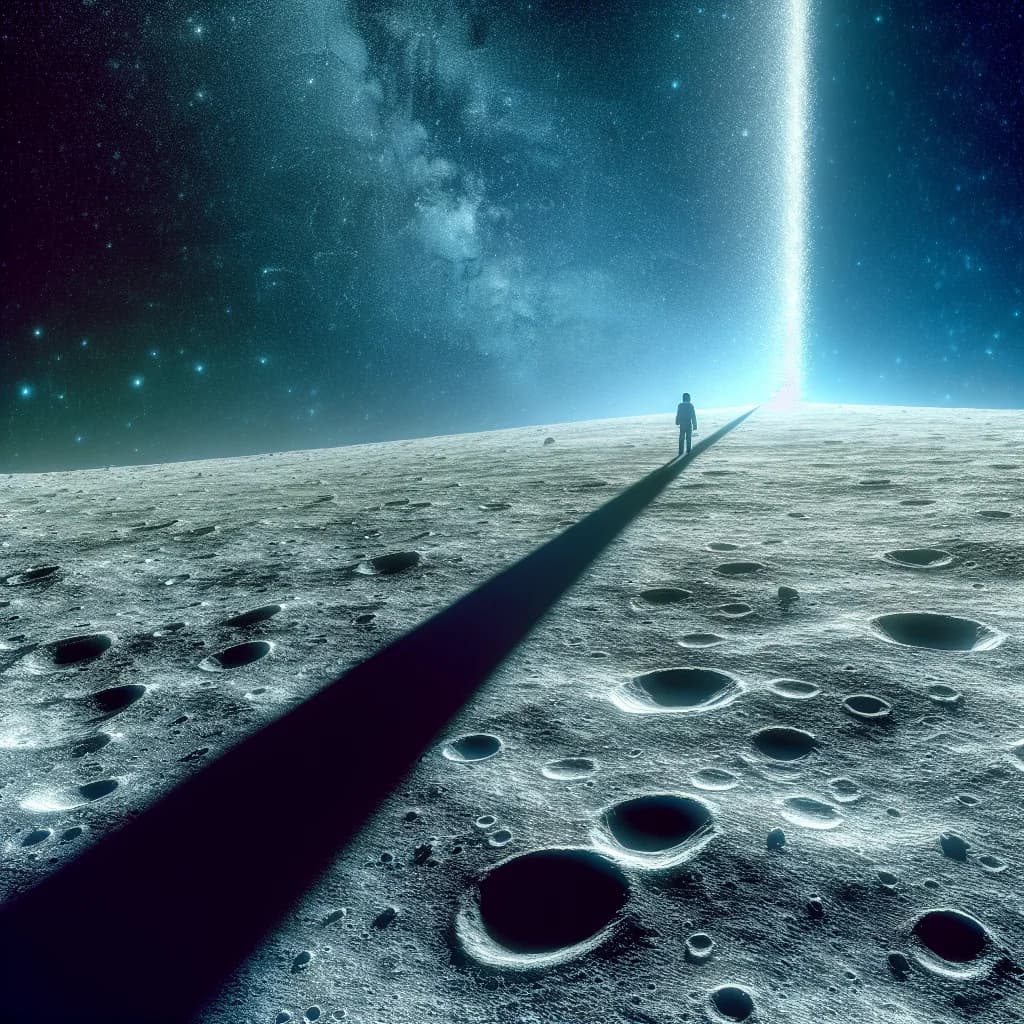
If you could survive on the Moon without a suit, would you hear your own footsteps on the surface
In the eerie, airless silence of the lunar surface, your own body might be the only thing breaking the quiet. Discover the surprising physics of why you could actually hear your own footsteps on the Moon—even without a single breath of air.

Too Long; Didn't Read
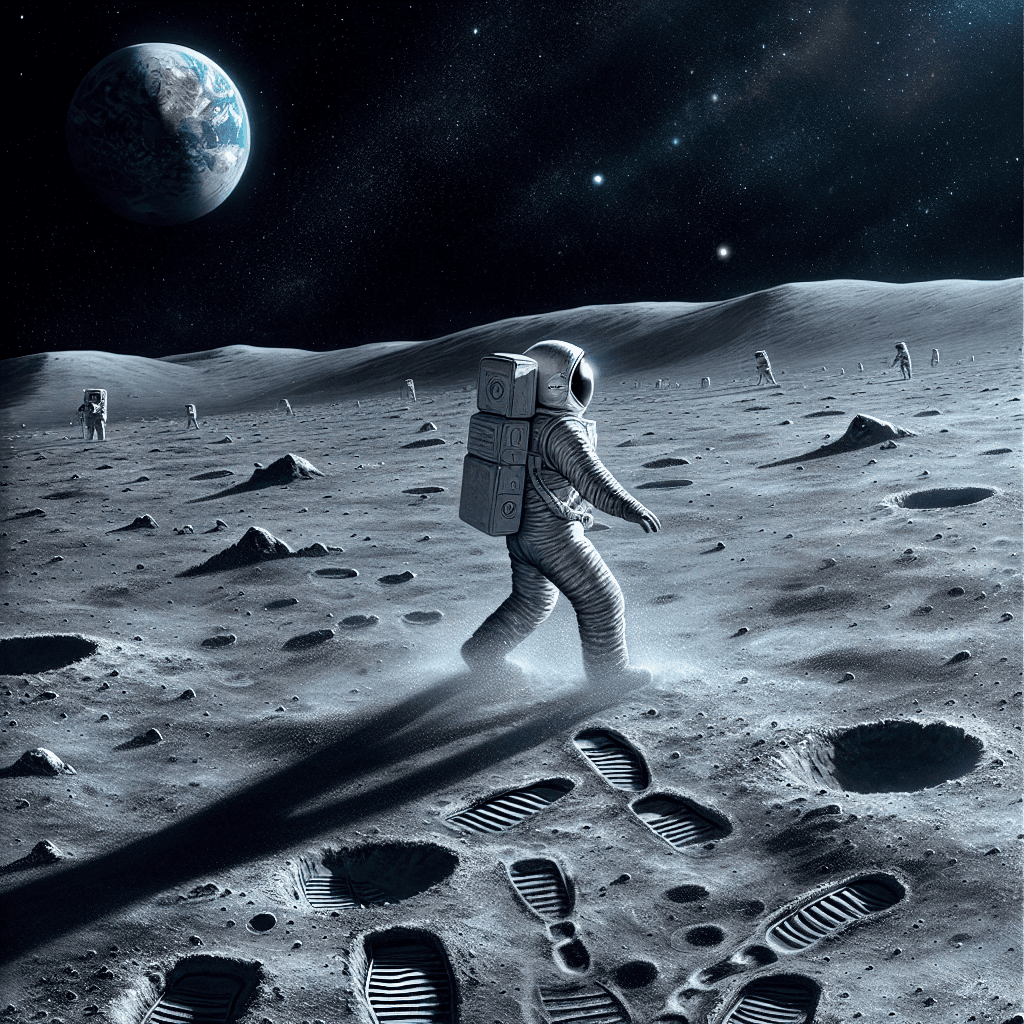
Yes, you would hear your own footsteps. While the Moon’s vacuum prevents sound from traveling through the air, the vibrations from your feet hitting the ground would travel through your bones directly to your inner ear via bone conduction.
If You Could Survive the Moon Barefoot, Would You Hear Your Own Footsteps? A Physics Breakdown
Imagine stepping onto the lunar surface, not as an astronaut encased in layers of pressurized fabric and life-support systems, but as yourself, wearing nothing more than your favorite pair of sneakers. In this hypothetical scenario, we grant you the "magical" ability to survive the Moon’s harsh vacuum and extreme temperatures without a suit. As you take your first tentative step onto the dusty plains of the Sea of Tranquility, a fascinating scientific question arises: would you actually hear the "thud" of your feet hitting the ground?
To answer this, we must look beyond the famous tagline "In space, no one can hear you scream" and examine the specific mechanics of wave propagation, bone conduction, and the unique physical properties of lunar regolith. This thought experiment relies on the principles of acoustics and physiology to determine how sound behaves when the traditional medium of air is removed from the equation.
The Silence of the Vacuum
On Earth, we hear sounds because our atmosphere acts as a giant delivery service for vibrations. When your foot hits the pavement, it displaces air molecules, creating a pressure wave that travels to your eardrum. On the Moon, the atmosphere is so thin—roughly $10^{-14}$ the density of Earth’s—that it is considered a near-vacuum.
With virtually no air molecules to bump into one another, there is no medium for an external "sound wave" to travel from the ground, through the space around your legs, and into your ears. If a boulder were to crash down twenty feet away from you, you would witness the impact in total, eerie silence. However, your own footsteps present a different physical loophole.
Bone Conduction: The "Inside" Track
While sound cannot travel through the lunar vacuum to reach your ears, it has a VIP pass through your own body. This is known as bone conduction.
When your foot strikes the lunar surface, the impact creates mechanical vibrations. These vibrations don't need air; they travel through your shoes, into the bones of your feet, up your skeletal structure, and directly to the cochlea in your inner ear. This is the same principle that allows you to hear the "crunch" of a carrot inside your head even if you plug your ears.
- Transmission Efficiency: Solid bone is a much denser medium than air. Sound actually travels significantly faster through solids—roughly 3,000 to 6,000 meters per second in bone compared to 343 meters per second in Earth's air.
- The Result: You would definitely "hear" the impact, but it would sound different than it does on Earth. It would be a deep, bass-heavy vibration localized within your skull rather than a crisp, external "clack."
Walking on Moon Dust: The Muffling Effect
The quality of the sound also depends on what you are stepping on. The Moon is covered in regolith, a fine, glass-like dust created by billions of years of micrometeorite impacts. Unlike the packed dirt or hard rock of Earth, lunar regolith is incredibly porous and "fluffy" in its upper layers.
- Energy Absorption: Regolith acts as a natural shock absorber. Much of the kinetic energy from your step would be spent displacing the dust rather than creating a sharp vibration.
- Acoustic Damping: Because the dust is loosely packed, it is not an efficient conductor of sound. The vibration that eventually reaches your skeleton would be significantly muffled, making your footsteps sound like soft, dull thumps rather than sharp strikes.
The "Symphony of the Self"
Without the background noise of wind, rustling leaves, or distant traffic, your internal environment would become surprisingly loud. In the absence of external atmospheric noise, you would become hyper-aware of your own biological functions. You would likely hear the rhythmic "whoosh" of blood pumping through your carotid arteries and the mechanical "click" of your joints moving. In this silent lunar world, your own body becomes the primary source of all acoustic data.
Conclusion
If you could survive on the Moon without a suit, you would indeed hear your own footsteps, but not through the "air" of the lunar environment. Instead, you would hear them through the direct physical connection between the ground and your skeleton. This internal pathway bypasses the vacuum of space, turning your body into a conductor for every step you take.
Ultimately, this scenario highlights the incredible relationship between physics and biology. We often think of sound as something that happens "out there," but our perception of the world is deeply rooted in how our bodies interact with physical energy. While the Moon may be a realm of external silence, for the suitless traveler, it would be a place of deep, resonant, and intensely personal sound.