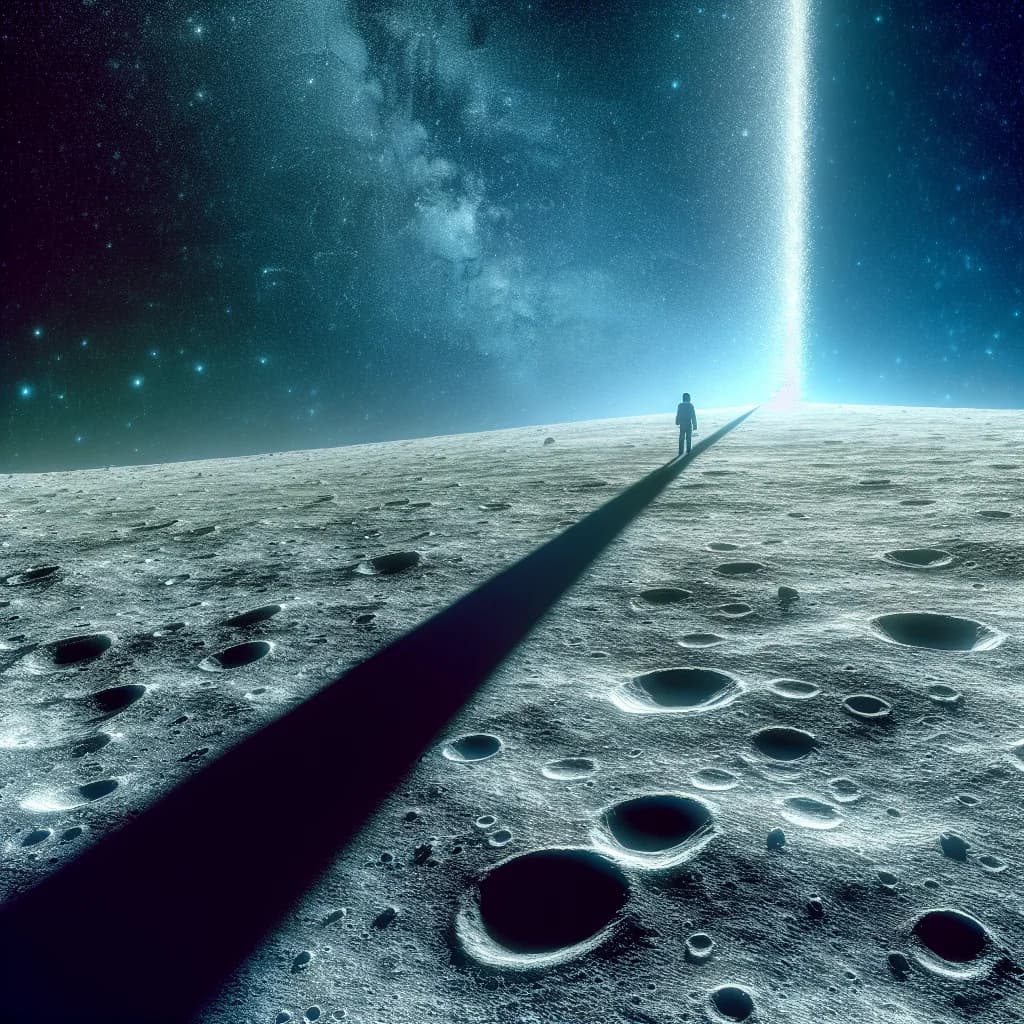
If you detonated a nuclear bomb at the bottom of the Mariana Trench, would the ocean surface even ripple
Could the crushing weight of seven miles of water actually swallow a nuclear explosion whole, or would the world feel the shockwaves? Discover why the deepest point on Earth might be the only place where a mushroom cloud never stands a chance.

Too Long; Didn't Read
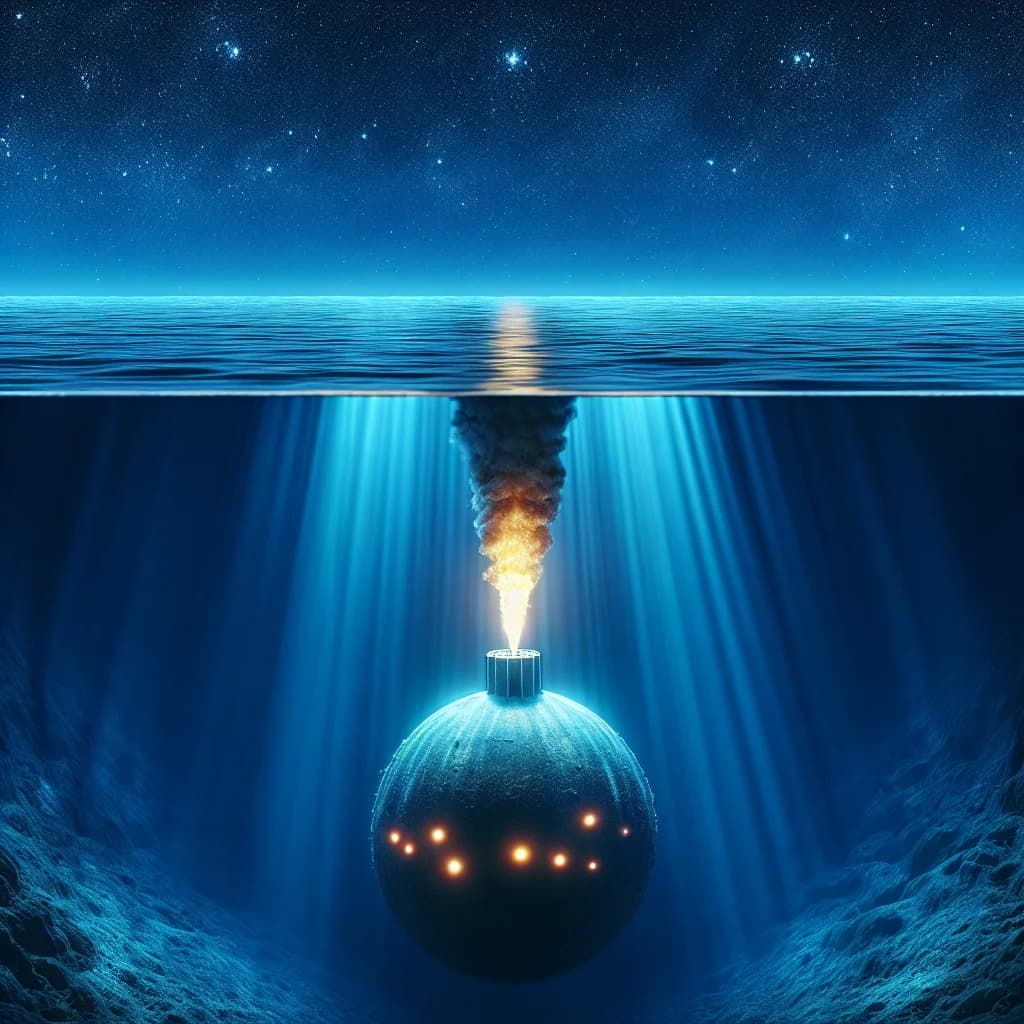
Detonating a nuclear bomb at the bottom of the Mariana Trench would have almost no effect on the surface. Due to the extreme depth and water pressure, the explosion's gas bubble would collapse and dissipate into heat and sound long before reaching the top, resulting in nothing more than a small mound of water and some warm bubbles.
The Deepest Boom: What Happens if You Detonate a Nuclear Bomb at the Bottom of the Mariana Trench?
The Mariana Trench is the ultimate frontier of our planet—a dark, silent abyss plunging nearly 11 kilometers (about 7 miles) into the Earth’s crust. It is a place of extremes, where the weight of the entire ocean presses down with staggering force. But what happens if we introduce a massive, artificial energy source into this tranquil, high-pressure environment? Specifically, if a standard nuclear device were detonated at the very bottom, in the Challenger Deep, would the surface of the Pacific Ocean even show a ripple?
To answer this, we must look beyond the cinematic tropes of mushroom clouds and tidal waves. Instead, we rely on the principles of fluid dynamics, thermodynamics, and the specific behavior of spherical expansions under extreme hydrostatic pressure. This thought experiment reveals a fascinating battle between the incredible energy of a localized blast and the sheer, overwhelming mass of the deep ocean.
The Crushing Reality of 1,000 Atmospheres
Before the "button" is pushed, we must understand the environment. At the bottom of the Mariana Trench, the water pressure is approximately 1,000 times higher than at sea level. This is equivalent to about 15,000 pounds per square inch (psi).
To visualize this:
- Imagine a single person trying to support the weight of nearly 50 Boeing 747 jumbo jets stacked on their shoulders.
- The water density is slightly higher due to the compression, acting less like a liquid and more like a physical wall of resistance.
In this environment, any "explosion" isn't fighting against air; it is fighting against a column of water seven miles high.
The Birth of the Bubble
When a nuclear device detonates, it releases a tremendous amount of energy in a few microseconds, creating a sphere of superheated plasma. In the atmosphere, this sphere expands rapidly because the air offers little resistance. At the bottom of the trench, the story is very different.
- Initial Expansion: The explosion creates a bubble of steam and plasma. Given a hypothetical 1-megaton yield, the bubble would initially grow to a diameter of several hundred meters.
- The Thermal Exchange: Because water is an excellent heat sink, the intense thermal energy is rapidly absorbed by the surrounding liquid.
- The Pressure War: As the bubble expands, it pushes against that 11 kilometers of water. However, the internal pressure of the gas bubble drops as it grows. Within seconds, the 15,000 psi of the surrounding ocean becomes greater than the internal pressure of the bubble.
The Great Collapse
In physics, this leads to what is known as a "bubble oscillation." Instead of rising to the surface like a bubble in a soda glass, the massive hydrostatic pressure causes the steam bubble to collapse almost as quickly as it formed.
- The Rebound: As the bubble collapses, it compresses the gas inside until it heats up again, causing it to expand a second time.
- Dissipation: With each "pulse," the bubble loses energy to the surrounding water. It fragments into smaller, cooler "micro-bubbles" of steam and non-condensable gases.
- The Depth Limit: Because the trench is so deep, the energy is spent long before the gas can reach the surface. The "bubble" essentially turns into a cloud of warm, turbulent water that remains miles below the waves.
What Happens at the Surface?
So, back to the original question: Would the surface even ripple?
The answer is a resounding "mostly no." You would not see a towering fountain of water or a massive wave. However, you might notice two very subtle phenomena:
- Acoustic Waves: Sound travels exceptionally well in water. A hydrophone or a sensitive ship hull would detect a massive "thump" or a low-frequency rumble. This is a pressure wave, not a physical displacement of water.
- The "Mound" Effect: If the explosion were large enough, a very slight, gentle mound of water—perhaps only a few centimeters high—might briefly rise and fall as the initial pressure wave hits the surface. It would be virtually invisible to the naked eye amidst the natural swell of the ocean.
Conclusion
The ultimate outcome of a deep-sea detonation is a testament to the scale of our oceans. While a nuclear blast is the pinnacle of human-scale energy release, it is dwarfed by the astronomical mass and pressure of the Pacific. The ocean acts as a perfect "muffler," absorbing the heat and crushing the physical expansion of the blast into insignificance before it can ever reach the sunlight.
This experiment reminds us that the Earth’s natural systems operate on a scale of magnitude that makes even our most powerful technology look small. The Mariana Trench remains a silent, pressurized vault, capable of swallowing the world's most violent events and returning them to a state of cold, quiet equilibrium.