If you dropped a marshmallow onto a neutron star, why would it hit with the force of an atom bomb
Imagine a fluffy snack hitting a star with the energy of a massive nuclear arsenal. Discover the mind-bending physics of extreme gravity that transforms a simple marshmallow into a cosmic weapon of mass destruction.

Too Long; Didn't Read
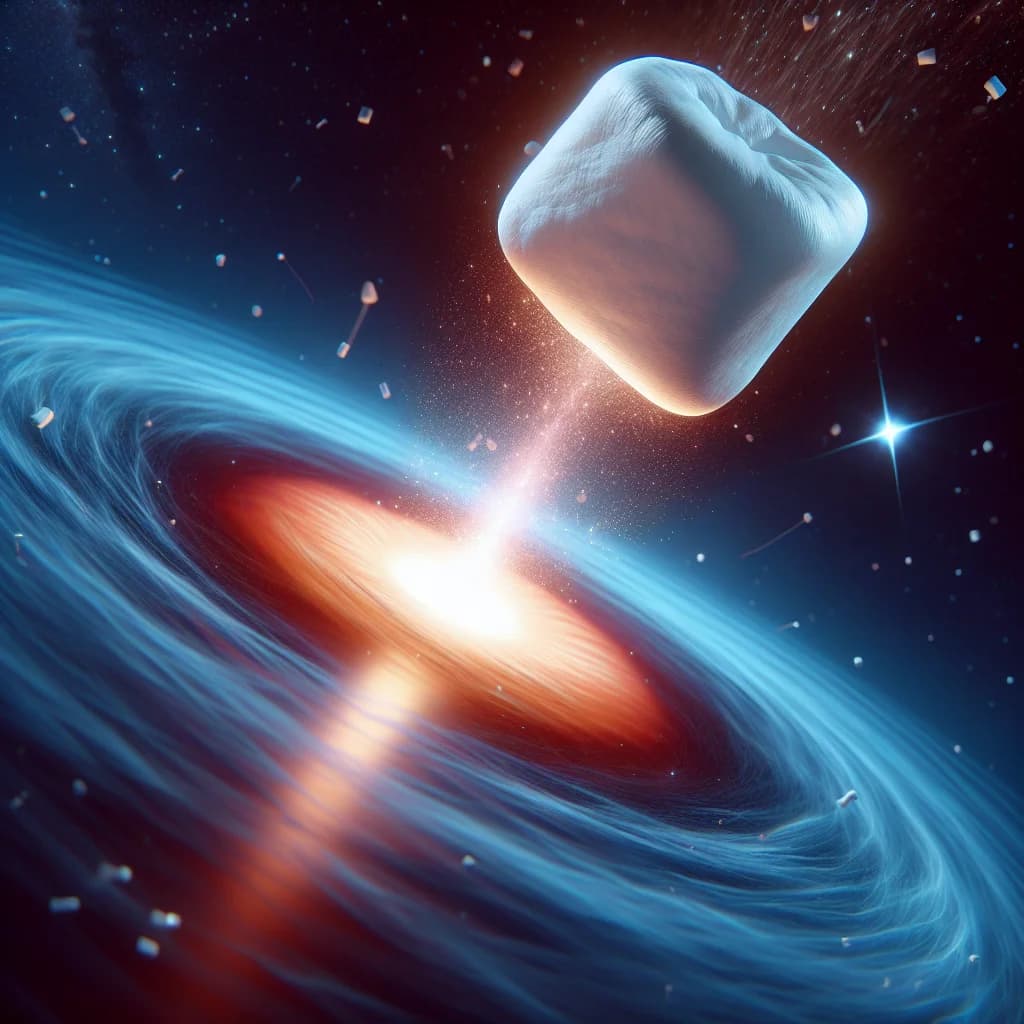
A neutron star's immense gravity accelerates a falling marshmallow to nearly half the speed of light. Upon impact, the object's massive kinetic energy is instantly released, creating an explosion comparable to a nuclear blast.
The Fluffy Apocalypse: Why Dropping a Marshmallow on a Neutron Star Would Release the Energy of an Atom Bomb
Imagine holding a standard, pink-and-white marshmallow—the kind you’d normally roast over a campfire. Now, imagine dropping it onto the surface of a neutron star. While this sounds like the setup for a surrealist joke, it is actually one of the most famous thought experiments in astrophysics. In our everyday lives, a dropped marshmallow results in a soft "thud" and a bit of dirt; however, in the vicinity of a neutron star, that same sweet treat becomes a projectile of staggering power.
This scenario serves as a perfect classroom for exploring the limits of classical physics and general relativity. By examining the intense gravitational pull, the acceleration of mass, and the resulting conversion of kinetic energy, we can calculate exactly why a fluffy snack would strike with the force of a nuclear warhead. This analysis relies on the foundational principles of gravitational potential energy and the extreme density of collapsed stellar remnants.
The Ultimate Gravity Well: Understanding the Neutron Star
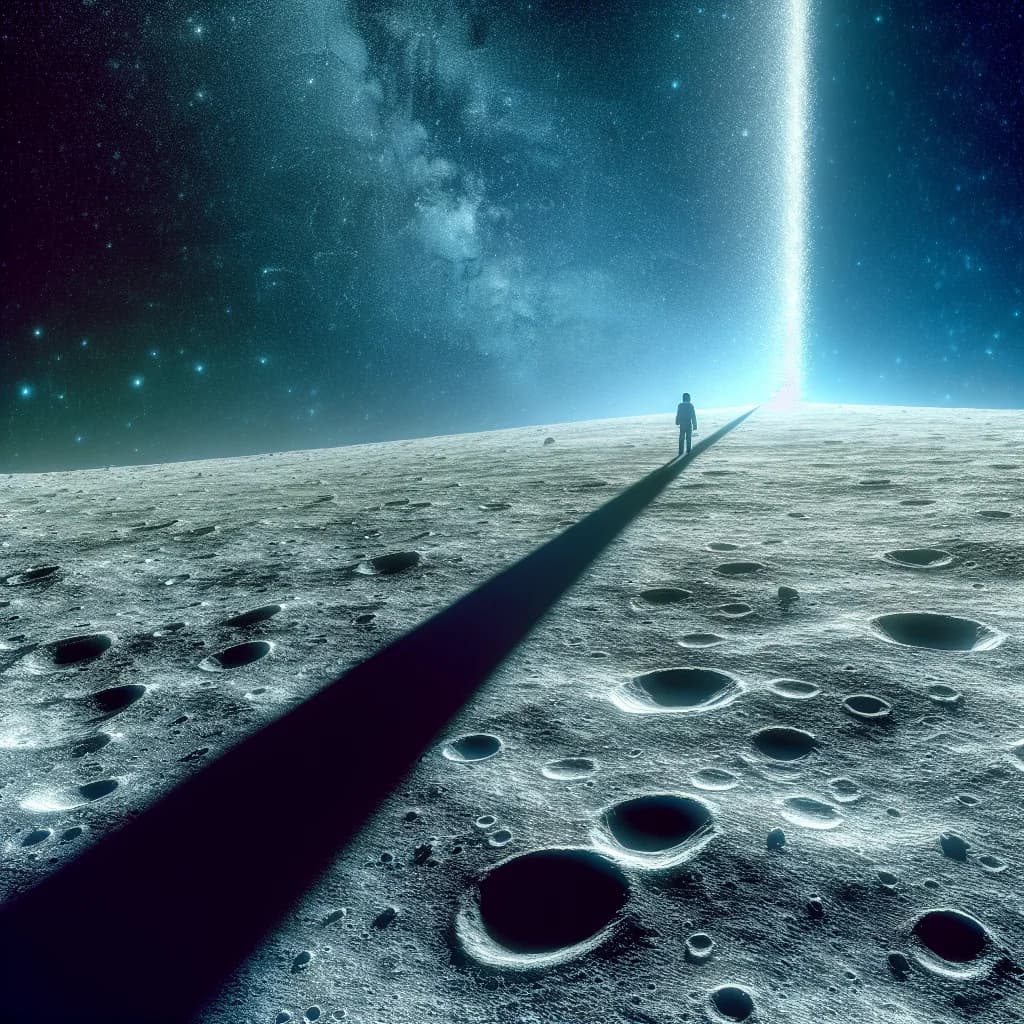
To understand the impact, we must first understand the "target." A neutron star is the collapsed core of a massive star that has gone supernova. It packs about 1.4 times the mass of our Sun into a sphere only about 12 miles (20 kilometers) in diameter. This results in a density so profound that a single teaspoon of neutron star material would weigh roughly a billion tons on Earth.
Because gravity is determined by mass and distance, the gravitational field at the surface of a neutron star is approximately 200 billion times stronger than Earth's. While Earth's gravity accelerates objects at 9.8 meters per second squared, a neutron star accelerates objects at rates that defy human intuition. If you stand on the "surface" (a thin, incredibly hard crust of iron nuclei), the escape velocity required to leave the star is about half the speed of light.
From Zero to Relativistic: The Great Fall
When you release the marshmallow from a modest height—let’s say a few kilometers above the surface—it doesn't just fall; it screams toward the ground. On Earth, air resistance (terminal velocity) would slow the marshmallow down. On a neutron star, there is no meaningful atmosphere to provide drag, only an intense gravitational slope.
As the marshmallow falls, its gravitational potential energy is converted into kinetic energy. Because the gravity is so immense, the marshmallow reaches "relativistic" speeds—velocities that are a significant fraction of the speed of light. By the time the marshmallow reaches the surface, it is traveling at approximately 100,000 kilometers per second (about 223 million miles per hour).
The Math of the "Marshmallow Bomb"
To find the energy of the impact, we use the formula for kinetic energy: $KE = \frac{1}{2}mv^2$.
- Mass ($m$): A standard marshmallow weighs about 7 grams (0.007 kg).
- Velocity ($v$): At impact, the marshmallow is moving at roughly 30% to 50% of the speed of light ($c$).
- The Result: When you plug these numbers in, the energy released upon impact is approximately $10^{14}$ to $10^{15}$ Joules.
To put that into perspective, the atomic bomb dropped on Hiroshima released about $6.3 \times 10^{13}$ Joules of energy. Consequently, our tiny, 7-gram marshmallow hitting a neutron star would release roughly the same amount of energy—if not more—than a tactical nuclear weapon. The "explosion" would manifest as a massive burst of X-rays and gamma radiation radiating out into space.
Cascading Consequences: What Happens to the Sugar?
In reality, the marshmallow wouldn't even hit the surface as a solid object. Long before it touched the ground, the "tidal forces" of the neutron star would take over. Because the gravity is so much stronger at the bottom of the marshmallow than at the top, the marshmallow would be stretched into a thin string of atoms—a process physicists playfully call "spaghettification."
As this stream of plasma hits the iron crust of the star, the kinetic energy is instantaneously converted into heat and radiation. The impact wouldn't leave a crater in the traditional sense; the star’s crust is far too dense and rigid. Instead, the marshmallow would be flattened into a layer only one atom thick, spread across the surface, and its component particles would be crushed into the neutron-rich sea of the star’s interior.
Conclusion
The thought experiment of the marshmallow and the neutron star highlights the incredible power of gravity when compressed into a small space. By applying the laws of kinetic energy and gravitation, we see that mass is not just "stuff," but a vessel for incredible potential energy.
Ultimately, this scenario reminds us that the universe operates on scales that dwarf our terrestrial experiences. While a marshmallow is a harmless treat on Earth, the laws of physics dictate that in the presence of a neutron star, even the fluffiest object becomes a force of nature. It serves as a striking reminder of the elegant, high-energy dance that governs the furthest reaches of our cosmos.