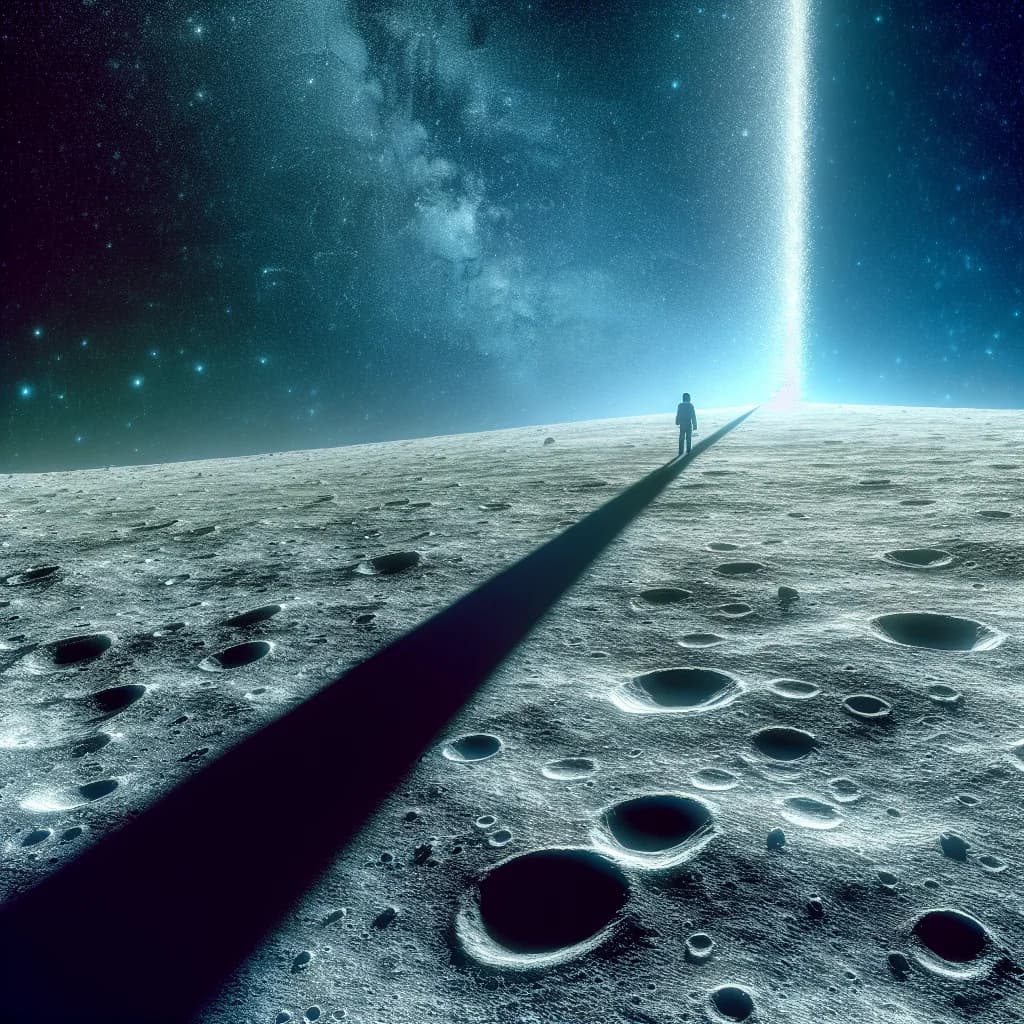
If you lived at the center of Earth would you age slower than someone on the surface
Could the secret to a longer life be buried 4,000 miles beneath your feet? Discover the mind-bending physics of gravitational time dilation and why a clock at the Earth's core ticks just a little bit slower than the one on your nightstand.


Too Long; Didn't Read
Yes, you would age slower at the center of the Earth due to gravitational time dilation. Because you are deeper in the planet’s gravity well, time moves more slowly than it does on the surface, though the difference is only a tiny fraction of a second over a lifetime.
The Core of Chronology: Would You Age Slower at the Center of the Earth?
Imagine, for a moment, that we could peel back the layers of our planet like an onion and construct a comfortable, pressurized habitat exactly at the Earth’s geometric center. Putting aside the minor inconveniences of molten iron and crushing atmospheric pressure, we are left with one of the most fascinating questions in modern physics: would the hands of your watch tick more slowly than those of your friends back on the surface? This thought experiment isn't just a flight of fancy; it is a gateway into the mind-bending world of General Relativity, where time is not a universal constant but a flexible fabric influenced by the very ground beneath our feet.
The Fabric of Time and Einstein’s Insight
To understand why your age might change depending on your altitude, we must look to Albert Einstein’s Theory of General Relativity. Einstein proposed that space and time are inextricably linked into a four-dimensional fabric called spacetime. Massive objects, like the Earth, don’t just sit on this fabric; they warp and curve it.
This curvature creates what we perceive as gravity. One of the most startling consequences of this warping is gravitational time dilation. The principle is straightforward: the stronger the gravitational potential (the "deeper" you are in a gravitational well), the slower time passes. If you are closer to a massive source, your "now" moves a fraction of a heartbeat slower than the "now" of someone further away.
The Gravitational Well: Surface vs. Center
To visualize this, imagine the Earth creates a "dimple" in the fabric of the universe. The surface of the Earth is deep within that dimple, but the center is at the very bottom.
The Shell Theorem Paradox
You might recall from basic physics that if you were at the center of the Earth, you would be weightless. This is due to the Shell Theorem, which states that the gravitational pull from all the mass of the Earth above you would cancel out in every direction. While your weight (the force of gravity) would be zero, your gravitational potential—the measure of how much energy it took to get down there—is at its absolute maximum.
In the realm of relativity, it is the potential, not the local pulling force, that dictates the flow of time. Even though you are floating weightlessly at the core, you are technically at the "deepest" point of Earth’s gravitational influence.
Calculating the Temporal Drift
How much "younger" would you actually be? The difference is mathematically predictable, though incredibly small.
- The Metric: Scientists calculate the difference in the flow of time between the center and the surface using the Earth's mass ($5.97 \times 10^{24}$ kg) and its radius (approximately 6,371 km).
- The Result: According to General Relativity, a clock at the Earth’s center ticks slower than a clock on the surface by a factor of about $1.5 \times 10^{-9}$.
- The Human Scale: If you lived at the center of the Earth for a standard human lifetime of 80 years, you would emerge only about 0.004 seconds younger than your twin on the surface.
To put this into context, 0.004 seconds is roughly the amount of time it takes for a housefly to flap its wings once. It is a tiny increment, yet it represents a fundamental truth about how our universe functions.
Real-World Comparisons
While we cannot yet build a laboratory at the Earth's core, we see this phenomenon in action every day:
- GPS Satellites: These satellites orbit about 20,000 km above us. Because they are further out of the Earth’s gravitational well, their clocks tick about 45 microseconds faster per day than ours. Engineers must calibrate these clocks to account for relativity; otherwise, your phone's GPS would be off by kilometers within a single day.
- Atomic Clocks: Scientists have placed ultra-precise atomic clocks on different floors of skyscrapers. Even a height difference of a few meters results in a measurable (though microscopic) difference in how time passes.
Conclusion: A Matter of Perspective
The ultimate scientific verdict is a resounding yes: if you lived at the center of the Earth, you would indeed age more slowly than someone on the surface. This outcome is dictated by the immutable laws of General Relativity, which prove that gravity and time are two sides of the same cosmic coin.
While a four-millisecond "youth bonus" over 80 years might not be worth the commute to the Earth's core, the experiment highlights a profound reality. We live in a universe where time is personal, influenced by where we stand and the mass of the world beneath us. It reminds us that even the most solid ground is part of a fluid, ever-changing tapestry of spacetime that connects the center of our planet to the furthest reaches of the stars.