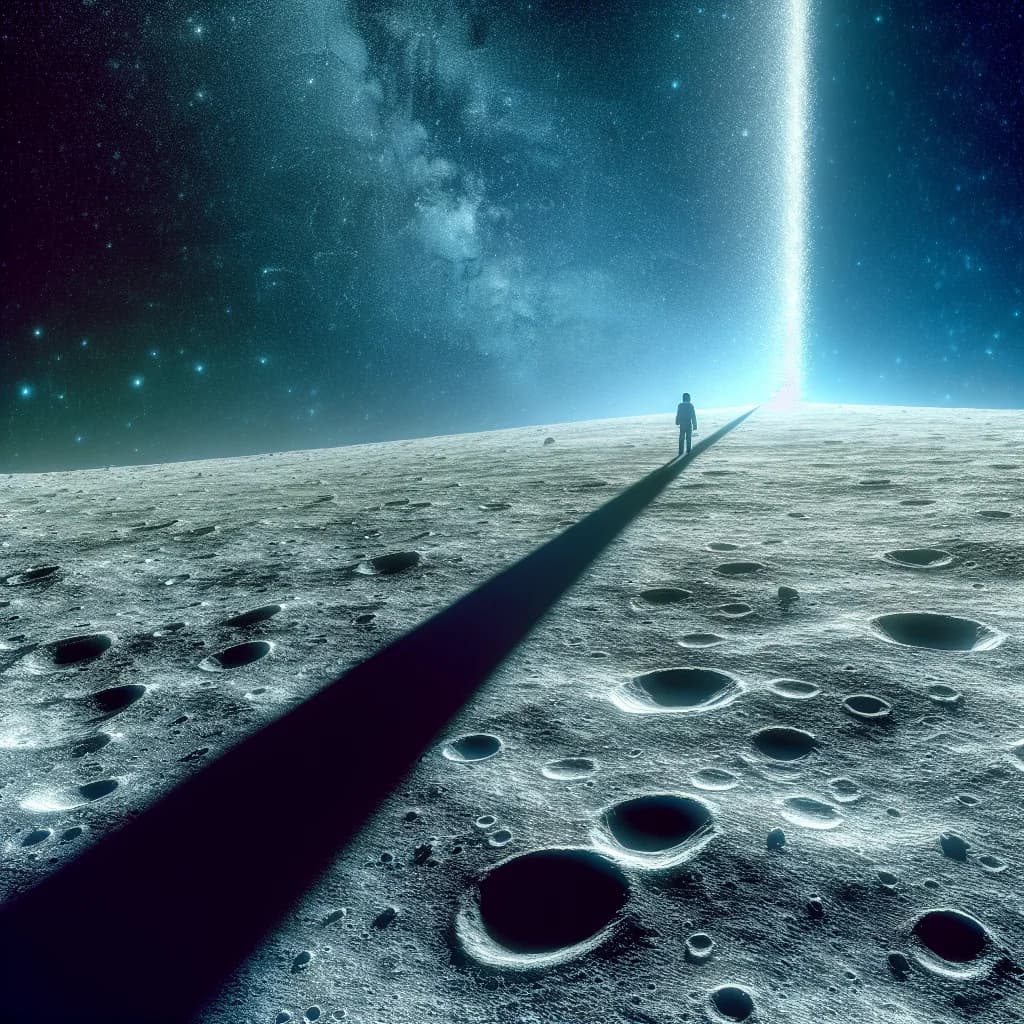
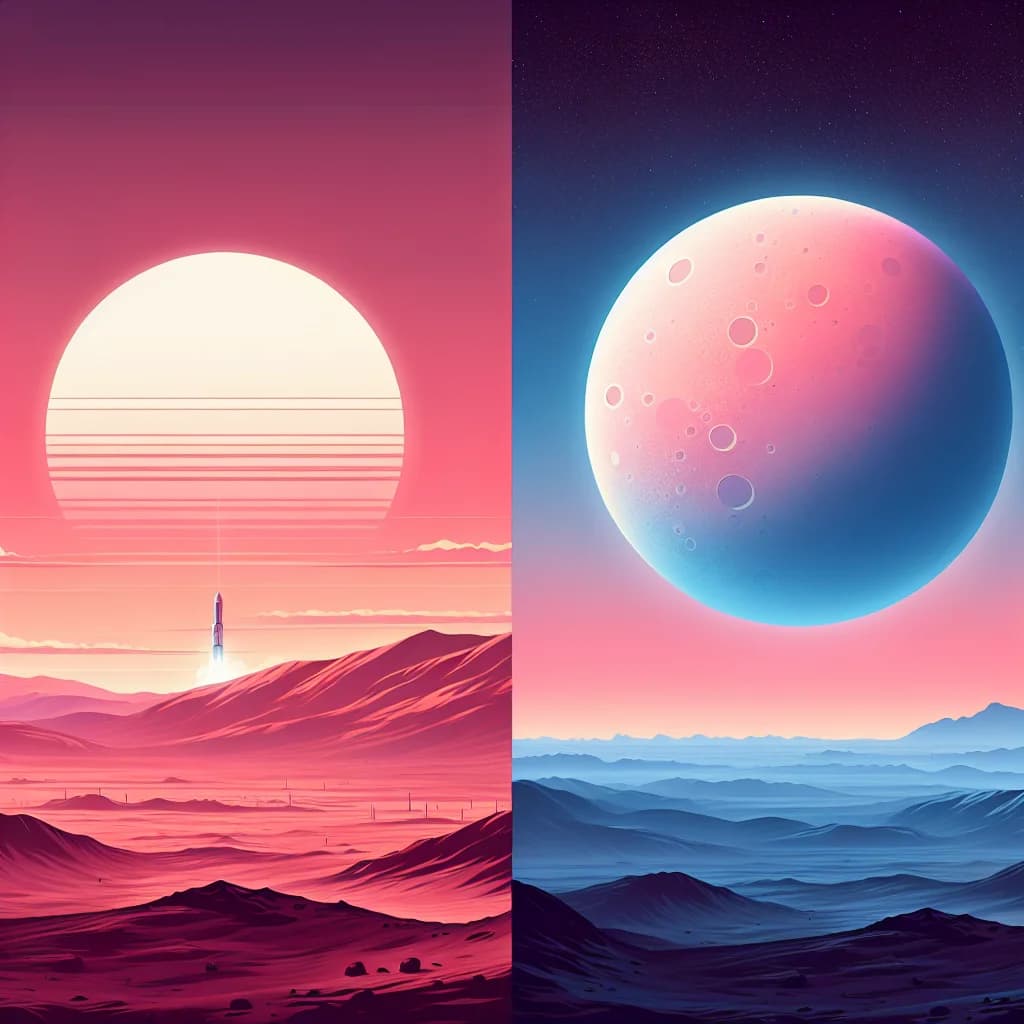
If you lived on a planet with two different colored suns, would you have two different colored shadows
Imagine stepping onto an alien landscape where your silhouette splits into a surreal dance of crimson and sapphire. Discover the mind-bending physics of how a sky with two different suns would transform your very shadow into a vibrant masterpiece of color.

Too Long; Didn't Read
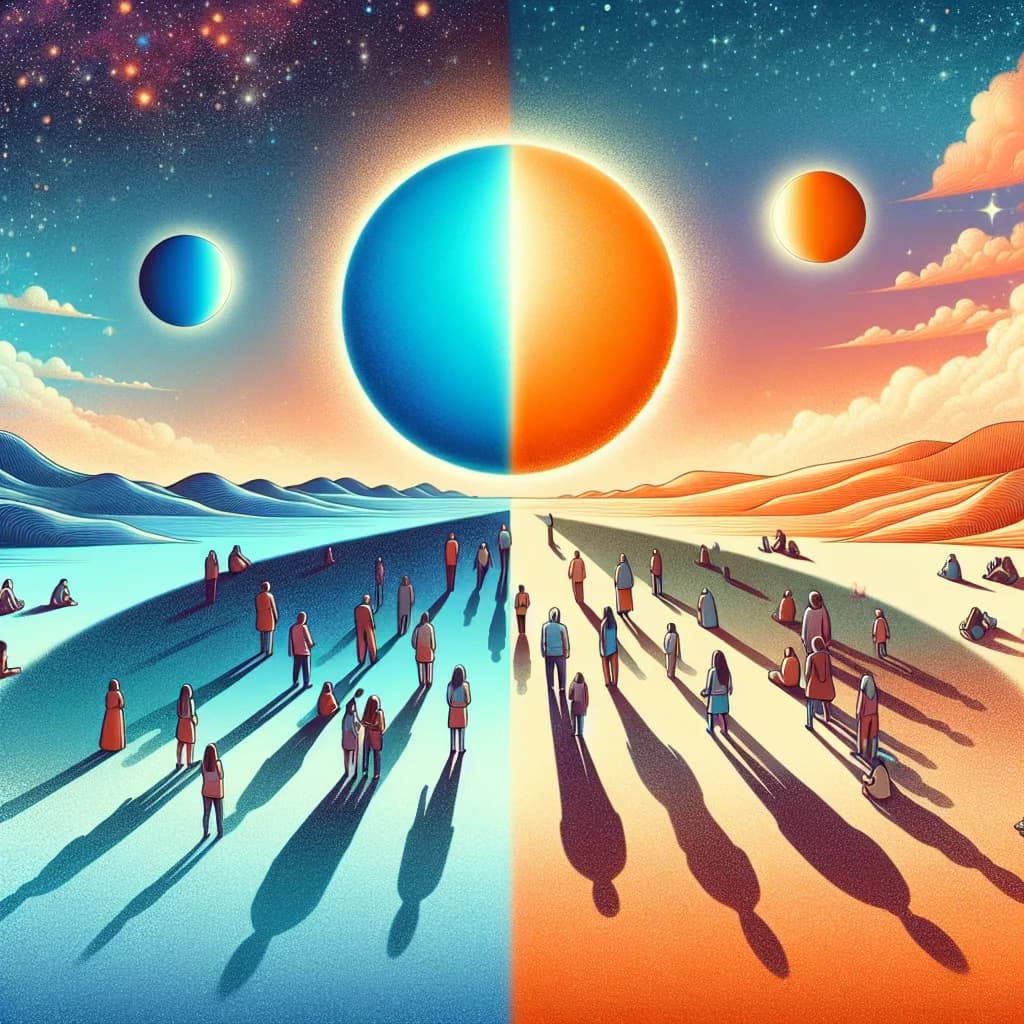
Yes, you would have two colored shadows. Each shadow is created by blocking one sun while the other remains visible, meaning each shadow appears as the color of the sun that is not currently obstructed. Where both light sources are blocked, the shadow remains dark.
Binary Sunsets and Chromatic Shadows: What Happens When Two Different Stars Light Your World?
Imagine standing on the surface of a distant exoplanet, watching the horizon as two distinct suns begin to set. One is a massive, brilliant sapphire-blue star, while the other is a smoldering, ruby-red dwarf. While science fiction often focuses on the breathtaking vistas of such "circumbinary" planets, it rarely stops to ask a more personal, physical question: if you looked down at your feet, what would your shadow look like? This isn't just a whimsical thought experiment; it is a fascinating dive into the intersection of geometric optics, additive color theory, and stellar astrophysics. By applying the laws of physics that govern light and shadow here on Earth, we can determine exactly how a dual-sun system would rewrite the visual rules of a planetary surface.
The Physics of Additive Color Theory
To understand the shadows, we must first understand the light. On Earth, we are accustomed to a single, yellowish-white light source. However, light behaves according to "additive color theory." Unlike mixing paint (where colors get darker), mixing light is a process of addition.
If our hypothetical planet is illuminated by a red star and a blue star of equal perceived brightness, the "ambient" light of the daytime sky would actually appear magenta or a pale violet. This happens because the photoreceptors in our eyes would combine the incoming red and blue photons.
- Wavelengths: The red star emits longer wavelengths (approx. 700 nm), while the blue star emits shorter, higher-energy wavelengths (approx. 450 nm).
- The Result: Your environment would be bathed in a secondary color created by the overlap of these two primary stellar outputs.
The Anatomy of a Dual-Sun Shadow
The most surprising revelation of living under two suns is that your shadow would not be a single, dark silhouette. Instead, you would cast two distinct, colored shadows, and one central dark shadow.
1. The "Blue" Shadow
When you stand in the path of the red sun’s light, you block its red photons from hitting the ground behind you. However, the blue sun—positioned at a different angle in the sky—is still shining on that exact spot. Because only the blue light reaches that area, your shadow isn't black; it is a vibrant, luminous blue.
2. The "Red" Shadow
Conversely, your body also blocks the light from the blue sun. In the area where the blue light is obstructed, the red sun’s rays are still free to strike the surface. This results in a second shadow cast at a different angle, appearing as a deep, warm red.
3. The Umbra (The Black Core)
In the specific area where your body obstructs the light from both suns simultaneously, you get a traditional black shadow, known as the umbra. This creates a striking visual effect: a dark central figure flanked by two colorful "ghost" shadows.
Calculating Scale and Intensity
The clarity and color of these shadows depend on the Inverse Square Law and stellar luminosity.
- Luminosity: A blue "O-type" star can be 30,000 times more luminous than our Sun, while a red "M-type" dwarf might only have 0.08% of the Sun’s luminosity.
- Distance: For the shadows to appear equally vivid, the planet would need to be much closer to the red dwarf than to the blue giant.
If the blue sun is significantly more intense, its "red shadow" (the area where blue light is blocked) will be much darker and more pronounced, while the red sun's "blue shadow" might appear faint or washed out. The visual geometry is a delicate balance of the stars' temperatures—measured in Kelvin—and their orbital positions relative to the observer.
Environmental and Atmospheric Consequences
The presence of two light sources would create a complex "light-scape."
- Refraction: The planet’s atmosphere would scatter the blue and red light differently (Rayleigh scattering). This might result in a sky that transitions from a deep red at one horizon to a brilliant cyan at the other.
- Plant Life: On Earth, plants are green because they reflect green light while absorbing red and blue. On a two-sun world, plants might evolve to be pitch black to absorb every scrap of energy from both the red and blue ends of the spectrum, ensuring maximum photosynthetic efficiency.
Conclusion
If you lived on a planet with two different colored suns, your world would be a masterpiece of optical complexity. You would indeed have two different colored shadows, a phenomenon dictated by the simple yet profound laws of additive color and geometric obstruction. Where one star's light is blocked, the other's color fills the void, turning every object into a prism of sorts. This thought experiment reminds us that our experience of "reality"—even something as simple as a shadow—is entirely dependent on the celestial environment in which we find ourselves. While we may only have one sun and one grey shadow today, the universe is filled with billions of binary systems where the ground is a tapestry of red, blue, and violet.