If you poured water into a vacuum, would it spontaneously boil and freeze at the same time
Imagine a liquid that erupts into steam and solidifies into ice at the exact same moment. Step into the strange reality of a vacuum, where the laws of physics create a spectacular contradiction that defies everything you know about water.

Too Long; Didn't Read
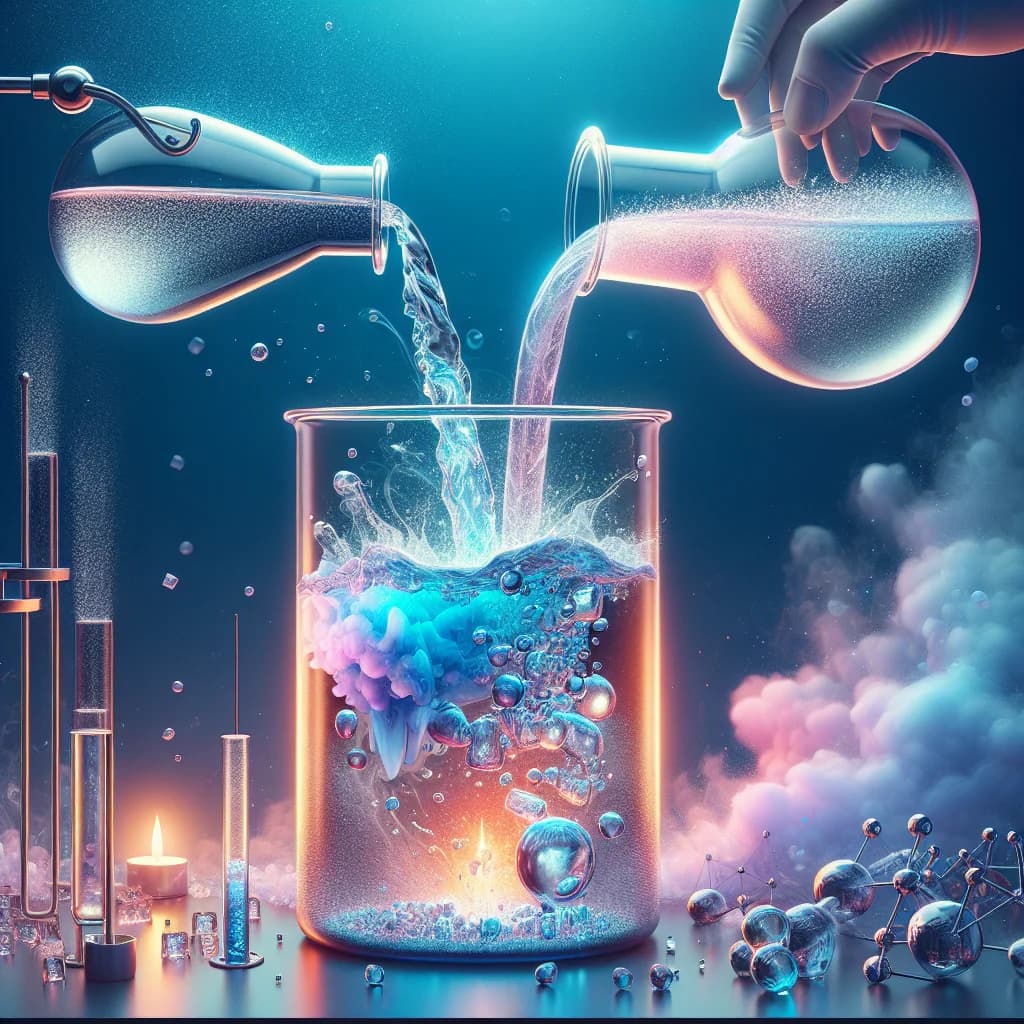
Yes, water in a vacuum boils and freezes simultaneously. The lack of pressure causes the liquid to boil instantly, which removes thermal energy so rapidly that the remaining water turns into ice.
Boiling Ice: What Happens if You Pour Water Into the Vacuum of Space?
Imagine floating in the silent, vast expanse of the cosmos, holding a simple glass of room-temperature water. If you were to tip that glass over, exposing the liquid to the cold, empty vacuum of space, what would happen? On Earth, we think of boiling and freezing as opposite ends of a long thermal spectrum. However, in the extreme environment of a vacuum, the laws of physics engage in a fascinating tug-of-war that defies our everyday intuition. Would the water instantly turn to steam, or would it harden into a block of ice? The answer is a spectacular scientific "both."
To understand this phenomenon, we must look at the disciplines of thermodynamics and phase transition physics. By analyzing how pressure and temperature interact, we can predict the surprisingly rhythmic dance of molecules that occurs when Earthly matter meets the void.
The Pressure Paradox: Why Low Pressure Leads to High Heat
On Earth, we are used to water boiling at 100°C (212°F). However, this "standard" boiling point is entirely dependent on atmospheric pressure. At sea level, the weight of the air pushing down on the surface of the water keeps the molecules packed tightly together in a liquid state.
When you enter a vacuum, that external pressure vanishes.
- The Science of Vapor Pressure: Every liquid has a "vapor pressure," which is the pressure exerted by molecules trying to escape the liquid and become a gas.
- The Instant Boil: In a vacuum, the external pressure drops to near zero, which is far lower than the water’s internal vapor pressure.
Because there is no longer any atmospheric "lid" holding the molecules down, the water begins to boil violently and immediately, even if it is at room temperature. On a mountain like Everest, water boils at 71°C because the air is thinner; in a vacuum, that boiling point drops well below the freezing point.
The Deep Chill: How Boiling Leads to Freezing
The story doesn't end with steam. As the water boils away into a vapor, a second, equally powerful physical process takes over: evaporative cooling.
The Latent Heat of Vaporization
Turning a liquid into a gas requires a significant amount of energy. When water molecules escape the liquid phase to become steam, they take thermal energy with them. In a vacuum, this process is so rapid and energetic that the remaining liquid loses its heat at an incredible rate.
The Mathematical Balance
To visualize the scale of this energy loss, consider the "latent heat" of water. It takes about 2,260 kilojoules of energy to evaporate just one kilogram of water. As the most "excited" molecules leap into the vacuum as gas, they effectively "steal" the heat from the molecules left behind.
- Initial State: Liquid water at 20°C.
- Phase One: Violent boiling begins due to zero pressure.
- Phase Two: Rapid evaporation removes heat from the remaining liquid.
- Phase Three: The temperature of the remaining water plummets below the freezing point.
The Final Result: Space Snow
The outcome is a paradoxical spectacle. The water does not become a solid block of ice, nor does it entirely vanish as a gas. Instead, as the boiling water rapidly loses its energy, the remaining droplets flash-freeze into a fine, delicate lattice of ice crystals.
This process creates a misty cloud of "space snow." Scientists have actually observed this phenomenon during NASA missions. When astronauts have vented liquid waste into space, observers described it as looking like a cloud of sparkling, glittering diamonds catching the sunlight. The liquid boils until it is cold enough to freeze, resulting in a dual state where vapor and solid crystals coexist in a shimmering trail.
Conclusion
The mystery of water in a vacuum reveals the profound relationship between pressure and temperature. While we view boiling and freezing as separate events on a stove or in a freezer, the vacuum of space proves they are simply two sides of the same thermodynamic coin. The lack of pressure triggers an immediate boil, which in turn siphons off enough energy to cause an immediate freeze.
This thought experiment highlights the delicate balance of our own atmosphere, which provides the perfect "lid" to keep our water liquid and life sustainable. In the grand laboratory of the universe, the most common substances can behave in the most uncommon ways, reminding us that physics is often more poetic than it first appears.